(c) Talia and Clay - Gonzo Ecology, some rights reserved (CC BY) · cc-by
Muniria
Sign in to saveMuniria is a genus of four species of flowering plants in the mint family, Lamiaceae and is endemic to the Northern Territory in Australia. Plants in this genus are woolly shrubs with five petals joined to form a tube-shaped flower with four stamens of unequal lengths. These species are similar to those in the genus Pityrodia except that the branches are distinctly 4-angled in cross section and the fruit has calluses or ridges.
Species
GENUS
- KingdomPlantae
- PhylumTracheophyta
- ClassMagnoliopsida
- OrderLamiales
- FamilyLamiaceae
via GBIF
~2 min read
Encyclopedic overview
5 sectionsContents
- Description
- Taxonomy and naming
- Distribution
- References
- External links
Muniria is a genus of four species of flowering plants in the mint family, Lamiaceae and is endemic to the Northern Territory in Australia. Plants in this genus are woolly shrubs with five petals joined to form a tube-shaped flower with four stamens of unequal lengths. These species are similar to those in the genus Pityrodia except that the branches are distinctly 4-angled in cross section and the fruit has calluses or ridges.
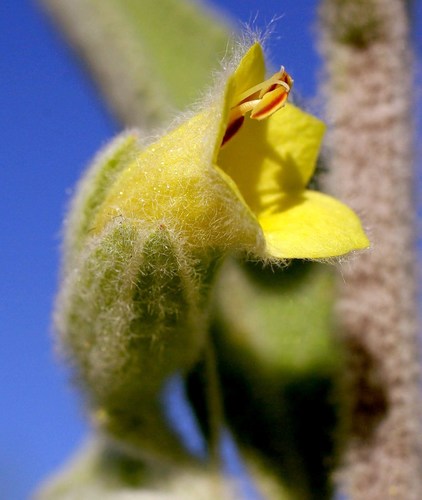
==Description== Plants in the genus Muniria are evergreen shrubs, tall and densely covered with woolly hairs. The stems and branches are four-angled in cross section. The leaves are simple, elliptic to egg-shaped, arranged in opposite pairs, covered with woolly hairs and glands. The flowers are arranged singly or in groups of up to twelve in leaf axils and single flowers or groups are surrounded by leaf-like bracteoles. Flowers have five sepals which are joined for about half their length to form a tube with five lobes. The five petals are pale yellow to red and form a slightly curved tube with five lobes on the end, the upper lobes slightly shorter than the lower ones. There are four stamens with the lower pair shorter than the upper ones. The fruit is dry, does not release its seeds when mature and has ridges or calluses.
Excerpted from Wikipedia’s “Muniria” article, available under the CC BY-SA 4.0 licence.