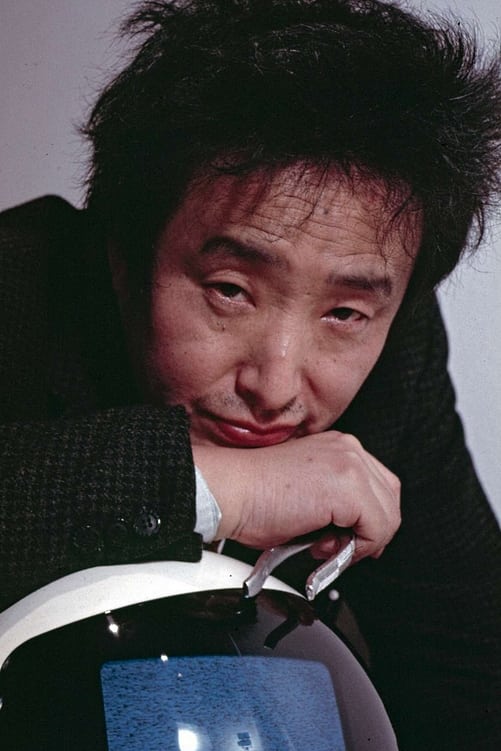
Nam June Paik
Also known as Naum June Paik
American video art pioneer (1932–2006)
Person · Open Library
- Born
- 1932
- Died
- 2006
- Works
- 39
Top works
- A Pas de Loup
- Fujio Akai
- Allen in vision
- Nam June Paik, 1932-2006
- Nam June Paik in Italia
via Open Library + Wikidata
Film & TV
Directing · Gyeongseong, South Korea [now Seoul]
Nam June Paik was the first video artist who experimented with electronic media and made a profound impact on the art of video and television. He coined the phrase "Information Superhighway" in 1974, and has been called the "father of video art."
Known for
- Nam June Paik: Moon Is the Oldest TV — Self (archive footage)2023
- Tapes2020
- Kill Your TV: Jim Moir’s Weird World of Video Art2019
- George: The Story of George Maciunas and Fluxus — Self (archive footage)2018
- Re: Maciunas and Fluxus2011
- Joseph Beuys - Coyote III — Himself2008
Article
Nam June Paik (Korean: 백남준 [pɛk̚.nam.dʑun] ; July 20, 1932 – January 29, 2006) was a South Korean artist. He worked with a variety of media and is considered to be the founder of video art. He is credited with the first use (1974) of the term "electronic super highway" to describe the future of telecommunications.
Born in Seoul to a wealthy business family, Paik trained as a classical musician, spending time in Japan and West Germany, where he joined the Fluxus collective and developed a friendship with experimental composer John Cage. He moved to New York City in 1964 and began working with cellist Charlotte Moorman to create performance art. Soon after, he began to incorporate televisions and video tape recorders into his work, acquiring growing fame. A stroke in 1996 left him partially paralyzed for the last decade of his life.
Gallery (2)
Connections
Categories
1932 births2006 deathsAcademic staff of Kunstakademie DüsseldorfArtists from SeoulFluxusKorean emigrants to the United StatesKyoto laureates in Arts and PhilosophyKyunggi High School alumniMass media theoristsMembers of the Royal Academy of Science, Letters and Fine Arts of BelgiumRecipients of the Ho-Am Prize in the ArtsRecipients of the Order of Cultural Merit (South Korea)