
File:Gokishichido.svg · Wikimedia Commons · See Wikimedia Commons
Nara period
Sign in to saveAlso known as Nara jidai, Nara era
historical medieval period of Japan from CE 710 to 794
The Nara period was a time in Japanese history lasting from 710 to 794 CE when the country's capital was located in Nara and the imperial government began to take on more organized forms. This era is significant because it marked an important early phase in Japan's development as a unified state with growing cultural and political institutions.
AI-generated from the Wikipedia summary — may contain errors.
Described at
Nara Period - World History Encyclopedia
The Nara Period (Nara Jidai) of ancient Japan (710-794 CE), so called because for most of that time the capital was located at Nara, then known as Heijokyo, was...
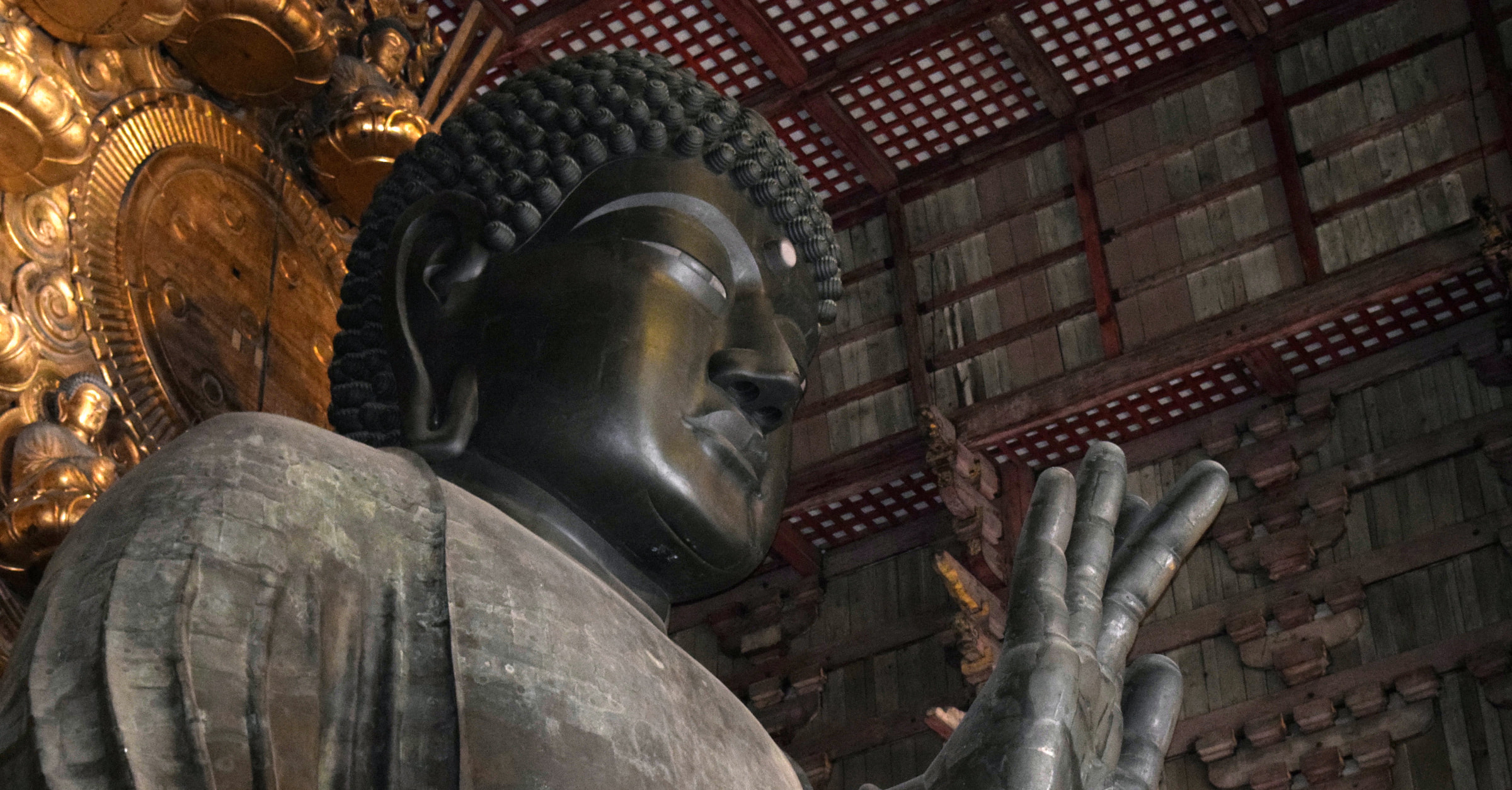
ancient.eu →The Nara Period ( Nara Jidai ) of ancient Japan (710-794 CE), so called because for most of that time the capital was located at Nara, then known as Heijokyo, was a short period of transition prior to the significant Heian Period . Despite the period's brevity it still managed to produce arguably the most famous works of Japanese literature ever written and some of the most important temples still in use today including at Todaiji , the largest wooden building in the world at that time, which still houses the largest bronze statue of Buddha ever made. Nara, or more correctly Heijokyo, as it was known then, was made the capital of Japan from 710 to 784 CE, after which time it was relocated to Nagaokakyo. The previous capital was Fujiwara -kyo, but Nara had the advantage of being more centrally placed, located 30 kilometres south of Kyoto. Later historians gave the capital's name to the period 710 to 794 CE even if for the last decade it was no longer the most important Japanese city . The Nara Period followed on from the Kofun Period (c. 250-538 CE) and Asuka Period (538-710 CE), together sometimes referred to as the Yamato Period. Japan had increased its diplomatic relations with its powerful neighbours China and Korea , accepted the Buddhist religion , and absorbed some useful cultural advancements. This process continued in the Nara Period. Nara was built on the Chinese model of Chang -an, the Tang capital and so had a regular and well-defined grid layout, two symmetrical halves, and buildings familiar to Chinese architecture . A university dedicated to the Confucian tradition was established, a sprawling royal palace was built and the state bureaucracy was expanded to some 7,000 civil servants. The total population of Nara may have been as high as 200,000 by the end of the period. The capital Nara was built on the Chinese model of Chang-an, the Tang capital and so had a regular & well-defined grid layout. Control of the central government over the provinces was increased by a heightened military presence throughout the islands of Japan. This did not prevent a major rebellion in 740 CE led by the Fujiwara exile Hirotsugu and supported by the Hayato minority based in southern Kyushu who resented the Yamato clan's dominance of the government and its attempts to 'civilise' under-developed regions. Emperor Shomu (r. 724-749 CE) raised an army of 17,000 men, quashed the rebel army inside of two months and executed Hirotsugu. For the ordinary populace, especially those in rural areas (90%), poverty, or just living above it, continued to be the norm. Agriculture still depended on primitive tools, not enough land was prepared for crops, and irrigation techniques were insufficient to prevent frequent crop failures and outbreaks of famine. In 743 CE a law attempted to encourage land clearance for agriculture by guaranteeing farmers the right to pass on their cleared land to their descendants, but most preferred the greater security of working for landed aristocrats. To make matters worse for Japan's already strained rural communities, there were smallpox epidemics in 735 and 737 CE which historians calculate reduced the county's population by 25-35%. The lot of the Japanese peasant was not helped by excessive taxation, largely designed to fund Emperor Shomu's temple building projects (see below) in the first half of the 8th century CE in which he was aided by the Buddhist priest Gyogi. The emperor was a keen convert to Buddhism , especially following the various disasters during his reign, and he had the bright idea to build a temple in every province in the hope this might improve the country's fortunes. In contrast to the peasantry, an ever-increasing number of religious sites and aristocrats were given tax immunity, and the government, happily spending away on temples, struggled to balance its books throughout the period. The court was also beset by internal conflicts for favours and positions amongst the aristocracy which re
Excerpt from a page describing this subject · 15,920 chars · not written by Vinony
Wikidata facts
- Instance of
- historical period
- Country
- Japan
- Followed by
- Heian period
- Follows
- Yamato period
- Image
- Japan- Nara, Todaiji Shosoin 2011.jpg
- Significant event
- 735–737 Japanese smallpox epidemic
Show 6 more facts
- start time
- 0710-00-00
- inception
- 0710-00-00
- Commons category
- Nara period
- topic's main category
- Category:Nara period
- end time
- 0794-00-00
- described at URL
- www.ancient.eu/Nara_Period
via Wikidata · CC0
~14 min read
Encyclopedic overview
LocationJapan Leaders Genmei (710–721) Emperor Kanmu (781–794)
Key eventsJapanese smallpox epidemic (735–737) Fujiwara no Hirotsugu rebellion (740) Yōrō Code promulgated (757)
Excerpted from Wikipedia’s “Nara period” article, available under the CC BY-SA 4.0 licence.