Profile via TMDB · Courtesy of TMDB
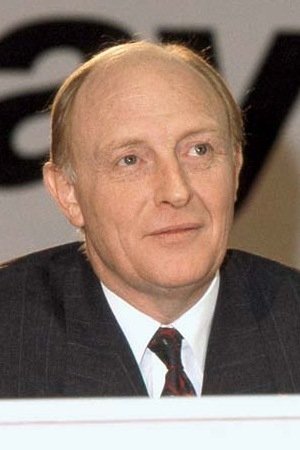
Neil Kinnock
Sign in to saveAlso known as Neil Gordon Kinnock, Baron Kinnock, Neil G. Kinnock, Neil Gordon Kinnock
British politician (1942-)
Film & TV
Tredegar, Blaenau Gwent, Wales, UK
Neil Gordon Kinnock, Baron Kinnock PC is a British politician. A member of the Labour Party, he served as a Member of Parliament from 1970 until 1995, first for Bedwellty and then for Islwyn. He was the Leader of the Labour Party and Leader of the Opposition from 1983 until 1992.
Known for
- The Big Snow of '47 — Self2024
- A Very British Sex Scandal: The Love Child & the Secretary — Self2024
- Thatcher's Not Dead — Self2022
- The United Way — Self2021
- The Choice 2020: Trump vs. Biden — Self (archive footage)2020
- Rise Up: Protests that Changed the World2020
- Labour: The Summer that Changed Everything2017
- Michael Sheen's Valleys Rebellion — Self2015
- Heath vs Wilson: The 10-Year Duel — Self2011
- How to Win the TV Debate — Self2010
via TMDB
Key facts
- President
- Romano Prodi
- Preceded by
- Erkki Liikanen
- Succeeded by
- Siim Kallas
- Monarch
- Elizabeth II
- Prime minister
- Margaret Thatcher , John Major
- Deputy
- Roy Hattersley
- Leader
- James Callaghan , Michael Foot
- Born
- Neil Gordon Kinnock , ( 1942-03-28 ) 28 March 1942 (age 84) , Tredegar , Wales
- Party
- Labour
- Spouse
- Glenys Parry ( married</span>"}]]}'>m. 1967 ; died 2023 )
- Children
- 2, including Stephen
- Education
- Lewis School
- Alma mater
- Cardiff University ( BA )
via Wikipedia infobox
Wikidata facts
- Instance of
- human
- Given name
- Neil
- Gender
- male
- Citizenship
- United Kingdom
- Place of birth
- Tredegar
- Occupation
- politician
- Employer
- Cardiff University
- Political party
- Labour Party
- Languages spoken
- English language
- Image
- Start campagne voor Europese verkiezingen van PvdA (Rotterdam) Neal Kinnoch , k, Bestanddeelnr 932-9811.jpg
- Work location
- London
Show 8 more facts
- date of birth
- 1942-03-28
- Commons category
- Neil Kinnock
- name in native language
- Neil Kinnock
- archives at
- National Library of Wales
- different from
- Nile Kinnick
- candidacy in election
- October 1974 United Kingdom general election
- P10632
- Neil Kinnock
- P12749
- Senrioka Station
Sources (5)
via Wikidata · CC0
~40 min read
Encyclopedic overview
Neil Gordon Kinnock, Baron Kinnock (born 28 March 1942) is a Welsh politician who was Leader of the Opposition and Leader of the Labour Party from 1983 to 1992. He was a Member of Parliament (MP) from 1970 to 1995, first for Bedwellty and then for Islwyn. He was Vice-President of the European Commission from 1999 to 2004. Kinnock was positioned on the soft left of the Labour Party.
Born and raised in South Wales, Kinnock was first elected to the House of Commons in the 1970 general election. He became the Labour Party's shadow education minister after the Conservatives won power in the 1979 general election. After the party under Michael Foot suffered a landslide defeat to Margaret Thatcher in the 1983 election, Kinnock was elected Leader of the Labour Party and Leader of the Opposition. During his tenure as leader, Kinnock proceeded to fight the party's left wing, especially the Militant tendency, and he opposed NUM leader Arthur Scargill's methods in the 1984–1985 miners' strike. He led the party during most of the Thatcher government, which included its third successive election defeat when Thatcher won the 1987 general election. Although Thatcher had won another landslide, Labour regained sufficient seats for Kinnock to remain Leader of the Opposition following the election.
Excerpted from Wikipedia’s “Neil Kinnock” article, available under the CC BY-SA 4.0 licence.