Profile via TMDB · Courtesy of TMDB
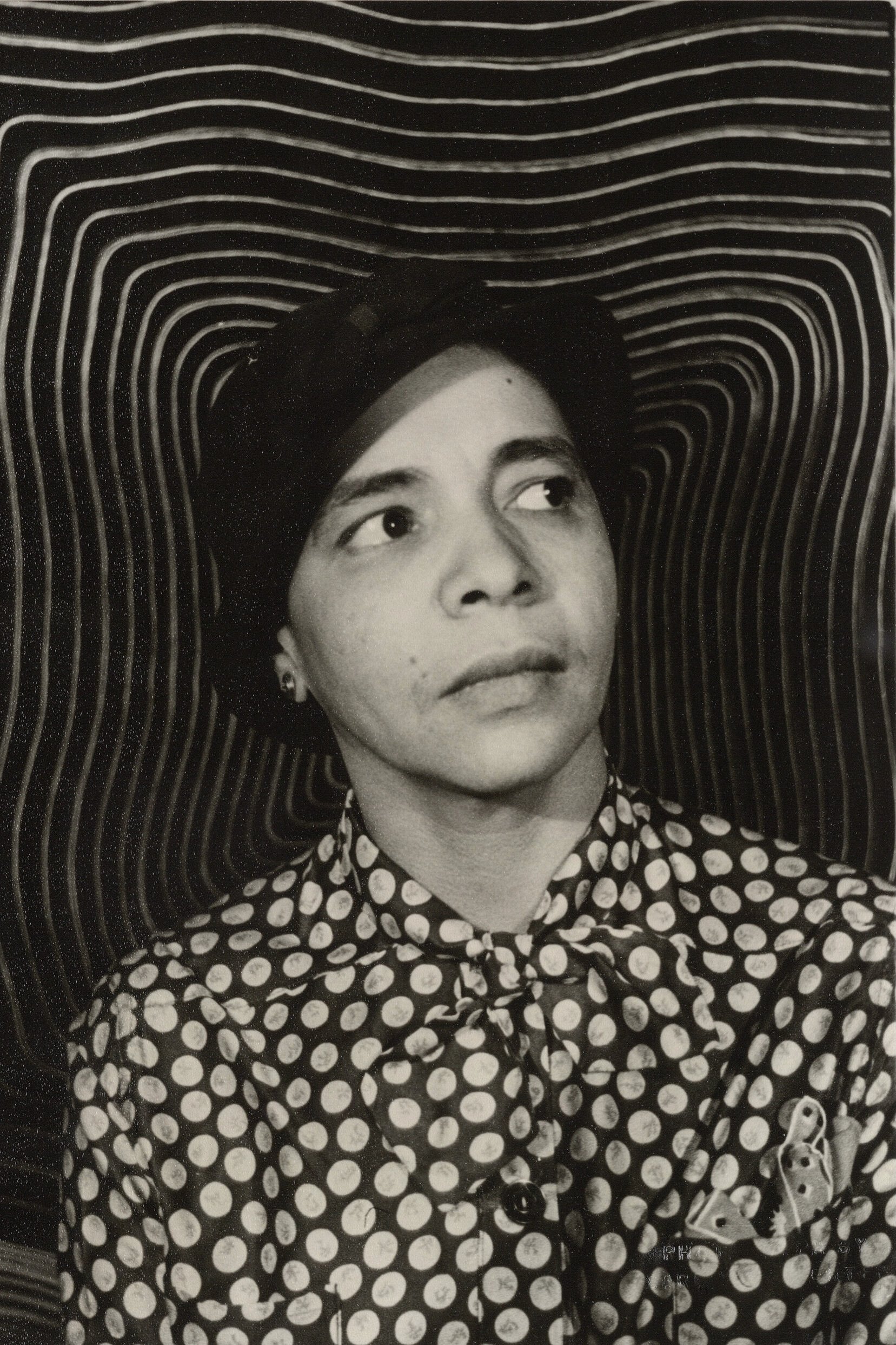
Nella Larsen
Sign in to saveAlso known as Nella Larsen Imes, Nellallitea Larsen, Nellallitea Walker, Allen Semi, Nellye Larsen
American novelist, librarian, nurse (1891–1964)
Film & TV
Chicago, Illinois, USA
Nellallitea "Nella" Larsen was an American novelist. Working as a nurse and a librarian, she published two novels, Quicksand and Passing, and a few short stories. Though her literary output was scant, she earned recognition by her contemporaries.
via TMDB
Key facts
- Born
- Nellie Walker , ( 1891-04-13 ) April 13, 1891, Chicago , Illinois , U.S.
- Died
- March 30, 1964 (1964-03-30) (aged 72), New York City , U.S.
- Other names
- Nellallitea Larsen , Nellye Larson, Nellie Larsen, Nella Larsen Imes
- Education
- Fisk University (No degree), University of Copenhagen (Audited classes), Lincoln Hospital (Nursing degree), New York Public Library (Library science certificate)
- Occupations
- Novelist librarian nurse
- Notable work
- Quicksand (1928), Passing (1929)
- Movement
- Harlem Renaissance , American modernism
- Spouse
- Elmer Imes ( married</span>"}]]}'>m. 1919 ; divorced</span>"}]]}'>div. 1933 )
- Awards
- Guggenheim Fellowship
via Wikipedia infobox
Described at

Nella Larsen Wrestled With Race and Sexuality in the Harlem Renaissance - The New York Times
The writer’s novels were celebrated and helped her become the first African-American woman to receive a Guggenheim Fellowship. Then she disappeared.
nytimes.com →Madhubala in "Mahal", produced by The Bombay Talkies Studios in 1949. Alice Guy Blaché shooting a scene in 1906 of her film "La Fée aux Choux", distributed by Gaumont Pathé Archives. Annemarie Schwarzenbach in "Une Suisse Rebelle, Annemarie Schwarzenbach 1908-1942", produced by Troubadour Films. Since 1851, obituaries in The New York Times have been dominated by white men. Now, we’re adding the stories of other remarkable people. Nella Larsen’s fiction is read today in American literature and black studies courses. Carl Van Vechten and Van Vechten Trust When Nella Larsen died, in 1964, she left little behind: a ground-floor apartment, two published novels, some short stories, a few letters. She was childless, divorced and estranged from her half sister, who, in some accounts, upon learning she was to inherit $35,000 of Larsen’s savings, denied knowing the writer existed . Obituary writing is more about life than death: the last word, a testament to a human contribution. Yet who gets remembered — and how — inherently involves judgment. To look back at the obituary archives can, therefore, be a stark lesson in how society valued various achievements and achievers. Since 1851, The New York Times has published thousands of obituaries: of heads of state, opera singers, the inventor of Stove Top stuffing and the namer of the Slinky. The vast majority chronicled the lives of men, mostly white ones. Charlotte Brontë wrote “Jane Eyre”; Emily Warren Roebling oversaw construction of the Brooklyn Bridge when her husband fell ill; Madhubala transfixed Bollywood; Ida B. Wells campaigned against lynching. Yet all of their deaths went unremarked in our pages, until now. Below you’ll find obituaries for these and others who left indelible marks but were nonetheless overlooked. We’ll be adding to this collection each week, as Overlooked becomes a regular feature in the obituaries section , and expanding our lens beyond women. You can use this form to nominate candidates for future “Overlooked” obits. Read an essay from our obituaries editor about how he approaches subjects and learn more about how the project came to be . Ida B. Wells, one of the nation’s most influential investigative reporters, in 1920. Chicago History Museum/Getty Images It was not all that unusual when, in 1892, a mob dragged Thomas Moss out of a Memphis jail in his pajamas and shot him to death over a feud that began with a game of marbles. But his lynching changed history because of its effect on one of the nation’s most influential journalists, who was also the godmother of his first child: Ida B. Wells. Qiu Jin, in an undated image, defied prevailing gender and class norms by unbinding her feet, cross-dressing and leaving her young family to pursue an education abroad. Paul Fearn/Alamy With her passion for wine, swords and bomb making, Qiu Jin was unlike most women born in late 19th-century China. As a girl, she wrote poetry and studied Chinese martial heroines like Hua Mulan (yes, that Mulan ) fantasizing about one day seeing her own name in the history books. But her ambitions ran up against China’s deeply rooted patriarchal society, which held that a woman’s place remained in the home. Undeterred, Qiu rose to become an early and fierce advocate for the liberation of Chinese women, defying prevailing Confucian gender and class norms by unbinding her feet, cross-dressing and leaving her young family to pursue an education abroad. Mary Ewing Outerbridge didn’t have an easy time bringing tennis to America in 1874. First she had to get past customs agents. And they were suspicious. What was this large net? Clearly it wasn’t for fishing, they said. And what were these stringed things with long handles? Diane Arbus was a daughter of privilege who spent much of her adult life documenting those on the periphery of society. Since she killed herself in 1971, her unblinking portraits have made her a seminal figure in modern-day photography and an influence on th
Excerpt from a page describing this subject · 15,849 chars · not written by Vinony
Wikidata facts
- Instance of
- human
- Family name
- Larsen
- Gender
- female
- Citizenship
- United States
- Place of birth
- Chicago
- Place of death
- Brooklyn
- Spouse
- Elmer Samuel Imes
- Occupation
- novelist
- Languages spoken
- English language
- Notable work
- Passing
- Movement
- Harlem Renaissance
- Image
- NellaLarsen1928.jpg
- Residence
- Tompkinsville
Show 10 more facts
- date of birth
- 1891-00-00
- date of death
- 1964-00-00
- Commons category
- Nella Larsen
- ethnic group
- African Americans
- birth name
- Nellie Walker
- married name
- Nella Larsen Imes
- name in native language
- Nella Larsen
- Commons Creator page
- Nella Larsen
via Wikidata · CC0
~30 min read
Encyclopedic overview
Nella Larsen (born Nellie Walker) was an American novelist, nurse, and librarian. She published two novels–Quicksand (1928) and Passing (1929)–and a few short stories.
A revival of interest in her writing has occurred since the late 20th century. Her works have been the subjects of numerous academic studies involving issues of racial and sexual identity, and she has been lauded as "not only the premier novelist of the Harlem Renaissance, but also an important figure in American modernism."
Excerpted from Wikipedia’s “Nella Larsen” article, available under the CC BY-SA 4.0 licence.