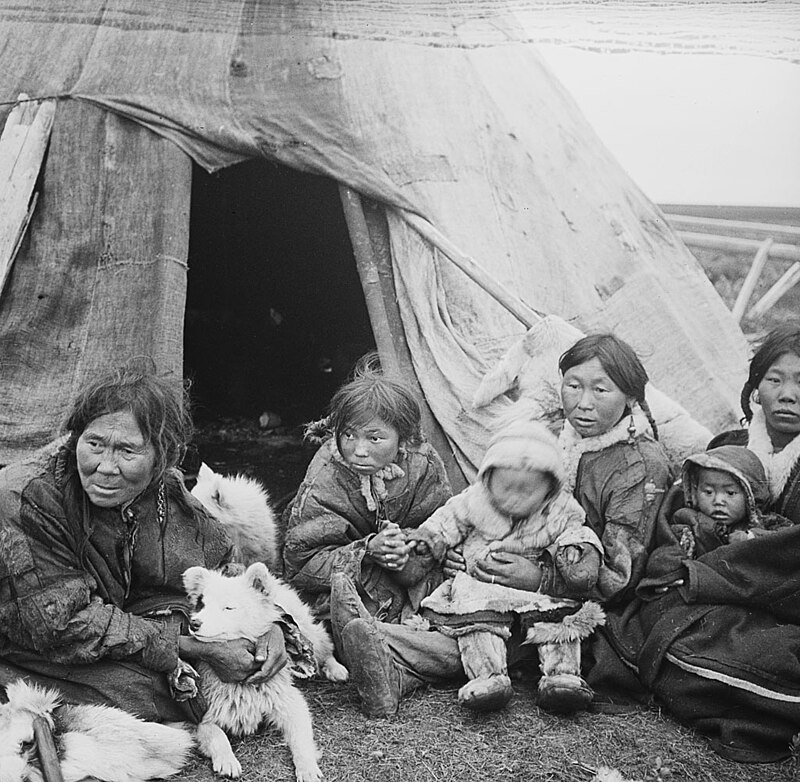
File:No-nb_bldsa_3f048_Nentser_(folkegruppe)_kvinner_og_barn_foran_inngangen_til_teltet_sitt._(6435260555).jpg · Wikimedia Commons · See Wikimedia Commons
Nenzen
Sign in to saveAlso known as Yurak, Yurak Samoyed, Nenec, Nenetsy, Nentse
nomadische und sibirische Ethnie, das hauptsächlich auf der Jamaler Halbinsel und dem Krasnoiarsk gelegen ist
The Nenets are an indigenous ethnic group native to the Russian Arctic, traditionally living in regions along the Arctic Ocean coast, with approximately 49,646 people recorded in the 2021 census. They matter as a distinct Samoyedic people with their own languages and cultures, recognized as indigenous to Russia, though their populations and traditional ways of life face challenges in the modern world.
AI-generated from the Wikipedia summary — may contain errors.
Key facts
- Ethnic group.group
- Nenets
- Ethnic group.image
- 250px
- Ethnic group.image_caption
- A Nenets family in the Brekhovskie Islands, 1913
- Ethnic group.population
- 50,000
- Ethnic group.region1
- Russia Arkhangelsk Oblast: ∟ Tyumen Oblast: ∟
- Ethnic group.pop1
- 49,646
- Ethnic group.region4
- Ukraine
- Ethnic group.pop4
- 217
- Ethnic group.langs
- Nenets, Russian
- Ethnic group.rels
- Shamanism, Animism, Russian Orthodoxy
- Ethnic group.related
- Enets, Nganasans, Selkups
- Ethnic group.native_name
- Ненэй, ненэче
via Wikipedia infobox
Wikidata facts
- Instance of
- ethnic group
- Subclass of
- ethnic groups in Europe
- Native language
- Nenets
- Religion
- Eastern Orthodoxy
- Country
- Saint Petersburg
- Population
- 44640
- Image
- Nenets people near Dudinka (Ru200008050079).jpg
Show 5 more facts
- Commons category
- Nenets people
- topic's main category
- Category:Nenets people
- described by source
- Encyclopædia Britannica 11th edition
- language used
- Nenets
- different from
- Enets
via Wikidata · CC0
Article · Deutsch
Die Nenzen (selbstbezeichnend nenzisch ненэй ненэче nenəj nenəče, russisch ненцы nenzy; historisch: Samojeden) sind ein indigenes Volk mit rund 41.000 Angehörigen im Nordosten des europäischen Teils Russlands und im Nordwesten Sibiriens. Sie werden nach der russischen Einteilung zu den „kleinen Völkern des Nordens“ gezählt und repräsentieren heute noch am deutlichsten das Kulturareal Sibirien. Die meisten Nenzen leben im Autonomen Kreis der Nenzen, im Autonomen Kreis der Jamal-Nenzen und im ehemaligen Autonomen Kreis Taimyr. Ihre Sprache ist das Nenzische. Eine etwa 1500 Menschen starke Gruppe der Waldnenzen lebt überwiegend im Nordosten des Autonomen Kreises der Chanten und Mansen.
Abstract from DBpedia / Wikipedia · CC BY-SA
Gallery (27)
Available in 61 languages
- Español
- Français
- Deutsch
- 中文
- 日本語
- Русский
- Português
- Italiano
- العربية
- Armenian
- azb
- Azerbaijani
- Bahasa Indonesia
- Basque
- be_x_old
- Belarusian
- Breton
- Bulgarian
Show 42 more
- Buriat
- Catalan
- Croatian
- Czech
- Danish
- Egyptian Arabic
- Esperanto
- Estonian
- Finnish
- Georgian
- Hungarian
- hyw
- Icelandic
- Kabardian
- Kazakh
- Latvian
- Lithuanian
- Mingrelian
- Mongolian
- Nederlands
- Northern Frisian
- Northern Sami
- Norwegian
- Norwegian Nynorsk
- Polski
- Romanian
- Serbian
- Serbian (Latin)
- Slovak
- Svenska
- Tatar
- Tiếng Việt
- Türkçe
- Ukrainian
- Urdu
- Uzbek
- Veps
- Welsh
- Yakut
- Zaza
- فارسی
- 한국어
via Wikidata sitelinks · CC0