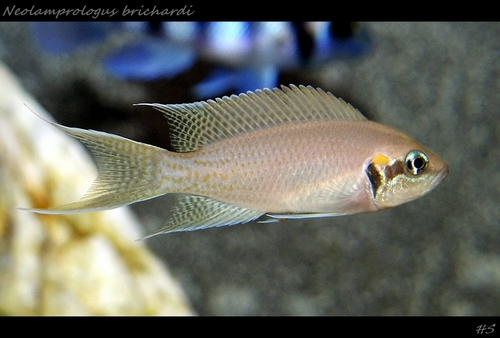
(c) Herwig Ster, some rights reserved (CC BY-NC-SA) · cc-by-nc-sa
Neolamprologus
Sign in to saveNeolamprologus is a genus of cichlids endemic to eastern Africa with all species occurring in Lake Tanganyika. It is the largest genus of cichlids in Lake Tanganyika and also the largest genus in the tribe Lamprologini, which includes Altolamprologus, Chalinochromis, Julidochromis, Lamprologus, Lepidiolamprologus, Telmatochromis and Variabilichromis. The latter is a monotypic genus doubtfully distinct from Neolamprologus.
Species
Daffodil Cichlid
GENUS
- KingdomAnimalia
- PhylumChordata
- ClassTeleostei
- OrderPerciformes
- FamilyCichlidae
via GBIF
Museum specimens
- Specimen records
- 21
- Family
- Cichlidae
- Collections
- CUMV, UMMZ, NRM
- Recorded in
- Tanzania, Zambia
Wikidata facts
- Instance of
- taxon
- Parent taxon
- Lamprologini
- Image
- Neolamprologus brichardi young.jpg
Show 4 more facts
- taxon rank
- genus
- taxon name
- Neolamprologus
- Commons category
- Neolamprologus
- topic's main category
- Category:Neolamprologus
Sources (1)
via Wikidata · CC0
~5 min read
Encyclopedic overview
2 sectionsContents
- Species
- Footnotes
Neolamprologus is a genus of cichlids endemic to eastern Africa with all species occurring in Lake Tanganyika. It is the largest genus of cichlids in Lake Tanganyika and also the largest genus in the tribe Lamprologini, which includes Altolamprologus, Chalinochromis, Julidochromis, Lamprologus, Lepidiolamprologus, Telmatochromis and Variabilichromis. The latter is a monotypic genus doubtfully distinct from Neolamprologus.
It is already known for some time that according to mtDNA sequence analysis, this genus is very probably polyphyletic. It is likely that it will be revised eventually; if Variabilichromis is split off, at least some of the more ancient lineages currently placed in Neolamprologus are probably worthy of separation also. However, the morphological similarity and numerous undescribed species do not make analyses easier, and as with many cichlids, recent speciation and abundant hybridization seriously confound molecular studies to the point where single-gene studies or those using only mtDNA or nDNA are essentially worthless for resolving Lamprologini phylogeny.
Excerpted from Wikipedia’s “Neolamprologus” article, available under the CC BY-SA 4.0 licence.