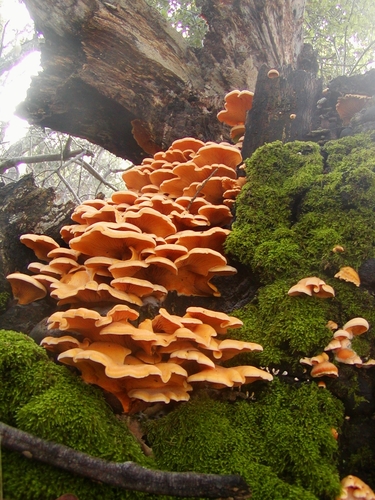
(c) Ken-ichi Ueda, some rights reserved (CC BY-NC-SA) · cc-by-nc-sa
Nidula
Sign in to saveNidula is a genus of fungi in the family Agaricaceae. Their fruit bodies resemble tiny egg-filled birds' nests, from which they derive their common name "bird's nest fungi". Originally described in 1902, the genus differs from the related genera Cyathus and Crucibulum by the absence of a cord that attaches the eggs to the inside of the fruit body. The life cycle of this genus allows it to reproduce both sexually, with meiosis, and asexually via spores.
Species
Stinking Orange Oyster
GENUS
- KingdomFungi
- PhylumBasidiomycota
- ClassAgaricomycetes
- OrderAgaricales
- FamilyAgaricaceae
via GBIF
Museum specimens
- Specimen records
- 94
- With media
- 52
- Family
- Agaricaceae
- Collections
- UT, MEL, TENN-F, OSC, MICH, UC
- Recorded in
- United States, Australia, Chile, Mexico, Canada, Sri Lanka
Wikidata facts
- Instance of
- taxon
- Parent taxon
- Nidulariaceae
- Image
- Nidula candida.jpg
Show 5 more facts
- taxon rank
- genus
- Commons category
- Nidula
- taxon name
- Nidula
- taxonomic type
- Nidula candida
- taxon author citation
- V.S.White
Sources (2)
via Wikidata · CC0
~6 min read
Encyclopedic overview
8 sectionsContents
- Taxonomy
- Description
- Life cycle
- Species
- Habitat and distribution
- Bioactive compounds
- References
- Cited works
Nidula is a genus of fungi in the family Agaricaceae. Their fruit bodies resemble tiny egg-filled birds' nests, from which they derive their common name "bird's nest fungi". Originally described in 1902, the genus differs from the related genera Cyathus and Crucibulum by the absence of a cord that attaches the eggs to the inside of the fruit body. The life cycle of this genus allows it to reproduce both sexually, with meiosis, and asexually via spores.
Species in this genus produce a number of bioactive compounds, including 4-(p-hydroxyphenyl)-2-butanone, a major component of raspberry flavor and insect attractor used in pesticides.
Excerpted from Wikipedia’s “Nidula” article, available under the CC BY-SA 4.0 licence.