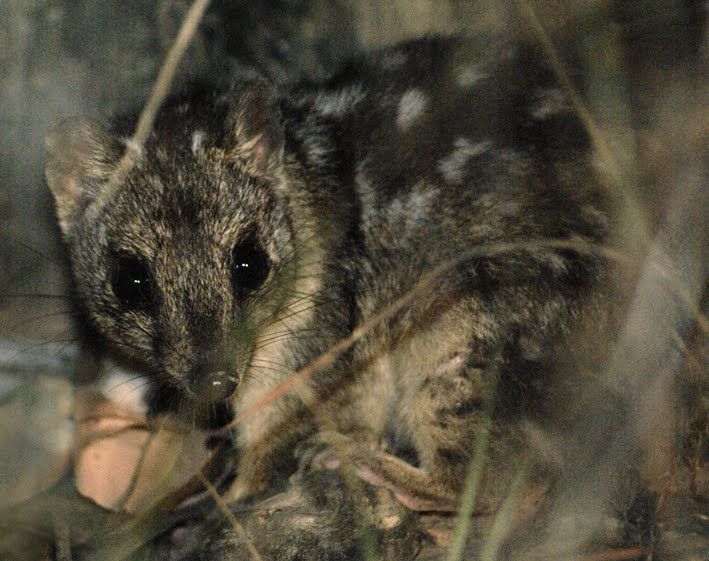
Encyclopedia of Life · EOL (see source)
Species
EndangeredMaximum longevity: 5.9 years (captivity) Observations: This species can exhibit semelparity. In tropical savannah, males die off after mating and exhibit weight loss, fur loss, parasite infestation, increased testosterone levels and anaemia, though not increased corticosteroid levels (Oakwood et al. 2001). One captive specimen lived 5.9 years (Richard Weigl 2005).
via IUCN
Wikidata facts
Show 10 more facts
- taxon rank
- species
- IUCN conservation status
- Endangered status
- Commons category
- Dasyurus hallucatus
- taxon name
- Dasyurus hallucatus
- Commons gallery
- Dasyurus hallucatus
- taxon common name
- dwergbuidelmarter
- endemic to
- Australia
- longest observed lifespan
- 5.9
- taxon author citation
- Gould, 1842
- short name
- D. hallucatus
Sources (2)
via Wikidata · CC0
~10 min read
Encyclopedic overview
The northern quoll (Dasyurus hallucatus), also known as the northern native cat, the North Australian native cat or the satanellus is a carnivorous marsupial native to Australia.
Taxonomy
Excerpted from Wikipedia’s “Northern quoll” article, available under the CC BY-SA 4.0 licence.