Oberonia · Kew POWO · Kew Plants of the World Online
Oberonia
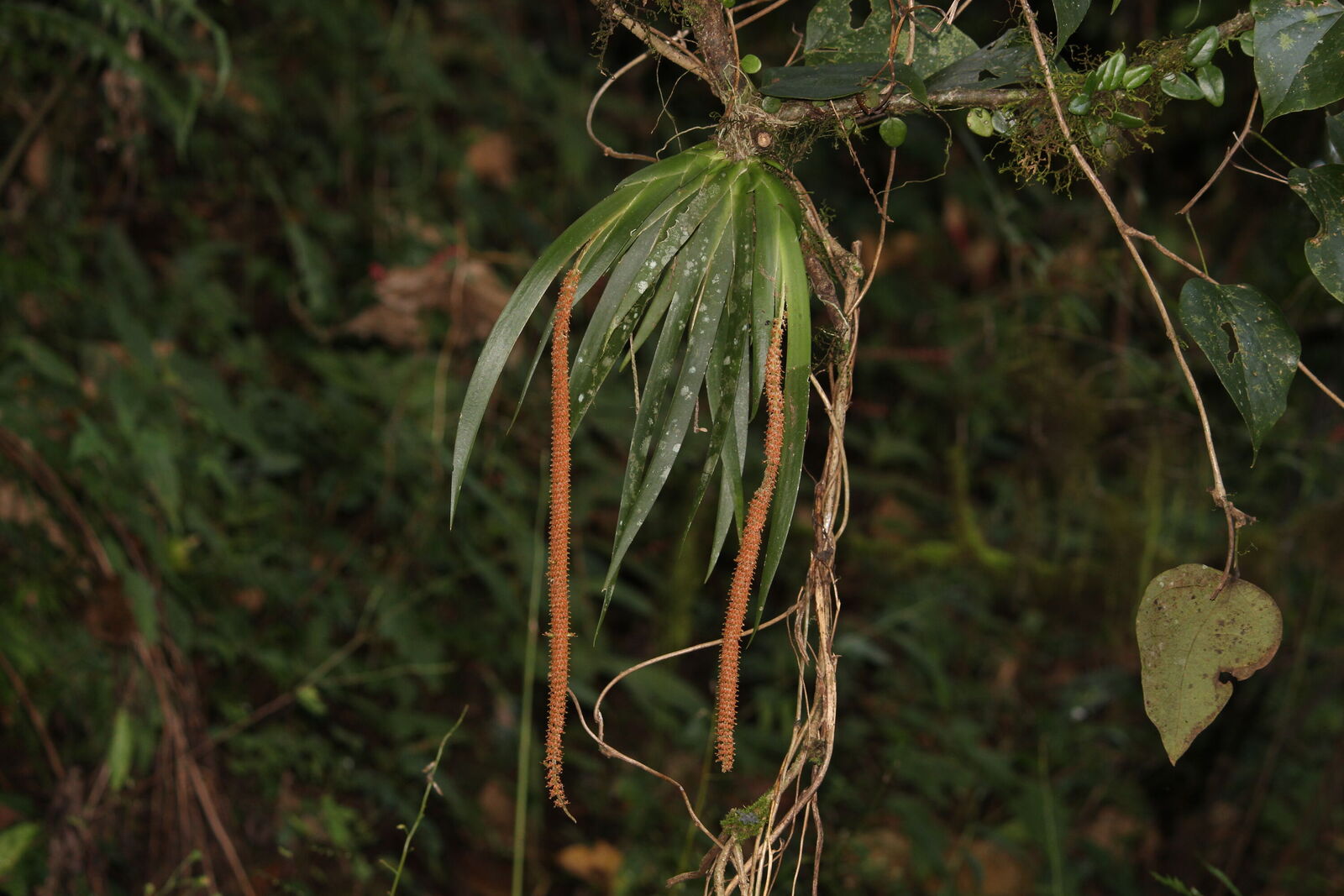
Sign in to saveOberonia, commonly known as fairy orchids, is a genus of flowering plants in the family Orchidaceae. Orchids in this genus are epiphytic or lithophytic plants with the leaves arranged fan-like, overlapping at the base and spreading near the tips. Large numbers of tiny, short-lived, cup-shaped, non-resupinate flowers are arranged on an arching flowering stem that emerges from the base of the uppermost leaf. There are about 270 species occurring from tropical and southern Africa to the Pacific.
Species
via · Kew POWO
Museum specimens
- Specimen records
- 787
- With media
- 554
- Family
- Orchidaceae
- Collections
- CAS, BRIT, RSA, SEL, MICH, POM
- Recorded in
- China, Philippines, Papua New Guinea, India, Pakistan, Indonesia, Sri Lanka, Malaysia
Wikidata facts
- Instance of
- taxon
- Parent taxon
- Malaxidinae
- Named after
- Oberon
- Image
- Oberonia mucronata (D.Don) Ormerod & Seidenf. in G.Seidenfaden, Contr. Orchid Fl. Thailand 13 20 (1997) (48077316392).jpg
Show 7 more facts
- taxon name
- Oberonia
- taxon rank
- genus
- topic's main category
- Category:Oberonia
- Commons category
- Oberonia
- Commons gallery
- Oberonia
- taxon common name
- 鸢尾兰属
Sources (1)
via Wikidata · CC0
~2 min read
Encyclopedic overview
6 sectionsContents
- Description
- Taxonomy and naming
- Distribution
- See also
- References
- External links
Oberonia, commonly known as fairy orchids, is a genus of flowering plants in the family Orchidaceae. Orchids in this genus are epiphytic or lithophytic plants with the leaves arranged fan-like, overlapping at the base and spreading near the tips. Large numbers of tiny, short-lived, cup-shaped, non-resupinate flowers are arranged on an arching flowering stem that emerges from the base of the uppermost leaf. There are about 270 species occurring from tropical and southern Africa to the Pacific.
==Description== Orchids in the genus Oberonia are epiphytic or lithophytic, sympodial herbs with the leaves in an unusual fan-like arrangement, in two overlapping rows near the base before spreading. A large number of tiny, non-resupinate, short-lived flowers are arranged in whorls or spirals along an arching flowering stem. The sepals and petals are all more or less similar to and free from each other although the petals are narrower than the sepals. The labellum is rigidly fixed to the base of the column and usually has three lobes.
Excerpted from Wikipedia’s “Oberonia” article, available under the CC BY-SA 4.0 licence.
Gallery (2)
Available in 19 languages
- Español
- Français
- 中文
- Português
- Bahasa Indonesia
- Cebuano
- Czech
- Egyptian Arabic
- Komi
- Komi-Permyak
- Latin
- Nederlands
- Polski
- Svenska
- Tiếng Việt
- Udmurt
- Waray
- Western Mari
via Wikidata sitelinks · CC0