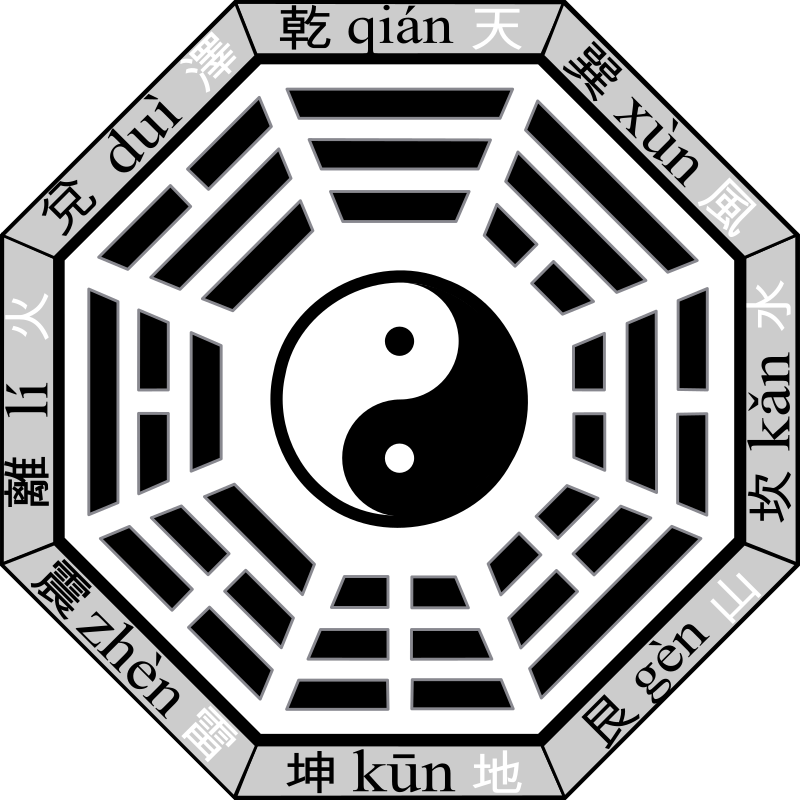
File:Bagua-name-earlier.svg · Wikimedia Commons · See Wikimedia Commons
octal
Sign in to saveAlso known as oct, base 8, base 8 numbering, base-8, base eight
Octal is a numeral system for representing a numeric value as base 8. Generally, an octal digit is represented as "0" to "7" with the same value as for decimal but with each place a power of 8. For example:
Octal is a number system that uses eight digits (0 through 7) instead of the ten digits (0 through 9) we normally use, with each position representing a power of 8 rather than a power of 10. It has been useful in computing because it provides a compact way to represent binary data, since each octal digit corresponds neatly to three binary digits.
AI-generated from the Wikipedia summary — may contain errors.
Wikidata facts
- Instance of
- positional numeral system
- Followed by
- nonary
- Follows
- septenary
Show 2 more facts
- radix
- 8
- maintained by WikiProject
- WikiProject Mathematics
Sources (1)
via Wikidata · CC0
~22 min read
Encyclopedic overview
24 sectionsContents
- Multiplication table
- Usage
- In China
- By Native Americans
- By Europeans
- {{anchor|\nnn}}In computers
- In aviation
- Conversion between bases
- Decimal to octal conversion
- Method of successive Euclidean division by 8
- Method of successive multiplication by 8
- Method of successive duplication
- Octal to decimal conversion
- Method of successive duplication
- Octal to binary conversion
- Binary to octal conversion
- Octal to hexadecimal conversion
- Hexadecimal to octal conversion
- Real numbers
- Fractions
- Irrational numbers
- See also
- References
- External links
Octal is a numeral system for representing a numeric value as base 8. Generally, an octal digit is represented as "0" to "7" with the same value as for decimal but with each place a power of 8. For example: \mathbf{112}_8 = \mathbf{1} \times 8^2 + \mathbf{1} \times 8^1 + \mathbf{2} \times 8^0
In decimal, each place is a power of ten. For example: \mathbf{74}_{10} = \mathbf{7} \times 10^1 + \mathbf{4} \times 10^0
Excerpted from Wikipedia’s “octal” article, available under the CC BY-SA 4.0 licence.
Gallery (3)
Available in 67 languages
- Español
- Français
- Deutsch
- 中文
- 日本語
- Русский
- Português
- Italiano
- العربية
- हिन्दी
- Albanian
- Armenian
- Azerbaijani
- Bahasa Indonesia
- Bangla
- Basque
- Bosnian
- Bulgarian
Show 48 more
- Catalan
- Croatian
- Czech
- Danish
- Esperanto
- Estonian
- Finnish
- Galician
- Georgian
- Greek
- Haitian Creole
- Hebrew
- Hungarian
- Icelandic
- Ido
- Javanese
- Latin
- Latvian
- Lithuanian
- Luxembourgish
- Macedonian
- Mirandese
- Nederlands
- Northern Sotho
- Norwegian
- Norwegian Nynorsk
- Polski
- Romanian
- Serbian
- Serbian (Latin)
- simple
- Sindhi
- skr
- Slovak
- Svenska
- Tamil
- Tiếng Việt
- Türkçe
- Ukrainian
- Urdu
- Uzbek
- Wu Chinese
- zh_classical
- zh_min_nan
- zh_yue
- فارسی
- ไทย
- 한국어
via Wikidata sitelinks · CC0