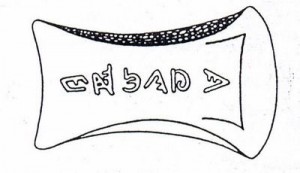
File:Campagna-bronz-fokostarto.jpg · Wikimedia Commons · See Wikimedia Commons
Old Hungarian
Sign in to saveAlso known as Old Hungarian alphabet, Hungarian Runic, Hung, Rovash
alphabetic writing system used by the Hungarians from the Middle Ages
Key facts
- Script type
- Alphabet
- Period
- Attested from 10th century. Marginal use into the 17th century, revived in the 20th.
- Direction
- Right-to-left script
- Languages
- Hungarian
- Parent systems
- Egyptian hieroglyphs Proto-Sinaitic Phoenician alphabet Aramaic alphabet Syriac alphabet Sogdian alphabet Old Turkic script Old Hungarian script
- Iso 15924
- Hung (176) , Old Hungarian (Hungarian Runic)
- Unicode alias
- Old Hungarian
- Unicode range
- U+10C80–U+10CFF
via Wikipedia infobox
Wikidata facts
- Based on
- Old Turkic
- Image
- 2013.09.09 Balaton (3).JPG
- Has use
- Hungarian
Show 7 more facts
- inception
- 1200-00-00
- Commons category
- Old Hungarian script
- script directionality
- right-to-left
- Unicode range
- U+10C80-10CFF
- name
- Old Hungarian
- native label
- 𐲥𐳋𐳓𐳉𐳗-𐲘𐳀𐳎𐳀𐳢 𐲢𐳛𐳮𐳀𐳤
- topic's main category
- Category:Old Hungarian script
via Wikidata · CC0
~20 min read
Encyclopedic overview
Axe socket found near Campagna
The Old Hungarian script, or Hungarian runes (Hungarian: Székely-magyar rovás, 'székely-magyar runiform', or rovásírás), is an alphabetic writing system used for writing the Hungarian language. Modern Hungarian is written using the Latin-based Hungarian alphabet. The term "old" refers to the historical priority of the script compared with the Latin-based one. The Old Hungarian script is a child system of the Old Turkic script.
Excerpted from Wikipedia’s “Old Hungarian” article, available under the CC BY-SA 4.0 licence.