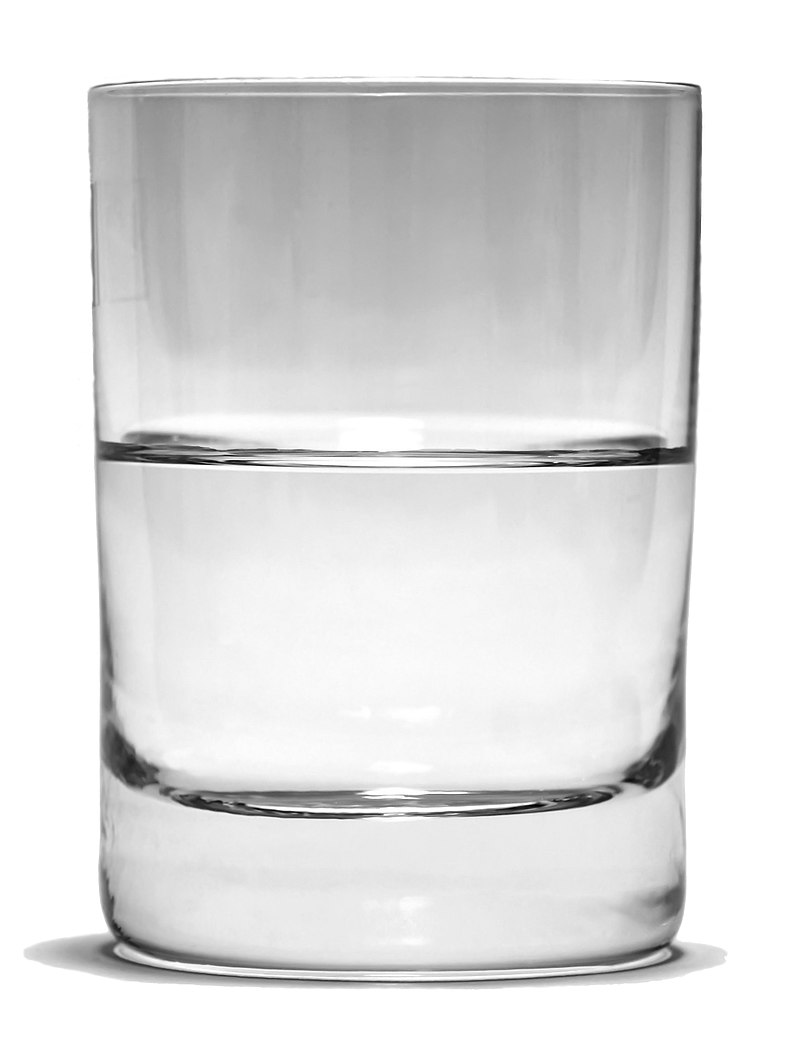
File:Glass_Half_Full_bw_1.JPG · Wikimedia Commons · See Wikimedia Commons
optimism
Sign in to saveAlso known as optimistic
thumb|right|Is the glass half empty or half full?|Half a glass of water, illustration of two different mental attitudes, optimism (half full) and [[pessimism (half empty)]]
Optimism is the tendency to expect positive outcomes and to see situations in a favorable light, often illustrated by viewing a glass as "half full" rather than "half empty." It matters because how optimistic or pessimistic people are can shape their attitudes, decisions, and overall outlook on life.
AI-generated from the Wikipedia summary — may contain errors.
Research
14,427 papers- Urban optimism.Nature ecology & evolution · 2019DOI: 10.1038/s41559-019-0843-0
- Is Optimism a Protective Factor for Cardiovascular Disease?ReviewCurrent cardiology reports · 2021Amonoo HL, Celano CM, Sadlonova M et al.DOI: 10.1007/s11886-021-01590-4
- Optimism, pessimism, and physical health among youth: a scoping review.Journal of pediatric psychology · 2024Fairbank EJ, Borenstein-Laurie J, Alberts NM et al.DOI: 10.1093/jpepsy/jsae045
- Optimism and the Experience of Pain: A Systematic Review.Behavioral medicine (Washington, D.C.) · 2019Basten-Günther J, Peters M, Lautenbacher SDOI: 10.1080/08964289.2018.1517242
- Hope, Optimism, and Clinical Pain: A Meta-Analysis.Annals of behavioral medicine : a publication of the Society of Behavioral Medicine · 2021Shanahan ML, Fischer IC, Hirsh AT et al.DOI: 10.1093/abm/kaab001
- Optimism and pessimism: a concept for behavioural ecology.ReviewBiological reviews of the Cambridge Philosophical Society · 2025Siewert V, Kaiser S, Sachser N et al.DOI: 10.1111/brv.13178
- Optimism during pregnancy and obstetrical outcomes: A systematic review.European journal of obstetrics, gynecology, and reproductive biology · 2020Giangiordano I, Sahani H, Di Mascio D et al.DOI: 10.1016/j.ejogrb.2020.03.029
- What is unrealistic optimism?ReviewConsciousness and cognition · 2017Jefferson A, Bortolotti L, Kuzmanovic BDOI: 10.1016/j.concog.2016.10.005
via PubMed
~19 min read
Encyclopedic overview
15 sectionsContents
- Psychological optimism
- Dispositional optimism
- Explanatory style
- Origins
- Assessment
- Life Orientation Test
- Attributional Style Questionnaire
- Associations with health
- Optimism and well-being
- Translating association into modifiability
- Philosophical optimism
- Optimalism
- See also
- References
- Further reading
thumb|right|Is the glass half empty or half full?|Half a glass of water, illustration of two different mental attitudes, optimism (half full) and [[pessimism (half empty)]]
Optimism is the attitude or mindset of expecting events to lead to particularly positive, favorable, desirable, and hopeful outcomes. A common idiom used to illustrate optimism versus pessimism is a glass filled with water to the halfway point: an optimist is said to see the glass as half full, while a pessimist sees the glass as half empty. In ordinary English, optimism may be synonymous with idealism—often, unrealistic or foolish optimism in particular.
Excerpted from Wikipedia’s “optimism” article, available under the CC BY-SA 4.0 licence.
Gallery (6)
Available in 70 languages
- Español
- Français
- Deutsch
- 中文
- 日本語
- Русский
- Português
- Italiano
- العربية
- हिन्दी
- Afrikaans
- Albanian
- Armenian
- Asturian
- Azerbaijani
- Bahasa Indonesia
- Bangla
- Basque
Show 51 more
- Belarusian
- Bulgarian
- Catalan
- Central Dusun
- Central Kurdish
- Croatian
- Czech
- Danish
- Esperanto
- Estonian
- Filipino
- Finnish
- Galician
- Georgian
- Greek
- Hebrew
- Hungarian
- Ido
- Kannada
- Kazakh
- Latin
- Latvian
- Lingua Franca Nova
- Macedonian
- Malay
- Mingrelian
- Nederlands
- Norwegian
- Polski
- Punjabi
- Romanian
- Rusyn
- Serbian
- Serbian (Latin)
- simple
- Sindhi
- Slovak
- Svenska
- Tajik
- Tamil
- Tiếng Việt
- Türkçe
- Ukrainian
- Urdu
- Uzbek
- Waray
- Wu Chinese
- zh_yue
- فارسی
- ไทย
- 한국어
via Wikidata sitelinks · CC0