File:Sudan_Oribi_(Ourebia_montana)_male_(18172324646).jpg · Wikimedia Commons · See Wikimedia Commons
oribi
Sign in to saveAlso known as Ourebia ourebi
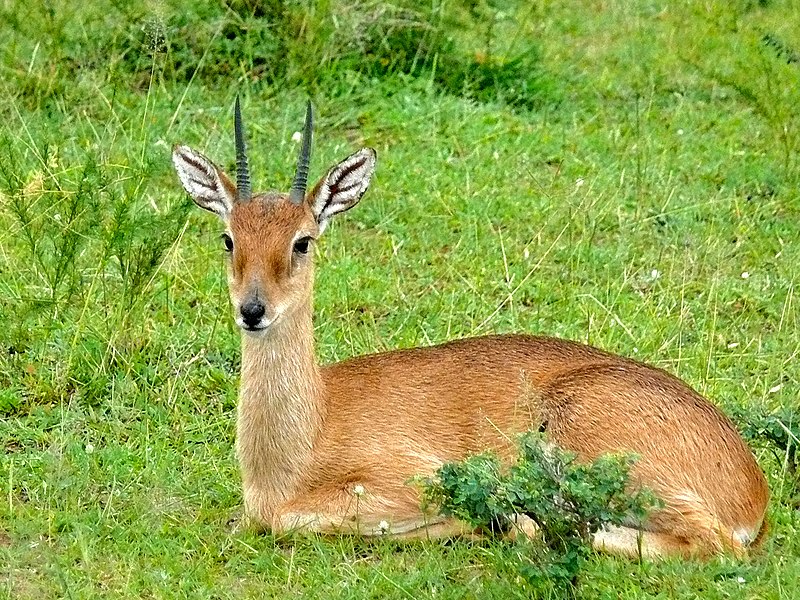
The oribi (; Ourebia ourebi) is a small antelope found in eastern, southern and western Africa. The sole member of its genus, it was described by the German zoologist Eberhard August Wilhelm von Zimmermann in 1783. While this is the only member in the genus Ourebia, eight subspecies are identified. The oribi reaches nearly at the shoulder and weighs . It possesses a slightly raised back, and long neck and limbs. The glossy, yellowish to rufous brown coat contrasts with the white chin, throat, underparts and rump. Only males possess horns; the thin, straight horns, long, are smooth at the tips
OverviewAI-generated
The oribi, scientifically named *Ourebia ourebi*, is a species of mammal belonging to the genus *Ourebia*. It is also referred to by the common names Ourébi, Southern Oribi, and Bleichböckchen. The species was described in the *Encyclopædia Britannica* 11th edition.
In captivity, the maximum longevity for this animal is 15.9 years, with a gestation period of 6.75 months. The IUCN Red List assessed the oribi as having a Least Concern conservation status in 2016.
Synthesized by Vinony from 19 facts across 5 sources: Wikidata, iNaturalist, IUCN Red List, Encyclopedia of Life, Vinony graph. Generated from structured data (not the Wikipedia text) and checked against those facts — may still contain errors.
Species
Least ConcernOribi
species
Maximum longevity: 15.9 years (captivity)
via IUCN
Wikidata facts
Show 8 more facts
- taxon rank
- species
- IUCN conservation status
- Least Concern
- taxon name
- Ourebia ourebi
- Commons category
- Ourebia ourebi
- taxon common name
- oribí
- gestation period
- 6.75
- described by source
- Encyclopædia Britannica 11th edition
- short name
- O. ourebi
Sources (2)
via Wikidata · CC0
~10 min read
Encyclopedic overview
9 sectionsContents
- Taxonomy
- Description
- Ecology and behaviour
- Diet
- Reproduction
- Distribution and habitat
- Threats and conservation
- References
- External links
The oribi (; Ourebia ourebi) is a small antelope found in eastern, southern and western Africa. The sole member of its genus, it was described by the German zoologist Eberhard August Wilhelm von Zimmermann in 1783. While this is the only member in the genus Ourebia, eight subspecies are identified. The oribi reaches nearly at the shoulder and weighs . It possesses a slightly raised back, and long neck and limbs. The glossy, yellowish to rufous brown coat contrasts with the white chin, throat, underparts and rump. Only males possess horns; the thin, straight horns, long, are smooth at the tips and ringed at the base.
Typically diurnal, the oribi is active mainly during the day. Small herds of up to four members are common; males defend their group's territory, large. It is primarily a grazer, and prefers fresh grasses but also browses occasionally. A seasonal breeder, the time when mating occurs varies geographically. Unlike all other small antelopes, oribi can exhibit three types of mating systems, depending on the habitat – polyandry, polygyny and polygynandry. Gestation lasts for six to seven months, following which a single calf is born; births peak from November to December in southern Africa. Weaning takes place at four to five months.
Excerpted from Wikipedia’s “oribi” article, available under the CC BY-SA 4.0 licence.