File:Tajfuto.jpg · Wikimedia Commons · See Wikimedia Commons
I don't have sufficient context to write an accurate overview. The provided information only contains a reference to an IOF (International Orienteering Federation) pictogram, which doesn't explain what orienteering is, how it's done, or why it matters. I would need additional context about the sport's definition, rules, or significance to provide an accurate, factual overview.
AI-generated from the Wikipedia summary — may contain errors.
Key facts
- Sport.name
- Orienteering
- Sport.image
- Tajfuto.jpg
- Sport.alt
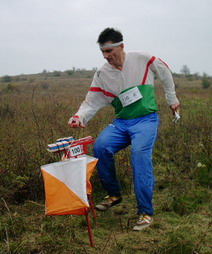
- Man holding a map at a control point
- Sport.imagesize
- 220px
- Sport.caption
- An orienteer punching a control point
- Sport.union
- International Orienteering Federation (IOF)
- Sport.firstlabel
- First public contest
- Sport.first
- 1897, United Kingdoms of Sweden and Norway
- Sport.region
- Worldwide
- Sport.clubs
- 78 national federations
- Sport.contact
- No
- Sport.team
- Individuals or teams of varying size
- Sport.mgender
- Mixed participation, with most competitions held in separate divisions
- Sport.type
- Outdoor
- Sport.equipment
- Compass, orienteering map
- Sport.olympic
- No
- Sport.world
- 1966
- Sport.IWGA
- 1995
via Wikipedia infobox
Wikidata facts
- Instance of
- type of sport
- Image
- World Orienteering Championships 2010 - relay 11.jpg
Show 7 more facts
- topic has template
- Template:Orienteering
- OpenStreetMap tag
- sport=orienteering
- Commons category
- Orienteering
- topic's main category
- Category:Orienteering
- uses
- orienteering map
- Unicode character
- 🧭
- on focus list of Wikimedia project
- Wikipedia:Vital articles/Level/4
Sources (3)
via Wikidata · CC0
Article · Français
La course d’orientation est un sport de pleine nature qui se pratique avec une carte ou document spécifique à normes codifiées et une boussole, et un système de gestion adaptée (chronométrique électronique (puce électronique au doigt) pour les courses - obligatoire pour celles à tutelle FFCO) et qui se déroule en forêt (individuelle ou relais pour la FFCO) ou en ville (sprint et relais pour la Fédération Française de Course d'Orientation (FFCO)) de jour ou de nuit ou les deux. La forme traditionnelle est une course à pied de type tout terrain mais d’autres formes de course d’orientation sont nées au fil des années, notamment à VTT et à ski, à raquettes, à cheval, en équipe, à l'aide de matériel de transmission voire en plongée. Une personne pratiquant cette activité est appelée orienteur ou orienteuse. Ce sport est une activité libre et n'est géré que pour les compétitions attribuant des titres officiels par l'International Orienteering Federation et, en France, par la FFCO (fédération française de course d'orientation).
Abstract from DBpedia / Wikipedia · CC BY-SA