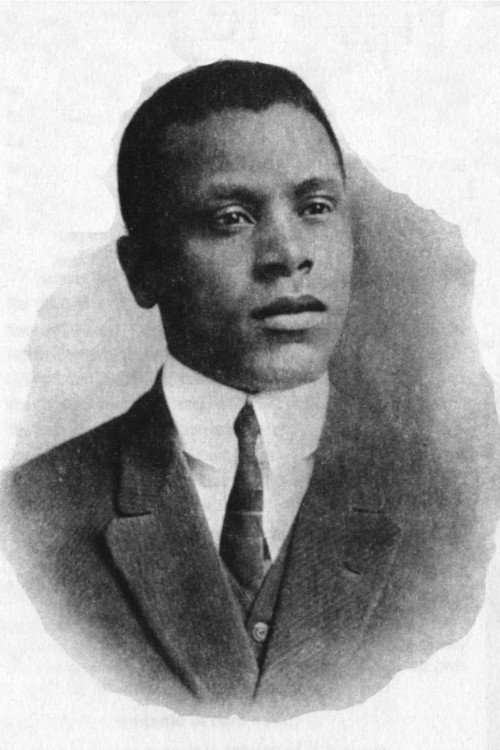
Profile via TMDB · Courtesy of TMDB
Oscar Micheaux
Sign in to saveAlso known as Oscar Devereaux Micheaux, Oscar Michaux
American writer and director (1884-1951)
OverviewAI-generated
Oscar Micheaux was a filmmaker born on January 2, 1884, and died on March 25, 1951. His movies gave black America something they had never seen — their loves and lives on the big screen. He is recognized in the Hollywood Walk Of Fame collection.
Synthesized by Vinony from 8 facts across 3 sources: Wikidata, Firecrawl, Vinony collections. Generated from structured data (not the Wikipedia text) and checked against those facts — may still contain errors.
Film & TV
Metropolis, Illinois, USA
Oscar Devereaux Micheaux (January 2, 1884 – March 25, 1951) was an American author, film director and independent producer of more than 44 films. Although the short-lived Micheaux Book & Film Company produced some films, he is regarded as the first major African-American feature filmmaker, the most successful African-American filmmaker of the first half of the twentieth century and the most…
Known for
- Hollywood Black — Self (archive footage)2024
- Oscar Micheaux: The Superhero of Black Filmmaking — Archival footage2021
- Murder In Harlem — Second detective (uncredited)1935
- Ten Minutes to Live — Officer 11932
- Screen Snapshots (Series 1, No. 7) — self1920
via TMDB
Described at

Oscar Micheaux, Intrepid Creator of Films on Race - The New York Times
Micheaux’s movies gave black America something they had never seen — their loves and lives on the big screen.
nytimes.com →Nina Mae McKinney in “Hallelujah!” produced by Metro-Goldwyn-Mayer studios in 1929. Oscar Micheaux directing a scene as seen in “Pioneers of African American Cinema" by Kino International. Martin Sostre in conversation with the warden in "Frame-Up: The Imprisonment of Martin Sostre" produced by Pacific Street Films. Gladys Bentley performing on “You Bet Your Life" with Groucho Marx produced by NBC. Dondi presenting his work from “Style Wars” courtesy of Public Art Films, Inc. These remarkable black men and women never received obituaries in The New York Times — until now. We’re adding their stories to our project about prominent people whose deaths were not reported by the newspaper. Almost as soon as you settle in to watch the 1939 melodrama “Lying Lips,” you can figure out who is the victim, who is the villain and who is the hero. And even if you know how it all will end, you want to watch anyway. Since 1851, The New York Times has published thousands of obituaries, capturing the lives and legacies of people who have influenced the world in which we live. We started the series last year by focusing on women like Sylvia Plath , the postwar poet; Emma Gatewood , the hiking grandmother who captivated a nation; and Ana Mendieta , the Cuban artist whose work was bold, raw and sometimes violent. We added to that collection each week. Now, this special edition of Overlooked highlights a prominent group of black men and women whose lives we did not examine at the time of their deaths. Many of them were a generation removed from slavery. They often attempted to break the same barriers again and again. Sometimes they made myth out of a painful history, misrepresenting their past to gain a better footing in their future. Some managed to achieve success in their lifetimes, only to die penniless, buried in unmarked graves. But all were pioneers, shaping our world and making paths for future generations. We hope you’ll spread the word about Overlooked — and tell us about others we’ve missed. Read about the project’s first year , and use this form to nominate a candidate for future Overlooked obits. In her top hat and tuxedo, Gladys Bentley belted out gender-bending tunes, becoming ’20s-era Harlem royalty. Collection of the Smithsonian National Museum of African American History and Culture W HEN IT COMES to loosening social mores, progress that isn’t made in private has often taken place onstage. That was certainly the case at the Clam House, a Prohibition-era speakeasy in Harlem, where Gladys Bentley, one of the boldest performers of her era, held court. Scott Joplin circa 1904. He would come to be revered as a ragtime giant and an in-demand performer. Michael Ochs Archives, via Getty Images In the post-Civil War era, the cruel breath of slavery and the aborted plan of Reconstruction still hung over the American South. But in the Joplin home, banjo and fiddle music filled the family’s evenings, giving the children — Scott in particular — a sense of music’s power to move. Margaret Garner, who was born as an enslaved girl, almost certainly did not plan to kill her child when she grew up and became an enslaved mother. But she also couldn’t yet know that the physical, emotional and psychological violence of slavery, relentless and horrific, would one day conspire to force her maternal judgment in a moment already fraught with grave imperative. The cyclist Major Taylor in 1898. He traveled the globe, racing as far away as Australia, and became known as the “Black Cyclone.” Science History Images/Alamy More than 100 years ago, one of the most popular spectator sports in the world was bicycle racing, and one of the most popular racers was a squat, strapping man with bulging thighs named Major Taylor. The fashion designer Zelda Wynn Valdes, who could fit a dress to a body of any size. Dance Theater of Harlem More than a half century before a “curvy” model made the cover of the Sports Illustrated swimsuit issue, and before hash
Excerpt from a page describing this subject · 18,392 chars · not written by Vinony
Wikidata facts
- Instance of
- human
- Given name
- Oscar
- Gender
- male
- Citizenship
- United States
- Place of birth
- Metropolis
- Place of death
- Charlotte
- Occupation
- film producer
- Languages spoken
- English language
- Native language
- English language
- Image
- Oscar Micheaux.jpg
Show 9 more facts
- date of birth
- 1884-01-01
- related category
- Category:Films directed by Oscar Micheaux
- date of death
- 1951-01-01
- Commons category
- Oscar Micheaux
- ethnic group
- African Americans
- Commons Creator page
- Oscar Micheaux
- writing language
- English language
Sources (7)
via Wikidata · CC0