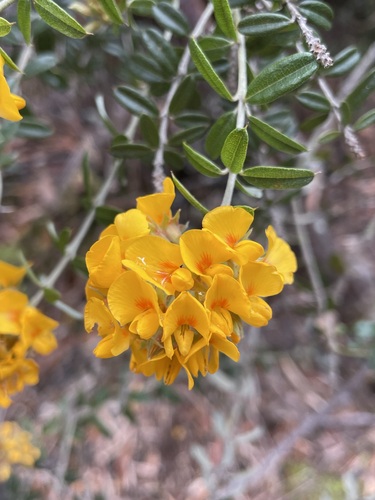
(c) Matt Berger, some rights reserved (CC BY), uploaded by Matt Berger · cc-by
Oxylobium
Sign in to saveOxylobium, commonly known as shaggy-peas, is a genus of flowering plants in the family Fabaceae, all of which are endemic to Australia. Plants in the genus Oxylobium are prostrate or erect shrubs with simple leaves with the edges turned down, flowers in racemes, clusters or corymbs with 5 sepals, the standard petal longer than the wings and keel, and inflated oval or oblong pods.
Species
golden shaggy-pea
GENUS
- KingdomPlantae
- PhylumTracheophyta
- ClassMagnoliopsida
- OrderFabales
- FamilyFabaceae
via GBIF · Kew POWO
Museum specimens
- Specimen records
- 200
- With media
- 68
- Family
- Fabaceae
- Collections
- GH, MEL
- Recorded in
- United States, Australia
Wikidata facts
- Instance of
- taxon
- Parent taxon
- Mirbelieae
- Image
- Oxylobium ellipticum.jpg
Show 6 more facts
- taxon name
- Oxylobium
- taxon rank
- genus
- topic's main category
- Category:Oxylobium
- taxon common name
- Shaggy Pea
- Commons category
- Oxylobium
Sources (1)
via Wikidata · CC0
~2 min read
Encyclopedic overview
4 sectionsContents
- Description
- Taxonomy
- Species
- References
Oxylobium, commonly known as shaggy-peas, is a genus of flowering plants in the family Fabaceae, all of which are endemic to Australia. Plants in the genus Oxylobium are prostrate or erect shrubs with simple leaves with the edges turned down, flowers in racemes, clusters or corymbs with 5 sepals, the standard petal longer than the wings and keel, and inflated oval or oblong pods.
==Description== Plants in the genus Oxylobium are prostrate or erect shrubs with usually hairy young stems. The leaves are simple, usually arranged in opposite pairs or whorled and often warty, the edges rolled down and sometimes with stipules at the base of the petiole. The flowers are arranged in racemes, clusters or corymb with bracts and bracteoles that often fall off as the flowers open. There are 5 sepals with upper lobes broader and higher up, the standard petal broad and more or less notched and longer than the wings and the keel. The stamens are free from each other and the pods are oval or oblong.
Excerpted from Wikipedia’s “Oxylobium” article, available under the CC BY-SA 4.0 licence.
Gallery (3)
Available in 10 languages
via Wikidata sitelinks · CC0