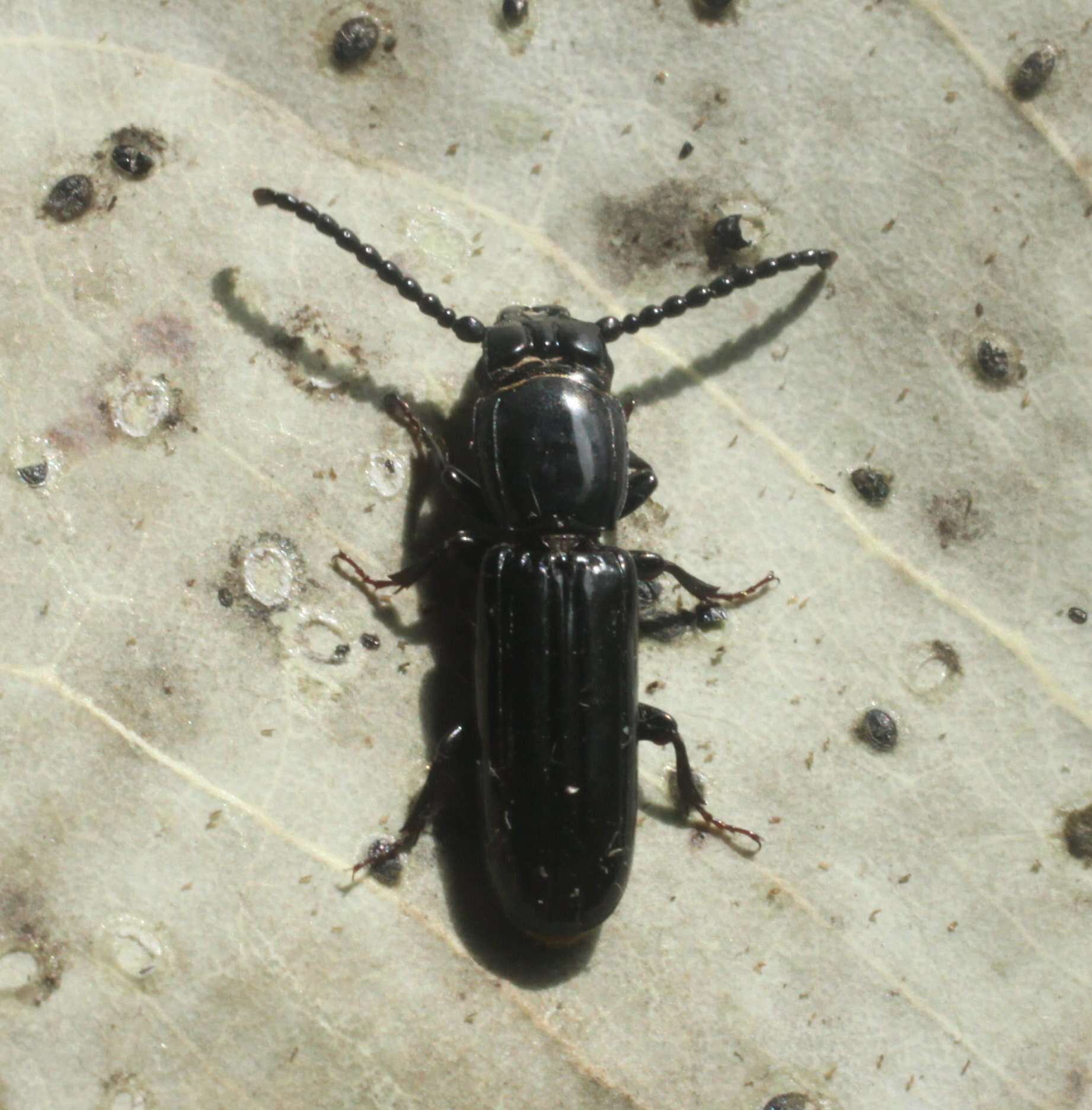
Encyclopedia of Life · EOL (see source)
Passandridae
Sign in to savePassandridae, the "parasitic flat bark beetles," are a family of beetles notable for being one of the very few beetle families with larvae that are, as far as known, exclusively ectoparasitic on the immature stages of other beetles and Hymenoptera.
Species
FAMILY
- KingdomAnimalia
- PhylumArthropoda
- ClassInsecta
- OrderColeoptera
- FamilyPassandridae
Passandridae (лат.) — семейство насекомых из подотряда разноядных жуков. Известно 9 родов и ~100 видов, распространённых повсеместно, за исключением западной Палеарктики и Новой Зеландии. Для жуков этого семейства характерны следующие признаки: тело удлинённое, параллельностороннее, уплощённое и полуцилиндрическое; у обоих полов все лапки пятичлениковые (формула лапок — 5-5-5); голова и переднеспинка с системой линий и бороздок; на надкрыльях имеются чешуйки и остатки от чешуек; жилкование задних крыльев хорошо развито. Для личинок этого семейства характерны следующие признаки: тело физогастрическое; ротовые органы, усики и ноги редуцированы. Личинки являются эктопаразитами насекомых, проживающих в древесине, главным образом усачей (Cerambycidae).
via GBIF
Museum specimens
- Specimen records
- 40
- With media
- 6
- Family
- Passandridae
- Collections
- PSUC, MSU, SAM, UNIVERSITY OF CENTRAL FLORIDA COLLECTION OF ARTHOPODS (UCFC), UNIVERSITY OF GUELPH, CENTRE FOR BIODIVERSITY GENOMICS, NHMUK
- Recorded in
- United States, South Africa, Namibia, Canada, Zambia, Australia, Botswana, CôTe D'Ivoire
Wikidata facts
- Instance of
- taxon
- Parent taxon
- Cucujoidea
- Image
- Taphroscelidia linearisMontage2.jpg
Show 5 more facts
- topic's main category
- Category:Passandridae
- taxon rank
- family
- taxon name
- Passandridae
- Commons category
- Passandridae
- taxon common name
- Parasitic Flat Bark Beetles
Sources (1)
via Wikidata · CC0
~2 min read
Encyclopedic overview
1 sectionsContents
- References
Passandridae, the "parasitic flat bark beetles," are a family of beetles notable for being one of the very few beetle families with larvae that are, as far as known, exclusively ectoparasitic on the immature stages of other beetles and Hymenoptera.
Adults are small to moderate sized beetles, 3-35mm, with heavily sclerotized bodies that are either dorso-ventrally compressed (genera occurring under bark) or subcylindrical in cross section (genera inhabiting wood-borer tunnels). Adults are generally brown or black, rarely with a color pattern, with prominent mandibles, confluent gular sutures, thick, moniliform antennae (antenna with equally sized spherical segments that looks like a string of beads), unequal tibial spurs on the front legs, and generally a characteristic system of grooves and/or carina on the dorsal surface.
Excerpted from Wikipedia’s “Passandridae” article, available under the CC BY-SA 4.0 licence.