Patrick MacGill
Sign in to saveIrish writer (1889–1963)
Person · Open Library
- Born
- 1889
- Died
- 1963
- Works
- 59
Top works
- Children of the dead end
- The red horizon
- The Carpenter of Orra
- Children of the Dead End (Working Class Autobiography)
- The diggers
via Open Library + Wikidata
Music · MusicBrainz
- Type
- Person
- Gender
- Male
- Origin
- Ireland
- Active from
- 1889-12-24
- Active to
- 1963-11
via MusicBrainz · CC0
Listeners · Last.fm
- Listeners
- 4
- Total plays
- 7
<a href="https://www.last.fm/music/Patrick+MacGill">Read more on Last.fm</a>
Described at
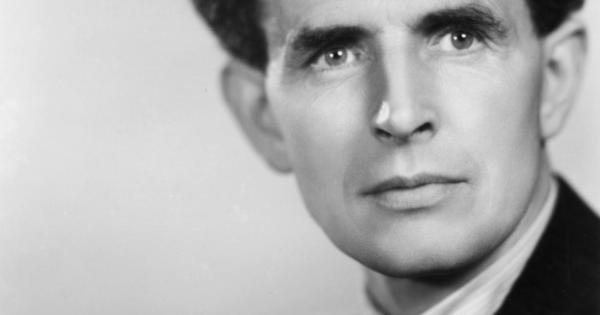
‘When He Had Cash, He Bought Books’ | Commonweal Magazine
Patrick MacGill was a self-taught polymath, a celebrated poet and fiction-writer. He was also my grandfather.
commonwealmagazine.org →Over sixty years later, having watched politicians come and go, I wonder whose influence is more lasting: a president’s or a poet’s? My grandfather, Patrick MacGill, wrote fiction, memoir, poetry, and autobiography. A literary festival in his honor is held every year in Glenties, the tiny Irish village where he was born, and this year, thirteen of his descendants—grandchildren, great-grandchildren and great-greats—gathered there to attend the forty-fourth edition of the Patrick MacGill Summer School. I was one of them, and it was perhaps the best conference I have ever attended. Since its first iteration in 1981, the event has been a magnet for politicians, writers, journalists, and poets. The prime minister of Ireland usually makes an appearance, as he did this year; Nobel Laureates (Seamus Heaney, John Hume) and political leaders (Gerry Adams, Bertie Ahern, even Margaret Heckler, congresswoman from my home city of Fall River, later the U.S. ambassador to Ireland) have been speakers. But while the speakers were outstanding, what set this conference apart from most I have attended was the audience. Well-informed and highly articulate, they participated without posturing or grandstanding. As an expatriate American, hearing views on the upcoming U.S. elections was particularly fascinating. At the pub on the last night, a man who had been attending for the past twelve years told me it was the only gathering he knew of where the values Patrick MacGill stood for—integrity, conviction, and commitment to social justice—were honestly debated, analyzed, and learned from. Patrick MacGill was a self-taught polymath, the eldest in a large family of devout but unquestioning Catholics. He left home at twelve with only three years of formal schooling to his credit, sent by his desperate parents to the “hiring fair” of Strabane, where they hoped he would get a job and help support the family. Patrick himself referred to it as a slave market—a more apt description for what being hired meant for a twelve-year-old. His first job required him to work from 4:00 a.m. to 11:00 p.m. with miserable food and accommodations. He ran away (illegally) before long and began his life on the road, intermittently working on farms and mines across Ireland and Scotland. He made friends, learned to drink and gamble and fall in love. He gradually grew distant from his family back in Glenties, who never asked about his life or how he was faring, but constantly demanded more money. Eventually, however, a change came over him: when he had spare cash, he bought books. As his love for language grew, he began to write poems and songs, entertaining his friends by performing them around the fire at night. By the time he became a “navvy” (the nickname given to the navigational engineers who built England’s canals and railroads), he was teaching himself German and French with the aid of dictionaries. He read Les Misérables in French and translated works by La Fontaine and Goethe for his own education. His toils as a navvy continued, perilous in an era where worker-safety laws did not exist. The ruthlessness of being required to dig tunnels without supports, blast explosives without protection, and watch friends die terrible deaths turned my grandfather into a socialist. His experiences in World War I, in addition to inspiring much of his subsequent poetry and fiction, solidified his political views. Inevitably, he also began to look at the Church, which had until then influenced his language, gestures, beliefs, and biases, with new eyes. Published in 1914, his autobiographical novel, Children of the Dead End , opens in his own village of Glenties and tells the story of his family’s grinding poverty, due in part to the constant demands of the village priest for larger donations. One of the book’s most heart-rending stories is of the death of his youngest brother, lost because his parents could afford neither a doctor nor the medicine he would have prescribed. In the s
Excerpt from a page describing this subject · 10,596 chars · not written by Vinony
Wikidata facts
- Instance of
- human
- Given name
- Patrick
- Gender
- male
- Citizenship
- Republic of Ireland
- Place of birth
- Glenties
- Place of death
- Florida
- Occupation
- navvy
- Languages spoken
- German
- Field of work
- journalism
- Conflict
- World War I
- Military branch
- British Army
- Image
- Patrick MacGill, 1936.jpg
Show 7 more facts
- writing language
- English language
- date of birth
- 1889-12-24
- date of death
- 1963-11-01
- Commons category
- Patrick MacGill
- described at URL
- www.macgillsummerschool.com/about-patrick
- place of burial
- Fall River
- nickname
- Navvy Poet
Sources (6)
via Wikidata · CC0