
File:Paul_Auster_BBF_2010_Shankbone.jpg · Wikimedia Commons · See Wikimedia Commons
Paul Auster
Sign in to saveAlso known as Paul Benjamin, Paul Queen, Paul Benjamin Auster
American novelist, poet, essayist, screenwriter (1947-2024)
OverviewAI-generated
Paul Auster, who also used the pseudonym Paul Benjaminn, was an author whose work period began in 1974. He was recognized in the American Academy Arts Sciences collection. Auster is noted as the author of the work *4 3 2 1*.
He was born on February 3, 1947, and died on April 30, 2024. Auster had two children.
Synthesized by Vinony from 10 facts across 3 sources: Wikidata, Firecrawl, Vinony collections. Generated from structured data (not the Wikipedia text) and checked against those facts — may still contain errors.
Film & TV
Newark, New Jersey, USA
Paul Benjamin Auster was an American author known for works blending absurdism, existentialism, crime fiction and the search for identity and personal meaning in works such as The New York Trilogy (1987), Moon Palace (1989), The Music of Chance (1990), The Book of Illusions (2002) and The Brooklyn Follies (2005).
Known for
- Siri Hustvedt – Dance Around the Self — Self2026
- Bonnie — Self2022
- Paul Auster: What If — Self - Writer2019
- Out of My Head2017
- Charlotte Rampling: The Look — Self2011
- Act of God — himself2009
- Amos Oz: The Nature of Dreams — Self2009
- Doc — Himself2008
- The Inner Life of Martin Frost — Narrator (voice)2007
- Edge of Outside — Self2006
via TMDB
Official website
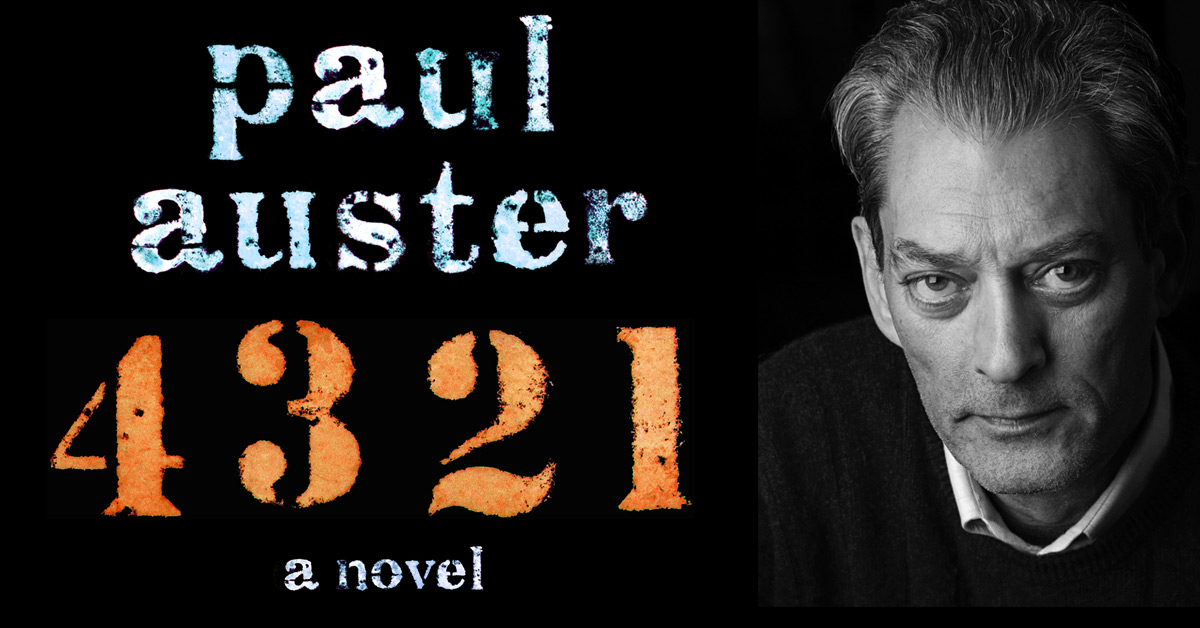
Paul Auster | Author of 4 3 2 1
4 3 2 1 is Paul Auster’s greatest, most heartbreaking and satisfying novel—a sweeping and surprising story of birthright and possibility, of love and of life itself., 4 3 2 1 is Paul Auster’s greatest, most heartbreaking and satisfying novel—a sweeping and surprising story of birthright and possibility, of love and of life itself: a masterpiece., 4 3 2 1 is Paul Auster’s greatest, most heartbreaking and satisfying novel—a sweeping and surprising story of birthright and possibility, of love and of life itself: a masterpiece., 4 3 2 1 is Paul Auster’s greatest, most heartbreaking and satisfying novel—a sweeping and surprising story of birthright and possibility, of love and of life itself: a masterpiece.
paul-auster.com →Link to the official site · 7,742 chars · not written by Vinony
Wikidata facts
- Instance of
- human
- Given name
- Benjamin
- Gender
- male
- Citizenship
- United States
- Place of birth
- Newark
- Place of death
- New York City
- Spouse
- Siri Hustvedt
- Child
- Sophie Auster
- Employer
- Columbia University
- Languages spoken
- English language
- Native language
- English language
- Notable work
- The New York Trilogy
- Genre
- prose
- Official website
- paul-auster.com
- Image
- Paul Auster BBF 2010 Shankbone.jpg
- Number of children
- 2
- Work location
- United States
Show 18 more facts
- P12674
- Okučani
- Commons category
- Paul Auster
- pseudonym
- Paul Benjaminn
- date of birth
- 1947-02-03
- topic's main category
- Category:Paul Auster
- member of
- PEN America
- name in native language
- Paul Auster
- has works in the collection
- Museum of Modern Art
- start of work period
- 1974-00-00
- writing language
- English language
- nominated for
- Booker Prize
- topic has template
- Template:Paul Auster
- copyright representative
- Broadcast Music, Inc.
- date of death
- 2024-04-30
- manner of death
- natural causes
- cause of death
- lung cancer
- archives at
- New York Public Library Main Branch
- place of burial
- Green-Wood Cemetery
Sources (14)
via Wikidata · CC0
~28 min read
Encyclopedic overview
Paul Benjamin Auster (February 3, 1947 – April 30, 2024) was an American writer, novelist, memoirist, poet, and filmmaker. His notable works include The New York Trilogy (1987), Moon Palace (1989), The Music of Chance (1990), The Book of Illusions (2002), The Brooklyn Follies (2005), Invisible (2009), Sunset Park (2010), Winter Journal (2012), and 4 3 2 1 (2017). His books have been translated into more than 40 languages.
Early life
Excerpted from Wikipedia’s “Paul Auster” article, available under the CC BY-SA 4.0 licence.
Gallery (5)
Available in 60 languages
- Español
- Français
- Deutsch
- 中文
- 日本語
- Русский
- Português
- Italiano
- العربية
- Afrikaans
- Armenian
- Asturian
- azb
- Azerbaijani
- Basque
- Belarusian
- Bosnian
- Breton
Show 41 more
- Bulgarian
- Catalan
- Croatian
- Czech
- Danish
- Egyptian Arabic
- Esperanto
- Estonian
- Finnish
- Galician
- Georgian
- Greek
- Haitian Creole
- Hebrew
- Hungarian
- Ido
- Interlingue
- Irish
- Latvian
- Lombard
- Luxembourgish
- Malagasy
- Mirandese
- Nederlands
- Norwegian
- Occitan
- Pampanga
- Polski
- Quechua
- Romanian
- Serbian
- Serbian (Latin)
- simple
- Slovak
- Svenska
- Tiếng Việt
- Türkçe
- Ukrainian
- Urdu
- فارسی
- 한국어
via Wikidata sitelinks · CC0