Encyclopedia of Life · EOL (see source)
Paxillosida
Sign in to saveThe Paxillosida are a large order of sea stars.
Species
モミジガイ目
ORDER
- KingdomAnimalia
- PhylumEchinodermata
- ClassAsteroidea
- OrderPaxillosida
Царство: Животные Подцарство: Эуметазои Без ранга: Двусторонне-симметричные Без ранга: Вторичноротые Тип: Иглокожие Подтип: Asterozoa Класс: Морские звёзды Надотряд: Valvatacea Отряд: Паксиллоносные морские звёзды Международное научное название Paxillosida Perrier, 1884 Семейства[1] Astropectinidae Gray, 1840 Ctenodiscidae Sladen, 1889 Goniopectinidae Verrill, 1889 Luidiidae Sladen, 1889 Porcellanasteridae Sladen, 1883 Pseudarchasteridae Radiasteridae Fisher, 1916 Систематикана ВикивидахИзображенияна Викискладе ITIS 156881NCBI 55648EOL 1935FW 31484 Паксиллоносные морские звёзды[2] (лат. Paxillosida) — отряд морских звёзд, сестринская группа по отношению к Asterina[3]. Обитатели илистых и песчаных грунтов[4]. Взрослые особи лишены ануса, лучи несут краевые пластинки и паксиллы[3][4]. Амбулакральные ножки без присосок[3], педицеллярии сидячие. В ходе развития бипиннария развивается в молодую особь, минуя стадию брахиолярии[3]. Иллюстрации Astropecten aranciacus Astropecten articulatus Astropecten bispinosus Astropecten irregularis Astropecten jonstoni Astropecten platyacanthus Luidia ciliaris Luidia australiae Примечания ↑ Paxillosida (англ.) в базе данных World Register of Marine Sp
via GBIF
Museum specimens
- Specimen records
- 113
- With media
- 18
- Collections
- NMV, CAS, AUM, USNM
- Recorded in
- Australia, United States, Japan, United Kingdom
Wikidata facts
- Instance of
- taxon
- Image
- Luidia magnifica.jpg
Show 4 more facts
- Commons category
- Paxillosida
- taxon name
- Paxillosida
- taxon rank
- order
- topic's main category
- Category:Paxillosida
Sources (1)
via Wikidata · CC0
~2 min read
Encyclopedic overview
3 sectionsContents
- Characteristics
- Systematics
- References
The Paxillosida are a large order of sea stars.
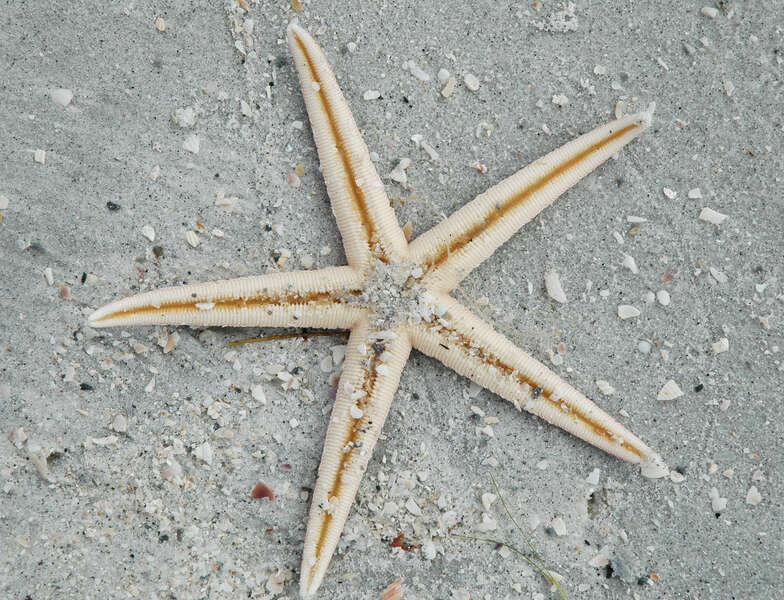
==Characteristics== Paxillosida adults lack an anus and have no suckers on their tube feet. They do not develop the brachiolaria stage in their early development. They possess marginal plates, and have sessile pedicellariae. They mostly inhabit soft-bottomed environments of sand or mud.
Excerpted from Wikipedia’s “Paxillosida” article, available under the CC BY-SA 4.0 licence.
Gallery (2)
Available in 21 languages
- Español
- Français
- Deutsch
- 中文
- 日本語
- Русский
- Português
- Italiano
- Belarusian
- Catalan
- Cebuano
- Egyptian Arabic
- Latin
- Navajo
- Nederlands
- Svenska
- Tiếng Việt
- Türkçe
via Wikidata sitelinks · CC0