Key facts
- Also known as
- Pencak silat Indonesia
- Focus
- Self-defense
- Hardness
- Full-contact , semi-contact , light-contact
- Country of origin
- Indonesia
- Famous practitioners
- Iko Uwais , Yayan Ruhian , Cecep Arif Rahman
- Olympic sport
- No
via Wikipedia infobox
Described at
Traditions of Pencak Silat - UNESCO Intangible Cultural Heritage
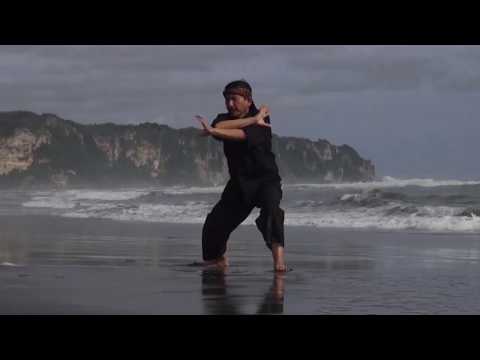
ich.unesco.org →In addition to their sporting element, Traditions of Pencak Silat also encompass mental-spiritual, self-defence and artistic aspects. The moves and styles of Pencak Silat are strongly influenced by various elements of art, involving a unity of body and movement fitting the accompanying music. The term ‘pencak’ is better known in Java, while the term ‘silat’ is better known in West Sumatra, describing a group of martial arts with many similarities. In addition to local terms, each region has its own moves, styles, accompaniments, music, and supporting equipment, which includes costumes, musical instruments, and traditional weapons. Pencak Silat practitioners are taught to maintain their relationship with God, human beings, and nature, and are trained in various techniques to deal with attacks or other dangerous situations based on principles to protect themselves as well as others, avoid harming the offender and build comradeship. The practice strengthens comradeship, maintains social order, and provides entertainment for ritual ceremonies. Related knowledge and skills are commonly taught in non-formal schools and include oral traditions and expressions such as greetings, philosophical phrases, rhymed poems, advice, as well as songs and techniques to play the instruments.
Excerpt from a page describing this subject · 7,546 chars · not written by Vinony
Wikidata facts
- Instance of
- type of sport
- Subclass of
- martial arts
- Country
- Netherlands
- Country of origin
- Indonesia
- Image
- Persaudaraan Setia Hati Terate - Tendangan terbang.jpg
Show 3 more facts
- Commons category
- Pencak silat
- partially coincident with
- silat
- described at URL
- ich.unesco.org/es/RL/01391
via Wikidata · CC0
~40 min read
Encyclopedic overview
Two men performing silek lanyah (one style of pencak silat), traditional martial arts of the Minangkabau people in West Sumatra, Indonesia. Silek lanyah is always performed in a muddy paddy field.
Pencak silat ( Indonesian pronunciation: [ˈpənt͡ʃaʔ ˈsilat]; in Western writings sometimes spelled "pentjak silat" or phonetically as "penchak silat") is a class of related Indonesian martial arts. In neighbouring countries, the term usually refers to professional competitive silat. It is a full-body fighting form incorporating strikes, grappling, and throwing, in addition to weaponry. Every part of the body is used and subject to attack. Pencak silat was practiced not only for physical defense but also for psychological ends. There are hundreds of different pencak silat styles (aliran) and schools (perguruan) which tend to focus either on strikes, joint manipulation, weaponry, or some combination thereof.
Excerpted from Wikipedia’s “pencak silat” article, available under the CC BY-SA 4.0 licence.