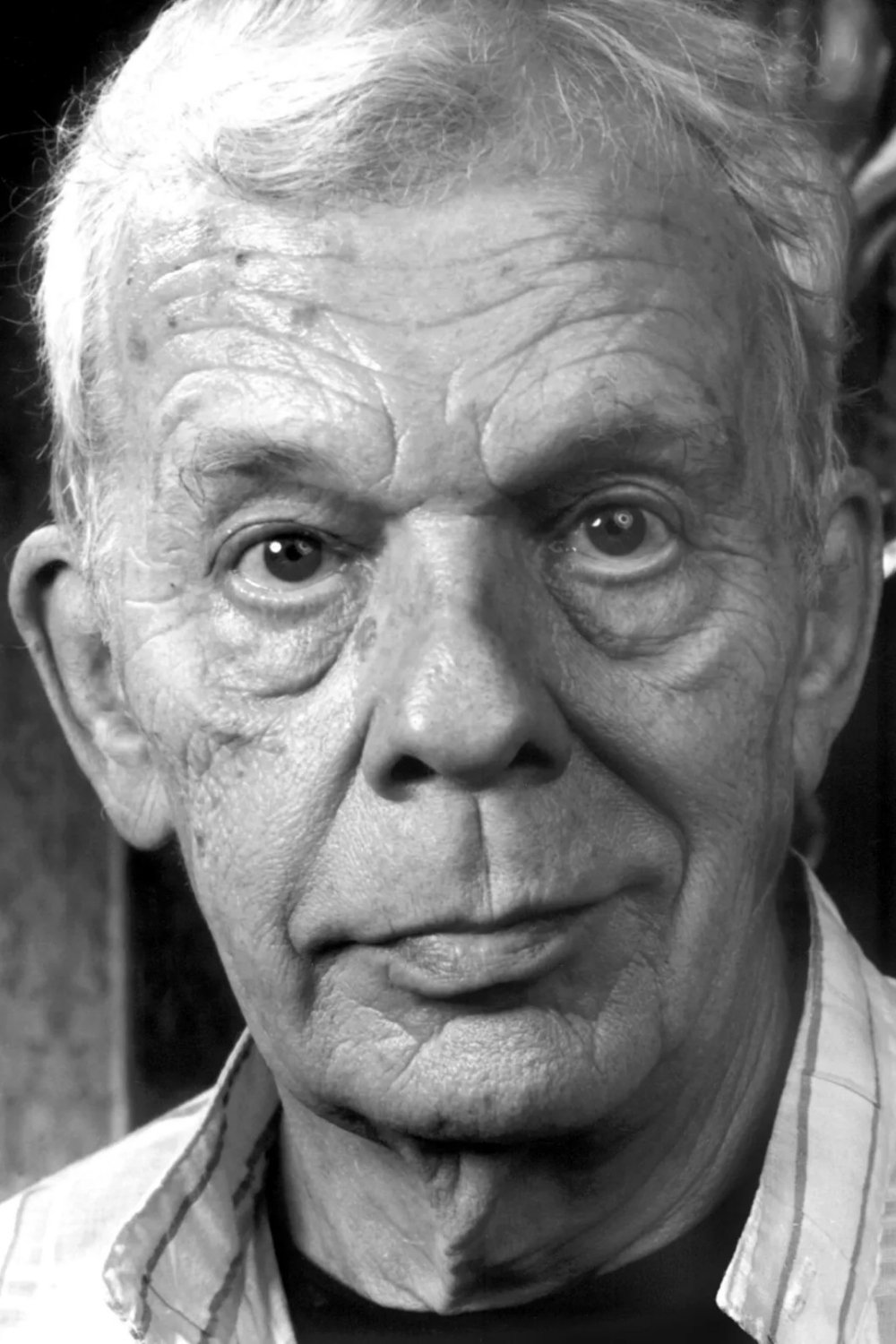
Profile via TMDB · Courtesy of TMDB
Peter Hacks
Sign in to savedrammaturgo, poeta e saggista tedesco
Person · Open Library
- Works
- 31
Top works
- Ein Gespräch im Hause Stein über den abwesenden Herrn von Goethe
- Margarete in Aix
- Das Poetische
- Jules Ratte
- Liaison amoureuse
via Open Library + Wikidata
Film & TV
Breslau, Silesia, Germany [now Wroclaw, Dolnoslaskie, Poland]
Peter Hacks (21 March 1928 – 28 August 2003) was a German playwright, author, and essayist. Hacks was born in Breslau (Wrocław), Lower Silesia. Displaced by World War II, Hacks settled in Munich in 1947, where he made acquaintance with Thomas Mann and Bertolt Brecht. Hacks then followed Brecht to East Berlin in 1955. However, a continued cooperation between him and Brecht did not arise. From…
via TMDB
Music · MusicBrainz
- Type
- Person
- Gender
- Male
- Origin
- Germany
- Active from
- 1928-03-21
- Active to
- 2003-08-28
Discography
via MusicBrainz · CC0
Listeners · Last.fm
- Listeners
- 41
- Total plays
- 960
Tags
<a href="https://www.last.fm/music/Peter+Hacks">Read more on Last.fm</a>
Wikidata facts
- Instance of
- human
- Given name
- Peter
- Gender
- male
- Citizenship
- German Democratic Republic
- Place of birth
- Wrocław
- Occupation
- poet
- Educated at
- Ludwig-Maximilians-Universität München
- Employer
- Deutsches Theater
- Languages spoken
- German
- Academic degree
- doctorate
- Image
- Bundesarchiv Bild 183-D0213-0049-003, Peter Hacks vor Westberliner Studenten.jpg
Show 8 more facts
- Commons category
- Peter Hacks
- date of birth
- 1928-03-21
- date of death
- 2003-08-28
- member of
- Academy of Arts, Berlin
- place of burial
- Berlin
- name in native language
- Peter Hacks
- archives at
- German Literature Archive Marbach
- pseudonym
- Saul O’Hara
via Wikidata · CC0
Works in European collections
1 object attributed to Peter Hacks, held across European museums, libraries & archives · via Europeana
Article · Italiano
Peter Hacks (Breslavia, 21 marzo 1928 – Groß Machnow, 28 agosto 2003) è stato un drammaturgo, poeta e saggista tedesco. Fondò negli anni sessanta del XX secolo la "classica socialista" e divenne uno dei più noti drammaturghi della Repubblica Democratica Tedesca (dopo esservi emigrato dalla Germania Ovest) e, senza dubbio, il più rappresentato. Per molto tempo fu l'unico autore vivente rappresentato sia nella Germania orientale che in quella occidentale.
Abstract from DBpedia / Wikipedia · CC BY-SA