Russell A. Mittermeier;Don E. Wilson
Phascolarctidae
Sign in to saveAlso known as koala family, koalas
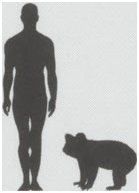
The Phascolarctidae (φάσκωλος (phaskolos) - pouch or bag, ἄρκτος (arktos) - bear, from the Greek phascolos + arctos meaning pouched bear) is a family of marsupials of the order Diprotodontia, consisting of only one extant species, the koala, and six well-known fossil species, with another six less well known fossil species, and two fossil species of the genus Koobor, whose taxonomy is debatable but are placed in this group. The closest relatives of the Phascolarctidae are the wombats, which comprise the family Vombatidae.
Species
FAMILY
- KingdomAnimalia
- PhylumChordata
- ClassMammalia
- OrderDiprotodontia
- FamilyPhascolarctidae
Los fascolárctidos (Phascolarctidae, de Phasco - bolsa, larct- del griego ‘arctos’ - oso) son una familia de marsupiales diprotodontos, con una sola especie actual, el koala, y otras muchas fósiles, todas de Australia. El rastro fósil de la familia llega al Mioceno medio u Oligoceno superior.
via GBIF
Museum specimens
- Specimen records
- 16
- Family
- Phascolarctidae
- Collections
- UCMP, BPBM, ROM, UWYO
- Recorded in
- Australia
Research
525 papers- Evolution of KoRV-A transcriptional silencing in wild koalas.Cell · 2025
- Anaerobic gut fungal communities in marsupial hosts.mBio · 2024
- A probable koala from the Oligocene of central Australia provides insights into early diprotodontian evolution.Scientific reports · 2023
- Reference Values for Postmortem Examination of the Heart in the Macropod (Macropodidae) and Koala (Phascolarctidae).Animals : an open access journal from MDPI · 2025
- Koala genome insights.Nature reviews. Genetics · 2018
via PubMed
Wikidata facts
- Instance of
- taxon
- Image
- Koala climbing tree.jpg
Show 7 more facts
- taxon name
- Phascolarctidae
- taxon rank
- family
- Commons category
- Phascolarctidae
- endemic to
- Australia
- taxonomic type
- Phascolarctos
- topic's main category
- Category:Phascolarctidae
- taxon author citation
- Owen, 1839
Sources (1)
via Wikidata · CC0
~2 min read
Encyclopedic overview
3 sectionsContents
- Classification
- References
- External links
The Phascolarctidae (φάσκωλος (phaskolos) - pouch or bag, ἄρκτος (arktos) - bear, from the Greek phascolos + arctos meaning pouched bear) is a family of marsupials of the order Diprotodontia, consisting of only one extant species, the koala, and six well-known fossil species, with another six less well known fossil species, and two fossil species of the genus Koobor, whose taxonomy is debatable but are placed in this group. The closest relatives of the Phascolarctidae are the wombats, which comprise the family Vombatidae.
The fossil record of the family dates back to the Middle Miocene or Late Oligocene.
Excerpted from Wikipedia’s “Phascolarctidae” article, available under the CC BY-SA 4.0 licence.