Image from GBIF · //creativecommons.org/licences/by-nc-nd/4.0/
Philadelphus
Sign in to saveAlso known as Mock orange
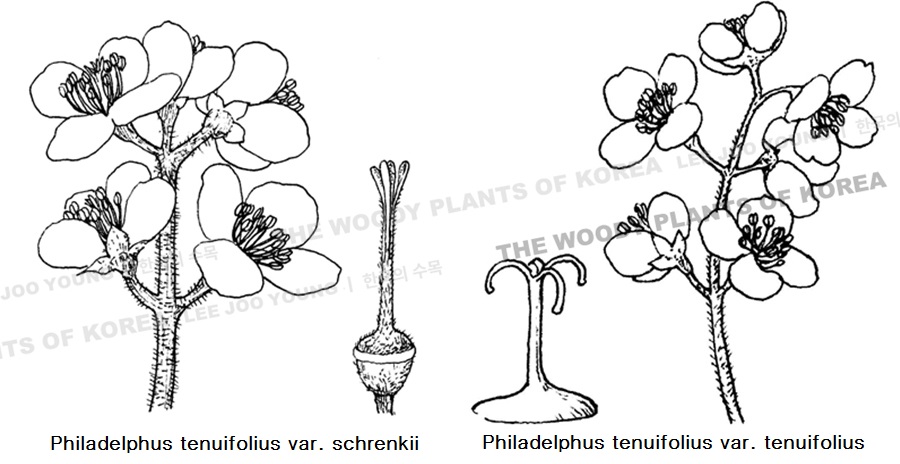
Philadelphus () (mock-orange) is a genus of about 60 species of shrubs from 3–20 ft (1–6 m) tall, native to North America, Central America, Asia and (locally) in southeast Europe.
OverviewAI-generated
Philadelphus is a genus of upright shrub plants within the family Hydrangeaceae. It belongs to the order Cornales, class Magnoliopsida, and phylum Tracheophyta in the kingdom Plantae. The genus is commonly known as mock orange, Pfeifensträucher, Mock-oranges, and Jasmikkeet. Its taxonomic type is Philadelphus coronarius, and it produces fruit in the form of capsules.
The genus comprises approximately 75 species distributed across the North Temperate Zone. Records indicate occurrences in Mexico, the United States, and China. The genus has been documented in various collections, including those at INECOL, UCMP, TEX, UNLV, and FC-UNAM.
Synthesized by Vinony from 28 facts across 7 sources: Wikidata, GBIF, Gbif Occ, Encyclopedia of Life, Plants of the World, iDigBio, Vinony graph. Generated from structured data (not the Wikipedia text) and checked against those facts — may still contain errors.
Species
GENUS
- KingdomPlantae
- PhylumTracheophyta
- ClassMagnoliopsida
- OrderCornales
- FamilyHydrangeaceae
山梅花属(学名:Philadelphus)是绣球科下的一个属,为直立灌木植物。该属共有约75种,分布于北温带。
via GBIF · Kew POWO
Museum specimens
- Specimen records
- 1,690
- With media
- 1,425
- Family
- Hydrangeaceae
- Collections
- INECOL, UCMP, TEX, UNLV, FC-UNAM, GH
- Recorded in
- Mexico, United States, China
Wikidata facts
- Instance of
- taxon
- Image
- Philadelphus satsumi2.jpg
Show 8 more facts
- taxon rank
- genus
- Commons category
- Philadelphus
- taxon name
- Philadelphus
- topic's main category
- Category:Philadelphus
- taxon common name
- skobotovec
- has fruit type
- capsule
- taxonomic type
- Philadelphus coronarius
Sources (3)
via Wikidata · CC0
~5 min read
Encyclopedic overview
12 sectionsContents
- Description
- Ecology
- Cultivation
- AGM cultivars
- In culture
- Selected species
- Asia
- Europe
- North America
- Pancontinental hybrids
- References
- External links
Philadelphus () (mock-orange) is a genus of about 60 species of shrubs from 3–20 ft (1–6 m) tall, native to North America, Central America, Asia and (locally) in southeast Europe.
They are named "mock-orange" in reference to their flowers, which in wild species look somewhat similar to those of oranges and lemons (Citrus) at first glance, and smell of orange flowers and jasmine (Jasminum). But Philadelphus is a basal asterid, not closely related to Jasminum (advanced asterids), and among the eudicots quite distant from Citrus (advanced rosids). An entirely misleading name for Philadelphus that is sometimes encountered is syringa; this properly refers to the lilacs, which are fairly close relatives of jasmine. The connection of the two shrubs lies in their introduction from Ottoman gardens to European ones, effected at the same time by the Holy Roman emperor's ambassador to the Sublime Porte, Ogier Ghiselin de Busbecq, who returned to Vienna in 1562. The two shrubs appear together in John Gerard's Herball, as "Blew Pipe" (the lilac) and "White Pipe Tree", for the woods of both are pithy and easily hollowed out.
Excerpted from Wikipedia’s “Philadelphus” article, available under the CC BY-SA 4.0 licence.