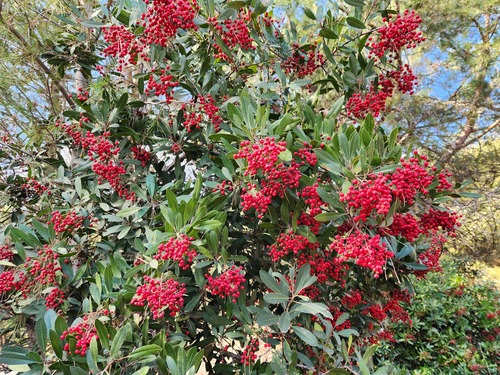
(c) Jiovanny Celis, some rights reserved (CC BY-NC), uploaded by Jiovanny Celis · cc-by-nc
Photinia
Sign in to savePhotinia () is a genus of about 30 species of small trees and large shrubs, but the taxonomy has recently varied greatly, with the genera Heteromeles, Stranvaesia and Aronia sometimes included in Photinia.
Species
Toyon
species
via
Museum specimens
- Specimen records
- 755
- With media
- 668
- Family
- Rosaceae
- Collections
- FMNH, YPM, UCMP, CAS, INECOL, IBUNAM
- Recorded in
- United States, China, Mexico, Japan
Research
516 papers- Photinia glabra-derived exosome-like nanovesicles mitigate skin inflammaging via dual regulation of inflammatory signaling and calcium homeostasis.Nanomedicine (London, England) · 2025
- pH-responsive Photinia glabra-zinc oxide-protoporphyrin IX nanoconjugates with enhanced cellular uptake for photodynamic therapy towards cancer cells.Nanomedicine (London, England) · 2024
- Potential Benefits of Black Chokeberry (Aronia melanocarpa) Fruits and Their Constituents in Improving Human Health.Molecules (Basel, Switzerland) · 2022
- Characterization and phylogenetic analysis of the complete mitochondrial genome sequence of Photinia serratifolia.Scientific reports · 2023
- Antibacterial and anticancer activities of green-synthesized silver nanoparticles using Photinia glabra fruit extract.Nanomedicine (London, England) · 2023
via PubMed
Wikidata facts
Show 7 more facts
- Commons gallery
- Photinia
- Commons category
- Photinia
- taxon rank
- genus
- taxon name
- Photinia
- topic's main category
- Category:Photinia
- taxon common name
- 石楠属
Sources (2)
via Wikidata · CC0
~7 min read
Encyclopedic overview
9 sectionsContents
- Description
- Taxonomy
- Uses
- Toxicity
- Species list
- Extinct species
- Formerly placed here
- References
- External links
Photinia () is a genus of about 30 species of small trees and large shrubs, but the taxonomy has recently varied greatly, with the genera Heteromeles, Stranvaesia and Aronia sometimes included in Photinia.
They are a part of the rose family (Rosaceae) and related to the apple. The botanical genus name derives from the Greek word photeinos for shiny and refers to the often glossy leaves. Most species are evergreen, but deciduous species also occur. The small apple-shaped fruit has a size of 4 to 12 mm and forms in large quantities. They ripen in the fall and often remain hanging on the bush until well into the winter. The fruits are used as food by birds, which excrete the seeds with their droppings and thereby distribute the plant.
Excerpted from Wikipedia’s “Photinia” article, available under the CC BY-SA 4.0 licence.