Phyllida Barlow
Sign in to saveAlso known as Gillian Phyllida Barlow, Dame Phyllida Barlow
British artist (1944–2023)
Person · Open Library
- Works
- 12
Top works
- In the Studio
- Phyllida Barlow : Sculpture
- Hurly-Burly
- OBJECTS FOR...AND OTHER THINGS: PHYLLIDA BARLOW; ED. BY GAVIN AMBROSE
- Joel Shapiro
via Open Library + Wikidata
Listeners · Last.fm
- Listeners
- 3
- Total plays
- 4
<a href="https://www.last.fm/music/Phyllida+Barlow">Read more on Last.fm</a>
Described at
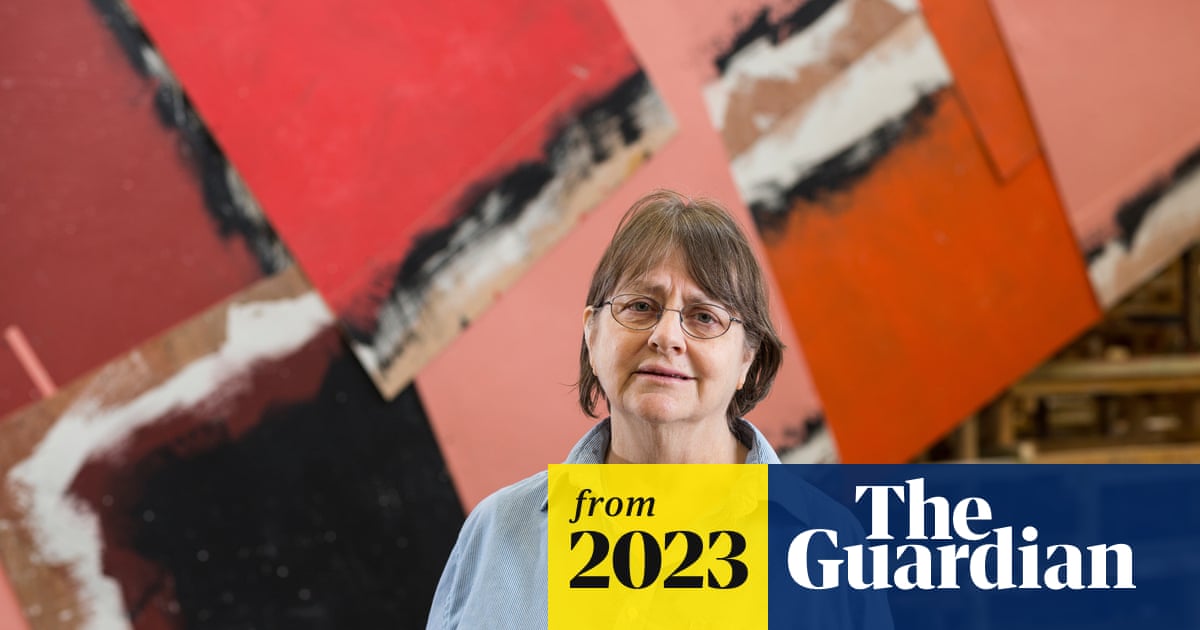
Dame Phyllida Barlow obituary | Phyllida Barlow | The Guardian
British sculptor determined to turn convention on its head to create vast, uncontainable works of art
theguardian.com →Phyllida Barlow with her work called ‘dock’ at Tate Britain, London, in 2014. Photograph: David Levene/The Guardian Phyllida Barlow with her work called ‘dock’ at Tate Britain, London, in 2014. Photograph: David Levene/The Guardian Growing up, the artist Phyllida Barlow , who has died aged 78, was warned by her mother against trading on her illustrious ancestry. Her father’s family tree was decked with Huxleys and Wedgwoods, but it was another of his forebears that her mother had particularly in mind. Barlow was the great-great-granddaughter of Charles Darwin. When, in 2017, Barlow unveiled her work folly in the British Pavilion at the Venice Biennale, critics were transfixed by its mess. A confection of carefully contrived flotsam and jetsam, folly’s papier-mache lollipops and abstract expressionist doors tumbled out of the pavilion and into the gardens beyond. The work’s unwillingness to be contained reflected a parallel refusal to be defined. “In the past,” Barlow noted, “sculpture had historical narratives. It was dominated by the plinth, it monumentalised and celebrated individuals.” One of those, often enough, was Darwin. Bound up in folly’s rejection of a sculptural ancestry was its maker’s renunciation of her own. Venice marked both a high point in Barlow’s career, and – she was 73 at the time – a late flowering of it. Even a decade before, the idea that she might one day be the Biennale’s official British artist would have been unthinkable. For more than four decades of her career, Barlow had had no gallery and shown almost no work. This, too, fed into the aesthetic of her art. While other British sculptors of her generation – Antony Gormley, say, or Richard Deacon – made sculpture that was traditional in being durable, Barlow quietly cornered the market in an art that was evanescent. Phyllida Barlow’s ‘folly’ on display at the British Pavilion at the Venice Biennale in 2017. Photograph: David Levene/The Guardian One early piece, made in the 70s in the basement studio of her north London house, was Tent: a sculpture consisting of a sheet of canvas thrown over a wooden frame and then heavily painted. “It provoked absolute hostility,” Barlow recalled, merrily. “It never went on exhibition. I remember two former students from the Slade saying it would be best to throw it away.” This was followed, in the 80s and 90s, by guerrilla sculptures, illicitly installed in north London school playgrounds, abandoned houses and a defunct stocking factory. Still others were shown in the homes of friends. Sometimes, at night, Barlow would throw objects she had made into the Thames, these sculptural performances having, as she said, “an audience of one”. The inspiration behind all of these she attributed to her paternal grandmother. It was thus from Nora Darwin (the botanist and geneticist Nora Barlow ), rather than Nora’s grandfather, Charles, that Phyllida liked to trace her descent. “Her understairs cupboard was filled with beautifully folded brown paper,” she recalled. “Navy blue sugar paper that grocers used, and neatly assembled piles of reusable stuff such as black rubber bands and old matchboxes. We continued to use Christmas decorations made during the wartime years well into the 50s – strange, rather abject pieces of cardboard with paint on them.” The virtue of such frugality was lost in the materialism of the 60s and the greed-is-good decades that followed. This infected the art world as much as any other: the expensive, high-gloss hardness of Jeff Koons will stand as testament to the time. It was only with the change of millennium and rise of environmentalism that ideas of sculptural fragility began at last to gain currency. Barlow’s folly, made of cheap and recycled materials and looking as though it might fall apart at any moment, was absolutely of its day. The neoclassical pavilion in which it stood had been built in 1909, at the height of Britain’s imperial power. The year before folly, to Barlow’s despair, th
Excerpt from a page describing this subject · 14,304 chars · not written by Vinony
Wikidata facts
- Instance of
- human
- Given name
- Gillian
- Family name
- Barlow
- Gender
- female
- Citizenship
- United Kingdom
- Place of birth
- Newcastle upon Tyne
- Place of death
- London
- Occupation
- visual artist
- Educated at
- Chelsea College of Art and Design
- Employer
- Slade School of Fine Art
- Languages spoken
- English language
- Field of work
- installation art
- Image
- Phyllida Barlow 2019.jpg
- Represented by
- Hauser & Wirth
Show 7 more facts
- date of birth
- 1944-01-01
- member of
- Royal Academy of Arts
- Commons category
- Phyllida Barlow
- floruit
- 2012-01-01
- date of death
- 2023-03-12
- name in native language
- Phyllida Barlow
Sources (8)
via Wikidata · CC0