Encyclopedia of Life · EOL (see source)
Physostegia
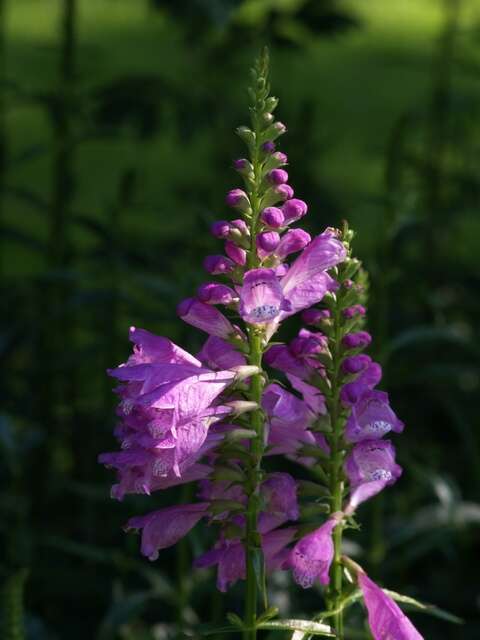
Sign in to savePhysostegia, the lionshearts or false dragonheads (in reference to their similarity to Dracocephalum), is a genus of flowering plants in the family Lamiaceae, native to North America (United States, Canada, northern Mexico). They are erect rhizomatous herbaceous perennials inhabiting damp, sunny places. They grow up to tall with purple or pink tubular flowers in racemes in summer.
Species
GENUS
- KingdomPlantae
- PhylumTracheophyta
- ClassMagnoliopsida
- OrderLamiales
- FamilyLamiaceae
Physostegia es un género con 46 especies de plantas con flores perteneciente a la familia Lamiaceae.[1] Es originario de Norteamérica. Son plantas con los tallos erectos que pueden crecer hasta los 2 m de altura, y que por lo general surgen de un rizoma. Las hojas del tallo son sésiles, glabras, dentadas y opuestas. Las plantas pasan el invierno como rosetas basales. La inflorescencias son racimos de flores blancas, rosas, lavanda o rojas que parecen orejas. La corola tiene dos labios de la misma longitud. Los cuatro estambres tienen anteras de color púrpura o casi blanco. Especies seleccionadas Physostegia aboriginorum Physostegia angustifolia Physostegia correllii Physostegia denticulata Physostegia digitalis Physostegia edwardsiana Physostegia formosior Physostegia godfreyi Physostegia granulosa Physostegia imbricata Referencias ↑ «Physostegia». Royal Botanic Gardens, Kew: World Checklist of Selected Plant Families. Consultado el 8 de abril de 2010.
via GBIF · Kew POWO
Museum specimens
- Specimen records
- 233
- With media
- 217
- Family
- Lamiaceae
- Collections
- INECOL, USF, COLO, CAS, CM, BRIT
- Recorded in
- Mexico, United States, Canada
Wikidata facts
- Instance of
- taxon
- Image
- Physostegia virginiana 9660.jpg
Show 6 more facts
- taxon name
- Physostegia
- taxon rank
- genus
- topic's main category
- Category:Physostegia
- taxon common name
- 随意草属
- Commons category
- Physostegia
Sources (1)
via Wikidata · CC0
~2 min read
Encyclopedic overview
2 sectionsContents
- References
- External links
Physostegia, the lionshearts or false dragonheads (in reference to their similarity to Dracocephalum), is a genus of flowering plants in the family Lamiaceae, native to North America (United States, Canada, northern Mexico). They are erect rhizomatous herbaceous perennials inhabiting damp, sunny places. They grow up to tall with purple or pink tubular flowers in racemes in summer.
The generic name comes from two Greek words, physa (a bladder) and stege (a covering), referring to the calyx, which becomes full of fruit when mature.
Excerpted from Wikipedia’s “Physostegia” article, available under the CC BY-SA 4.0 licence.