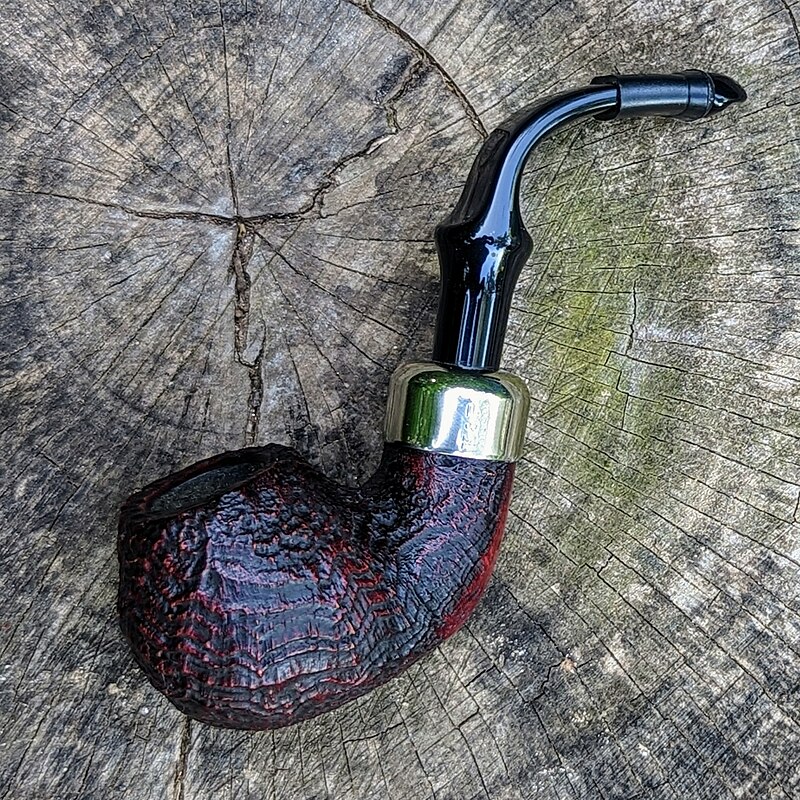
File:Peterson_System_Standard_Pipe.jpg · Wikimedia Commons · See Wikimedia Commons
pipe
Sign in to saveAlso known as tobacco pipe, smoking pipe, pipes, smoking pipes
objet servant à fumer le tabac
A pipe is a tool designed for smoking tobacco or other smokable products, consisting typically of a bowl where the material is burned and a stem or tube through which the smoke is inhaled. Pipes matter because they represent a traditional and widely-used method for consuming tobacco and other substances, with cultural significance across many societies and historical periods.
AI-generated from the Wikipedia summary — may contain errors.
Research
10,383 papers- Water pipe smoking and stroke: A systematic review and meta-analysis.Brain and behavior · 2024
- The LPAR1 antagonist, PIPE-791 produces antifibrotic effects in models of lung fibrosis.Respiratory research · 2025
- Rusty Pipe Syndrome and Review of Literature.Breastfeeding medicine : the official journal of the Academy of Breastfeeding Medicine · 2020
- Water Pipe (Hookah) Smoking and Cardiovascular Disease Risk: A Scientific Statement From the American Heart Association.Circulation · 2019
- Water pipe smoking and dermatologic consequences.Journal of the European Academy of Dermatology and Venereology : JEADV · 2015
via PubMed
Wikidata facts
- Image
- Alvano-Sabina-pipe.jpg
- Has use
- pipe smoking
Show 6 more facts
- topic's main category
- Category:Pipe smoking
- Commons category
- Pipes (smoking)
- uses
- opium
- Commons gallery
- Smoking pipe
- described by source
- New International Encyclopedia
Sources (2)
via Wikidata · CC0
Article · Français
La pipe est un objet servant principalement à fumer le tabac mais aussi d'autres substances comme le cannabis, l'opium, le crack ou encore de la méthamphétamine. Elle est en général composée de deux parties principales : le fourneau (qui contient le tabac) et le tuyau (qui sert à aspirer). La pipe est un objet pouvant avoir des formes très basiques comme très évoluées voire artistiques, et peut être fabriquée de façon industrielle ou de façon artisanale. Les pipes peuvent être réalisées dans différents matériaux. La plupart des pipes de nos jours sont faites en bruyère. Par le passé, les pipes en terre (argile) étaient les plus utilisées. Il en existe aussi en écume de mer, en porcelaine, en épi de maïs, en érable, en cerisier, en olivier, en chêne, en calebasse ou encore en bambou. Il existe également des pipes en pierre, en verre et en métal (notamment pour la consommation de cannabis). Les tuyaux de pipe peuvent eux aussi être réalisés dans différents matériaux. Traditionnellement, la corne et l'ambre étaient utilisées. Aujourd'hui dominent différentes matières, notamment plastiques : ébonite (et son dérivé le cumberland), bakélite, acrylique, ultem, … Les tuyaux de pipe peuvent aussi être faits de bois ou de bambou.
Abstract from DBpedia / Wikipedia · CC BY-SA
Gallery (12)
Available in 66 languages
- Español
- Français
- Deutsch
- 中文
- 日本語
- Русский
- Português
- Italiano
- العربية
- Albanian
- Azerbaijani
- Bahasa Indonesia
- Bangla
- Basque
- Belarusian
- Betawi
- Bosnian
- Breton
Show 47 more
- Bulgarian
- Burmese
- Catalan
- Chechen
- Chuvash
- Croatian
- Czech
- Danish
- Egyptian Arabic
- Esperanto
- Estonian
- Finnish
- Greek
- Hebrew
- Hungarian
- Ido
- Irish
- Javanese
- Kashubian
- Latin
- Lithuanian
- Low German
- Macedonian
- nds_nl
- Nederlands
- Norwegian
- Old English
- Polski
- Romanian
- rsk
- Serbian
- Serbian (Latin)
- simple
- Slovenian
- Svenska
- Swahili
- Toki Pona
- Türkçe
- Ukrainian
- Walloon
- Welsh
- Western Frisian
- Wu Chinese
- Yiddish
- zh_yue
- فارسی
- 한국어
via Wikidata sitelinks · CC0