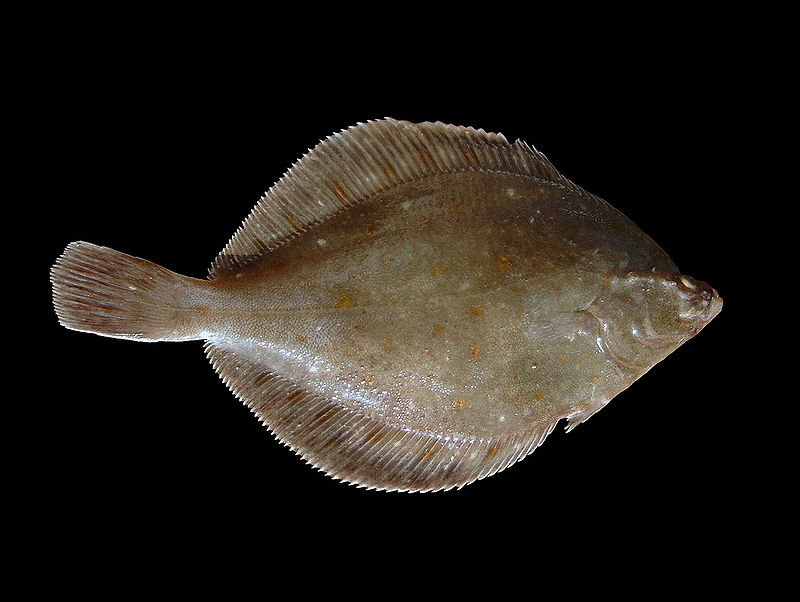
File:Pleuronectes_platessa.jpg · Wikimedia Commons · See Wikimedia Commons
Pleuronectidae
Sign in to savePleuronectidae, also known as righteye flounders, are a family of flounders. They are called "righteye flounders" because most species lie on the sea bottom on their left sides, with both eyes on their right sides. The Paralichthyidae are the opposite, with their eyes on the left side. A small number of species in Pleuronectidae can also have their eyes on the left side, notably the members of the genus Platichthys.
OverviewAI-generated
Pleuronectidae is a family of fish within the order Pleuronectiformes and class Teleostei. The taxon belongs to the phylum Chordata and kingdom Animalia. It is commonly known as righteye flounders. The family was described by Rafinesque in 1815 and holds an accepted status in taxonomic records. Its parent taxon is listed as both Pleuronectoidei and Pleuronectiformes.
The habitat for this family includes marine, brackish, and freshwater environments. Records indicate the presence of the family in the United States, with specific data associated with institutions SDNHM and UWFC. The taxon has been documented in 2,373,393 occurrences. Additionally, the subject is referenced by 182 other encyclopedia articles.
Synthesized by Vinony from 30 facts across 6 sources: Wikidata, GBIF, Gbif Occ, WoRMS, iDigBio, Vinony graph. Generated from structured data (not the Wikipedia text) and checked against those facts — may still contain errors.
Species
righteye flounders
FAMILY
- KingdomAnimalia
- PhylumChordata
- ClassTeleostei
- OrderPleuronectiformes
- FamilyPleuronectidae
Der Titel dieses Artikels ist mehrdeutig. Weitere Bedeutungen sind unter Schollen (Begriffsklärung) aufgeführt. Die Schollen oder Rechtsaugen-Flundern (Pleuronectidae) sind eine Familie der Plattfische. Schollen leben im Atlantik, im Indopazifik und dem Arktischen Ozean vom Flachwasser bis in einer Tiefe von 1000 Meter. Einige Arten leben auch im Süßwasser. Viele Schollenarten, wie die Scholle, der Heilbutt, der Schwarze Heilbutt und die Flunder sind beliebte Speisefische und werden kommerziell gefischt. Inhaltsverzeichnis 1 Merkmale 2 Systematik 3 Gattungen und Arten 4 Literatur 5 Belege 6 Weblinks Merkmale Beide Augen befinden sich auf der rechten Körperseite. Eine Ausnahme sind die Flundern, bei denen sich auch Exemplare finden, die beide Augen auf der linken Seite haben. Der Unterkiefer überragt den Oberkiefer. Schollen können die Farbe ihrer pigmentierten Oberseite dem Untergrund anpassen. Die Rückenflosse beginnt auf dem Kopf über dem oberen Auge. Die Bauchflossen sind symmetrisch. Adulte Tiere haben keine Schwimmblase. Das Seitenlinienorgan ist auf beiden Körperseiten gut entwickelt. Mit der Ausnahme von zwei Arten enthält das Dotter der Scholleneier keinen Öltropfen. Scholl
via GBIF
Museum specimens
- Specimen records
- 3,419
- With media
- 17
- Family
- Pleuronectidae
- Collections
- SDNHM, UWFC
- Recorded in
- United States
Wikidata facts
- Instance of
- taxon
- Parent taxon
- Pleuronectiformes
- Image
- Pleuronectes platessa.jpg
Show 6 more facts
- Commons category
- Pleuronectidae
- taxon rank
- family
- taxon name
- Pleuronectidae
- topic's main category
- Category:Pleuronectidae
- described by source
- Brockhaus and Efron Encyclopedic Dictionary
- taxon common name
- bokoplavutarice
Sources (2)
via Wikidata · CC0
Article · Español
Los pleuronéctidos (Pleuronectidae) son una familia de peces incluida en el orden Pleuronectiformes, principalmente marinos aunque con algunas especies de estuarios e incluso de agua de río, distribuidos por todos los océanos. Su nombre procede del griego: pleura (lado) + nekton (nadar). Casi todas las especies tienen importancia pesquera. Aparecen por primera vez en el registro fósil en el Eoceno inferior, durante el Terciario.
Abstract from DBpedia / Wikipedia · CC BY-SA