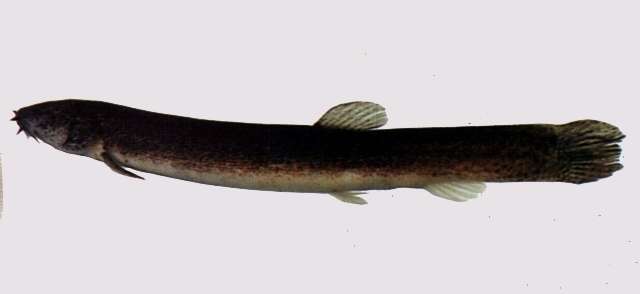
Encyclopedia of Life · EOL (see source)
Species
Least Concernpond loach
Species
- PhylumChordata
- ClassTeleostei
- OrderCypriniformes
- FamilyCobitidae
二名法 Misgurnus anguillicaudatusCantor, 1842[1] 泥鳅(学名:Misgurnus anguillicaudatus、pond loach、oriental weather loach、weather loach)为輻鰭魚綱鯉形目鳅科的一種,俗名鳅鱼、魚鰍、土鰍、旋鰍、胡鰡、雨鰡。 目录 1 分布 2 特徵 3 生態 4 經濟利用 5 註釋 6 参考文献 7 扩展阅读 分布 本魚分布於緬甸與東北亞向南至中國中部。在中國分布于云南六大水系及其附属水体、四川、湖北、湖南、重庆各河流干支流、湖泊、水库、沟渠、池塘和稻田等水体,主要栖息于江河湖泊。该物种的模式产地在浙江舟山。[1] 特徵 本魚體極修長,體側扁或略帶筒狀沿長,體色為斑駁的金褐色,帶有黑色斑點,背鰭1枚,約與背部同等大小;臀鰭短;位於背鰭之後,尾鰭後緣圓形,尾柄末端上方有一斑點,背鰭軟條9枚,臀鰭有軟條7枚。具有10個觸鬚,體長可達28公分。 生態 本魚棲息在河、湖泊、池塘和水田中,性情溫和,屬雜食性,以蠕蟲、小型甲殼動物、昆蟲等為食,容忍溫度在 2 與 30℃之間, 而且在水中氧氣不足時,能直接呼吸水面上的空氣。在氣壓低時,牠會變得十分活躍。 經濟利用 可食用魚、餌釣魚及觀賞魚,本種亦被引進至不少地方(如夏威夷),並有報告指引入後造成不利的生態衝擊。 日本超市销售的从中国进口的泥鳅 橘黄色泥鳅 註釋 ^ 1.0 1.1 中国科学院动物研究所. 泥鳅. 中国动物物种编目数据库. 中国科学院微生物研究所. [2009-04-11]. (原始内容存档于2016-03-05). 参考文献 维基共享资源中相关的多媒体资源:泥鳅 Froese, Rainer & Daniel Pauly, eds. (2011). Misgurnus anguillicaudatus in FishBase. 2011年12月版本 觀賞魚圖鑑. 貓頭鷹出版社. 1996年6月. 泥鰍 扩展阅读 維基物種中有關泥鳅的數據 取自“https://zh.wikipedia.org/w/index.php?title=泥鳅&oldid=48767956” 分类: IUCN无危物种 香港動物 中國魚類 台灣動物 香港原生物種 緬甸動物 日本魚類 越南動物 韓國動物 食用鱼 觀賞魚 泥鳅属 隐藏分类: TaxoboxLatinName 本地相关图片与维基数据相同 含有拉丁語的條目 FishBaseLatinName WikispeciesLatinName
via IUCN
Wikidata facts
Show 8 more facts
- taxon rank
- species
- taxon name
- Misgurnus anguillicaudatus
- Commons category
- Misgurnus anguillicaudatus
- IUCN conservation status
- Least Concern
- taxon common name
- 泥鳅
- invasive to
- Australia
- taxon range
- Yangtze
- short name
- M. anguillicaudatus
Sources (2)
via Wikidata · CC0
~13 min read
Encyclopedic overview
The pond loach (Misgurnus anguillicaudatus), also known as the Dojo loach, oriental weatherloach or oriental weatherfish, is a freshwater fish in the loach family Cobitidae. They are native to East Asia, but are also popular as an aquarium fish and introduced elsewhere in Asia and to Europe, America and Australia. The alternate name weather loach is shared with several other Cobitidae, including the other members of the genus Misgurnus and the spotted weather loach (Cobitis taenia, commonly known as spined loach). This term comes from their ability to detect changes in barometric pressure before a storm and react with frantic swimming or standing on end.
Description
Excerpted from Wikipedia’s “Pond loach” article, available under the CC BY-SA 4.0 licence.
Gallery (3)
Available in 29 languages
- Español
- Français
- Deutsch
- 中文
- 日本語
- Português
- Italiano
- Bahasa Indonesia
- Basque
- Bulgarian
- Catalan
- cdo
- Cebuano
- Czech
- Egyptian Arabic
- Finnish
- Hakka Chinese
- Nederlands
via Wikidata sitelinks · CC0