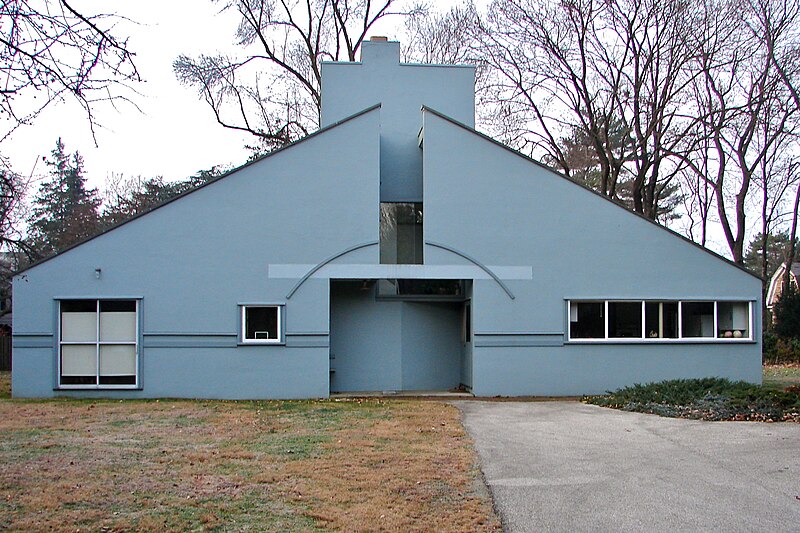
File:V_Venturi_H_720am.JPG · Wikimedia Commons · See Wikimedia Commons
postmodern architecture
Sign in to saveAlso known as postmodernism
architectural style that emerged in the 1960s
Key facts
- Years active
- Late 1950s–present
- Location
- International
- Major figures
- Robert Venturi , Philip Johnson , Charles Moore , Michael Graves
- Influences
- International style and modern
via Wikipedia infobox
Wikidata facts
- Instance of
- architectural style
- Founded by
- Gualtiero Galmanini
- Image
- Sanatoria Klimkovice, Hýlov, lázeňský dům A, postmoderní architektura 90. léta (01).jpg
Show 4 more facts
- Commons category
- Postmodern architecture
- topic's main category
- Category:Postmodern architecture
- start time
- 1970-00-00
- OpenStreetMap tag
- building:architecture=postmodernism
Sources (3)
via Wikidata · CC0
~40 min read
Encyclopedic overview
Postmodern architecture is a style or movement which emerged in the 1960s as a reaction against the austerity, formality, and lack of variety of modern architecture, particularly in the international style championed by Philip Johnson and Henry-Russell Hitchcock. The movement was formally introduced by the architect and urban planner Denise Scott Brown and architectural theorist Robert Venturi in their 1972 book Learning from Las Vegas, building upon Venturi's "gentle manifesto" Complexity and Contradiction in Architecture, published by the Museum of Modern Art in New York in 1966.
The style flourished from the 1980s through the 1990s, particularly in the work of Scott Brown & Venturi, Philip Johnson, Charles Moore and Michael Graves. In the late 1990s, it divided into a multitude of new tendencies, including high-tech architecture, neo-futurism, new classical architecture, and deconstructivism. However, some buildings built after this period are still considered postmodern.
Excerpted from Wikipedia’s “postmodern architecture” article, available under the CC BY-SA 4.0 licence.