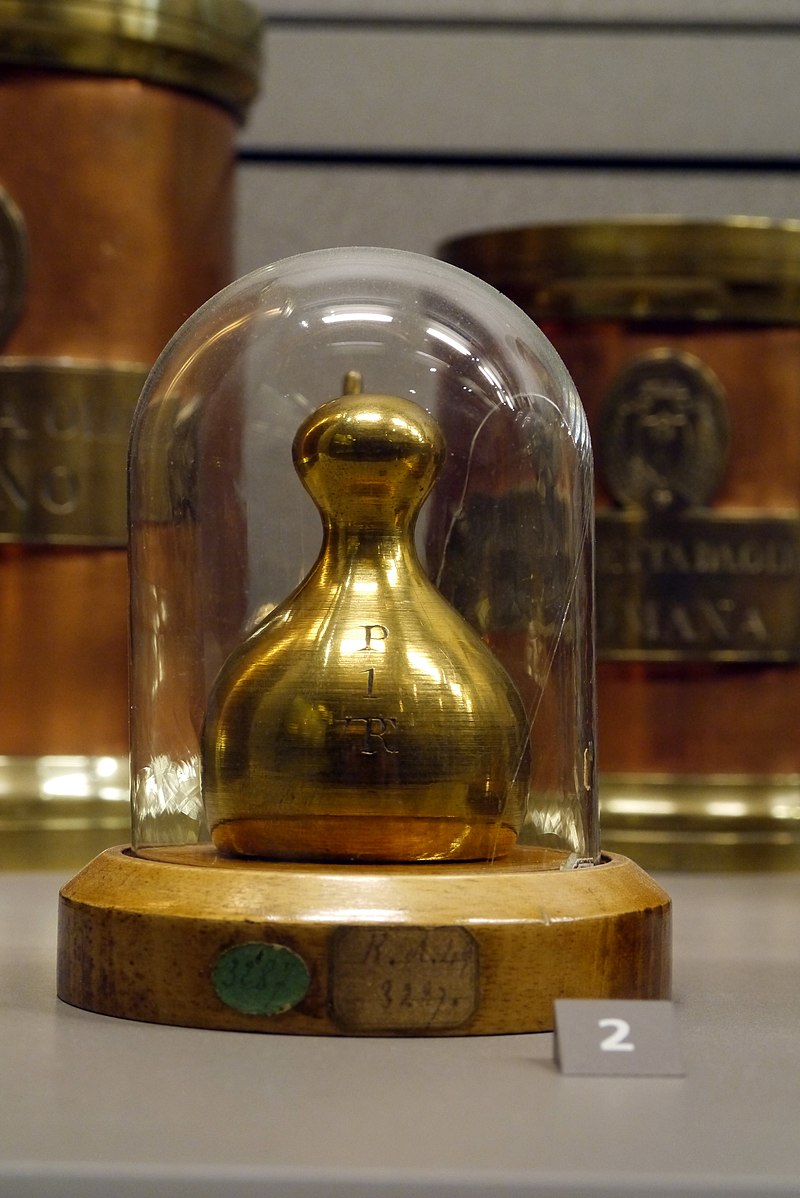
File:One_pound_avoirdupois_weight_-_Musée_des_arts_et_métiers_-_Inv_3287_-_01.jpg · Wikimedia Commons · See Wikimedia Commons
pound
Sign in to saveAlso known as lb, avoirdupois pound, pound-mass, pound mass, pound (mass), lbs, pounds, lbm
unit of mass in imperial, US customary, and avoirdupois systems of units
A pound is a unit of measurement used to describe how heavy something is, primarily in countries like the United States and other places that use imperial or customary measurement systems. It matters because it's the standard way people in these regions weigh everyday objects, from groceries to body weight, making it essential for commerce, cooking, and daily communication.
AI-generated from the Wikipedia summary — may contain errors.
Wikidata facts
- Part of
- imperial system of units
- Named after
- libra
- Image
- Balance ordinaire.jpg
Show 9 more facts
- on focus list of Wikimedia project
- Wikipedia:Vital articles/Level/4
- Unicode character
- ℔
- Commons category
- Pound (mass)
- conversion to SI unit
- 0.45359237
- measured physical quantity
- mass
- conversion to standard unit
- 7000
- unit symbol
- رطل
- Wikidata SPARQL query equivalent
- wd:Q100995 p:P2370/psn:P2370 [wikibase:quantityAmount ?source; wikibase:quantityUnit ?base]. ?item p:P2370/psn:P2370 [wikibase:quantityAmount ?target; wikibase:quantityUnit ?base]. BIND(?source / ?target as ?value)
- NCI Thesaurus ID
- C48531
Sources (3)
via Wikidata · CC0
~22 min read
Encyclopedic overview
The pound or pound-mass is a unit of mass used in both the British imperial and United States customary systems of measurement. Various definitions have been used; the most common today is the international avoirdupois pound, which is legally defined as exactly 0.45359237 kilograms, and which is divided into 16 avoirdupois ounces. The international standard symbol for the avoirdupois pound is lb; an alternative symbol (when there might otherwise be a risk of confusion with the pound-force) is lbm (for most pound definitions), # (chiefly in the U.S.), and ℔ or ″̶ (specifically for the apothecaries' pound).
The unit is descended from the Roman libra (hence the symbol lb, descended from the scribal abbreviation, ℔). The English word pound comes from the Roman libra pondo ('the weight measured in libra'), and is cognate with, among others, German Pfund, Dutch pond, and Swedish pund. These units remain in common use in many territories especially those which have not fully adopted the metric system.
Excerpted from Wikipedia’s “pound” article, available under the CC BY-SA 4.0 licence.
Gallery (4)
Available in 82 languages
- Español
- Français
- Deutsch
- 中文
- 日本語
- Русский
- Português
- Italiano
- العربية
- हिन्दी
- Afrikaans
- Aragonese
- Armenian
- Asturian
- Bahasa Indonesia
- Bangla
- Basque
- Bavarian
Show 63 more
- Bosnian
- Breton
- Bulgarian
- Catalan
- Chuvash
- Colognian
- Croatian
- Czech
- Danish
- Esperanto
- Estonian
- Faroese
- Finnish
- fiu_vro
- Galician
- Georgian
- Greek
- Haitian Creole
- Hebrew
- Hungarian
- Icelandic
- Jamaican Creole English
- Kazakh
- Latin
- Latvian
- Lithuanian
- Low German
- Luxembourgish
- Macedonian
- Malay
- Nederlands
- Northern Frisian
- Norwegian
- Norwegian Nynorsk
- Occitan
- Ossetic
- Piedmontese
- Polski
- Romanian
- Scots
- Serbian
- Serbian (Latin)
- simple
- Sindhi
- Slovak
- Slovenian
- Svenska
- Swahili
- Tamil
- Tatar
- Tiếng Việt
- Türkçe
- Ukrainian
- Uzbek
- Waray
- Western Frisian
- Wu Chinese
- Yakut
- Yiddish
- zh_yue
- فارسی
- ไทย
- 한국어
via Wikidata sitelinks · CC0