Phan, Quoc Toan;Ngo, Quoc Phu
Prodasineura
Sign in to saveProdasineura, the Asian threadtails, is a genus of damselflies in the family Platycnemididae. All the Afrotropical species formerly in this genus are now placed in Elattoneura, the African threadtails. Dijkstra et al. (2014) moved the genus (and related Elattoneura) from Protoneuridae to Platycnemididae based on molecular phylogenetic research.
Museum specimens
- Specimen records
- 150
- With media
- 28
- Family
- Platycnemididae
- Collections
- USNM
- Recorded in
- Hong Kong, Malaysia
Wikidata facts
- Instance of
- taxon
- Parent taxon
- Platycnemididae
- Image
- Prodasineura croconota.jpg
Show 4 more facts
- Commons category
- Prodasineura
- taxon name
- Prodasineura
- taxon rank
- genus
- topic's main category
- Category:Prodasineura
Sources (1)
via Wikidata · CC0
~1 min read
Encyclopedic overview
4 sectionsContents
- Description
- Habitats
- Species
- References
Prodasineura, the Asian threadtails, is a genus of damselflies in the family Platycnemididae. All the Afrotropical species formerly in this genus are now placed in Elattoneura, the African threadtails. Dijkstra et al. (2014) moved the genus (and related Elattoneura) from Protoneuridae to Platycnemididae based on molecular phylogenetic research.
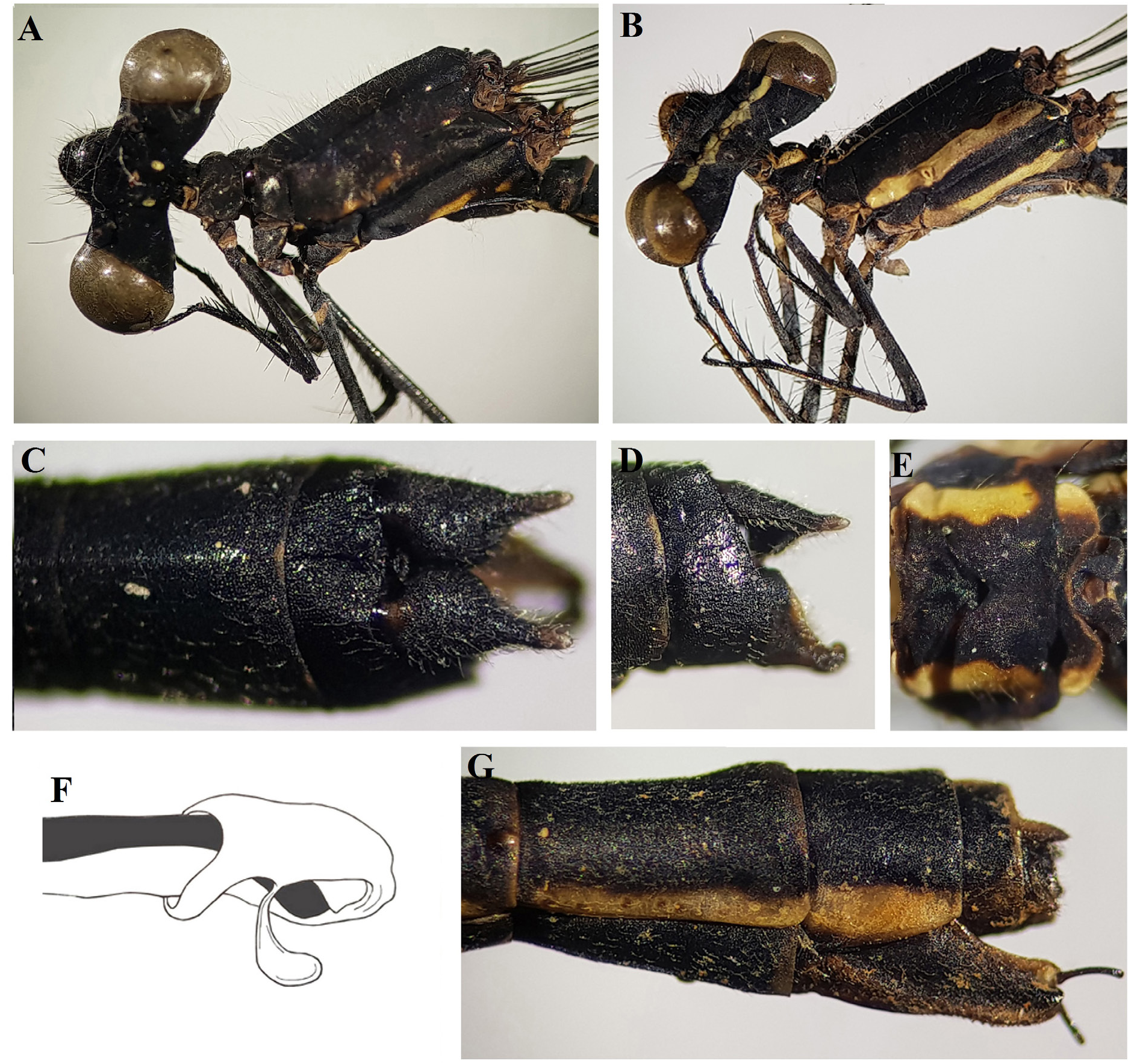
==Description== These are delicately built damselflies, with very wide heads. The males have starkly contrasting colours, typically a black body that is striped in blue, red or yellow. The colour pattern on the male's synthorax (which carries the wings) and tip of his abdomen, in combination with the shape of the four terminal appendages (the cerci and paraprocts, or male claspers for copulation) are useful features when distinguishing species in the genus. The cerci are generally hammer-like with a pointed apex, while the broad paraprocts taper abruptly towards a rounded tip. While females are broadly similar to males, details of their well-developed prothorax facilitate separation of species.
Excerpted from Wikipedia’s “Prodasineura” article, available under the CC BY-SA 4.0 licence.