Hickman, Carole S.
Propeamussiidae
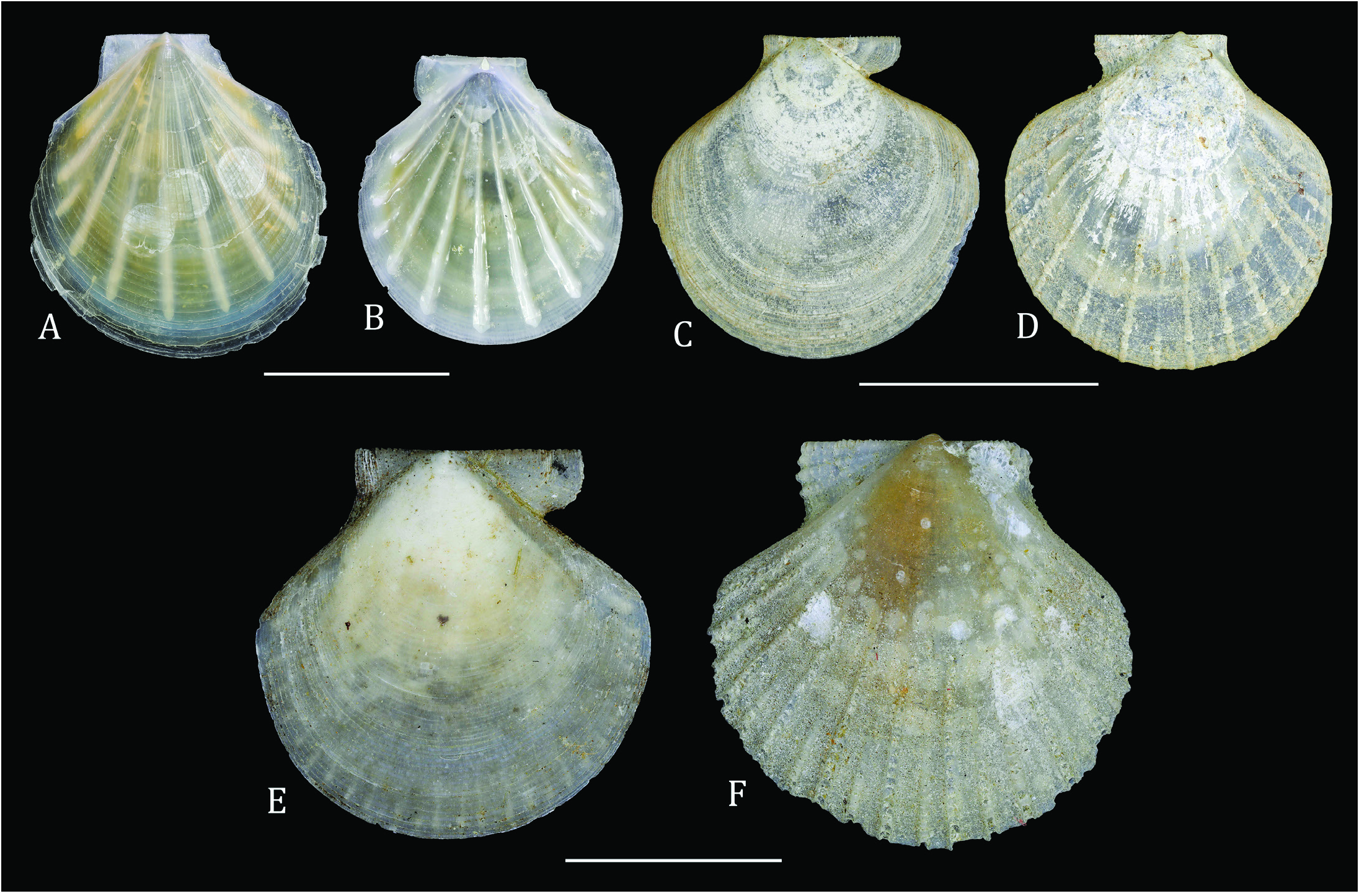
Sign in to savePropeamussiidae, sometimes referred to as glass scallops mud scallops or mud pectens, are a taxonomic family of saltwater clams, marine bivalve molluscs in the order Pectinida. As members of the superfamily Pectinoidea, they are closely related to scallops. Extant species are small in size, poorly known, and inhabit deep waters. None of the species within this family has a common name.
Species
ワタゾコツキヒ科
FAMILY
- KingdomAnimalia
- PhylumMollusca
- ClassBivalvia
- OrderPectinida
- FamilyPropeamussiidae
via GBIF
Museum specimens
- Specimen records
- 1,321
- With media
- 109
- Family
- Propeamussiidae
- Collections
- LACM, SDNHM, UCMP, USNM, CAS, MCZ
- Recorded in
- United States, Philippines, Colombia, Indonesia, Cuba
Wikidata facts
- Instance of
- taxon
- Parent taxon
- Pectinoidea
- Image
- Propeamussiidae - Propeamussium eocenicum.JPG
Show 4 more facts
- topic's main category
- Category:Propeamussiidae
- taxon name
- Propeamussiidae
- taxon rank
- family
- Commons category
- Propeamussiidae
Sources (1)
via Wikidata · CC0
~3 min read
Encyclopedic overview
2 sectionsContents
- Genera
- References
Propeamussiidae, sometimes referred to as glass scallops mud scallops or mud pectens, are a taxonomic family of saltwater clams, marine bivalve molluscs in the order Pectinida. As members of the superfamily Pectinoidea, they are closely related to scallops. Extant species are small in size, poorly known, and inhabit deep waters. None of the species within this family has a common name.
Valves of these animals are fragile, either equivalved or nearly so, small to medium-sized, and are described as subcircular to obscurely ovate in shape. Like other scallops, the valves have pronounced "ears" on the anterior and posterior sides of the hinge joint. Valves are also very nearly equilateral. All species have a byssal notch which will vary with depth of species.
Excerpted from Wikipedia’s “Propeamussiidae” article, available under the CC BY-SA 4.0 licence.