File:Flickr_-_The_U.S._Army_-_U.S._Army_World_Class_Athlete_Program_Paralympic.jpg · Wikimedia Commons · See Wikimedia Commons
prosthesis
Sign in to saveAlso known as prosthetics, prostheses, Prostheses and Implants, prosthetic device, prosthetic implant
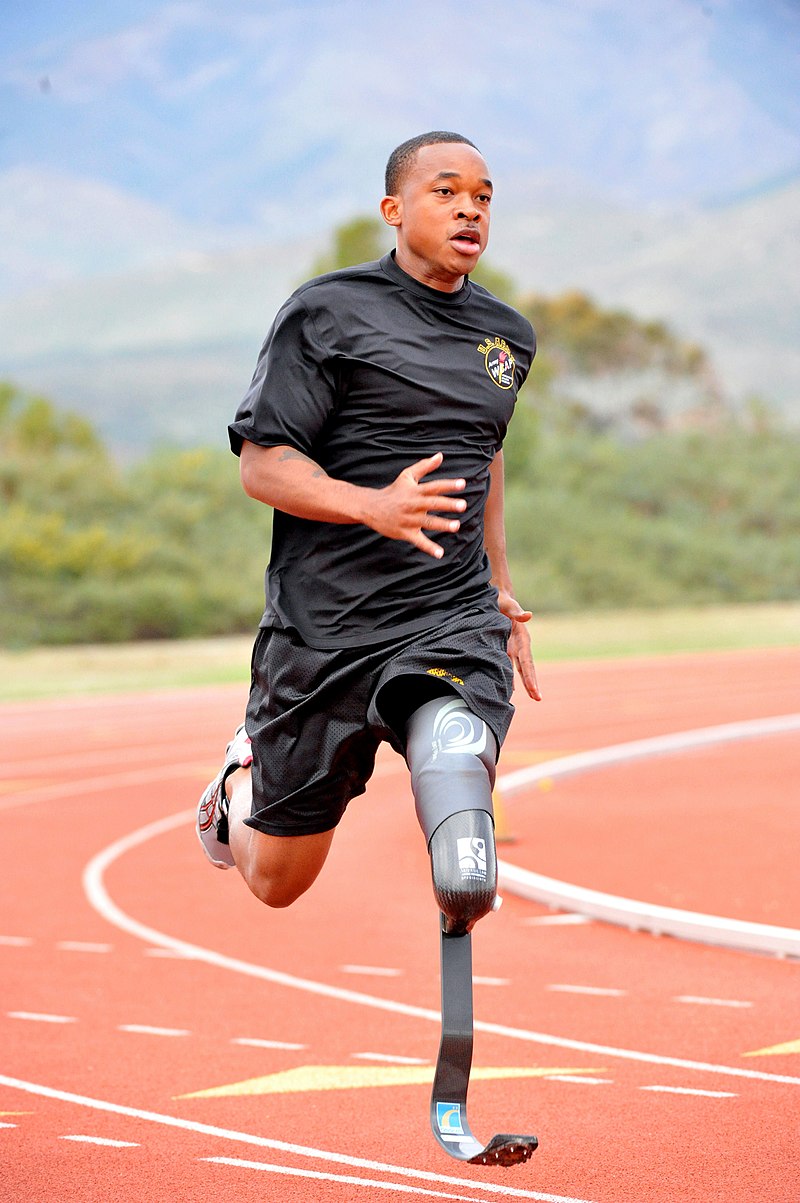
thumb|A person with a running prosthesis In medicine, a prosthesis (: prostheses; from ), or a prosthetic implant, is an artificial device that replaces a missing body part, which may be lost through physical trauma, disease, or a condition present at birth (congenital disorder). Prostheses may restore the normal functions of the missing body part, or may perform a cosmetic function.
A prosthesis is an artificial device that replaces a body part lost due to injury, illness, or a condition present from birth. It can help restore the function of the missing part or improve a person's appearance.
AI-generated from the Wikipedia summary — may contain errors.
Research
712,270 papers- [THE TOTAL PROSTHESIS].ReviewDeutsche Stomatologie · 1964PETZ R
- [Immediate prosthesis].Revista dental de Chile · 1946LOPEZ ROMAN J
- Immediate denture prosthesis.Oral health · 1947GIELER CW
- New cineplastic prosthesis.The Journal of bone and joint surgery. American volume · 1951CANTY TJ
- Angelchik prosthesis.The Annals of thoracic surgery · 1986Brown HSDOI: 10.1016/s0003-4975(10)60533-4
- [THE BREAST PROSTHESIS].Revue medicale de Liege · 1964BOVY G, LUCAS P
- [Immediate prosthesis].Zobozdravstveni vestnik · 1955SUVIN M
- [Magnetic prosthesis].Medicamenta · 1953SIMO LLOR M
via PubMed
Wikidata facts
- Image
- James Edward Hanger.jpg
Show 5 more facts
- Commons category
- Prostheses
- topic's main category
- Category:Prosthetics
- different from
- prothesis
- studied by
- science of prosthetics
- P8168
- Phil Bennett
via Wikidata · CC0
~74 min read
Encyclopedic overview
64 sectionsContents
- Types
- Limb prostheses
- Prosthetic raw materials
- Organ prostheses
- History
- Wood and metal prosthetics
- Technology progress before the 20th century
- Lower extremity modern history
- Upper extremity modern history
- Design trends moving forward
- Patient procedure
- Current technology and manufacturing
- Production of prosthetic socket
- Body-powered arms
- Sockets
- Wrists
- Voluntary opening and voluntary closing
- Feedback
- Terminal devices
- Hooks
- Hands
- Commercial providers and materials
- Lower-extremity prosthetics
- Socket
- Shank and connectors
- Foot
- Knee joint
- Microprocessor control
- Myoelectric
- Robotic prostheses
- Robotic arms
- Robotic transtibial prostheses
- Prosthesis design
- Use of recycled materials
- {{anchor|endoprosthesis|endo-exoprothesis|prosthetic implant|prosthetic joint implant}} Direct bone attachment and osseointegration
- Cosmesis
- Cognition
- Prosthetic enhancement
- Oscar Pistorius
- Design considerations
- Performance
- Other
- Design for Prosthetics
- Cost and source freedom
- High-cost
- Low-cost
- Open-source robotic prosthesis
- Low-cost prosthetics for children
- Pole and crutch
- Bamboo, PVC or plaster limbs
- Adjustable bicycle limb
- Sathi Limb
- Monolimb
- Cultural and social theory perspectives
- Social implications
- Ethical concerns
- Debates
- Notable users of prosthetic devices
- Mythological
- See also
- References
- Citations
- Sources
- External links
thumb|A person with a running prosthesis In medicine, a prosthesis (: prostheses; from ), or a prosthetic implant, is an artificial device that replaces a missing body part, which may be lost through physical trauma, disease, or a condition present at birth (congenital disorder). Prostheses may restore the normal functions of the missing body part, or may perform a cosmetic function.
A person who has undergone an amputation is sometimes referred to as an amputee, Rehabilitation for someone with an amputation is primarily coordinated by a physiatrist as part of an inter-disciplinary team consisting of physiatrists, prosthetists, nurses, physical therapists, and occupational therapists. Prostheses can be created by hand or with computer-aided design (CAD), a software interface that helps creators design and analyze the creation with computer-generated 2-D and 3-D graphics as well as analysis and optimization tools.
Excerpted from Wikipedia’s “prosthesis” article, available under the CC BY-SA 4.0 licence.