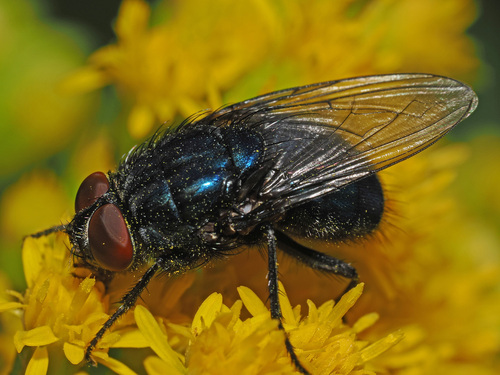
(c) Felix Riegel, some rights reserved (CC BY-NC), uploaded by Felix Riegel · cc-by-nc
Protocalliphora
Sign in to saveProtocalliphora or bird blowflies are a blow fly genus containing many species which are obligate parasites of birds. Eggs are laid in bird nests. After hatching, the larvae suck the blood of nestlings. They sometimes feed inside the nostrils of nestling birds and destroy the tissue at the base leading to reduced growth of the upper mandible and the young growing with "shovel-beaks". The species overwinter as adults.
Species
Bird Blowfly
GENUS
- KingdomAnimalia
- PhylumArthropoda
- ClassInsecta
- OrderDiptera
- FamilyCalliphoridae
via GBIF
Museum specimens
- Specimen records
- 103
- With media
- 16
- Family
- Calliphoridae
- Collections
- UHIM, UAM, UMNH, USNM, MCGILL UNIVERSITY, UNIVERSITY OF GUELPH, CENTRE FOR BIODIVERSITY GENOMICS
- Recorded in
- United States, Canada
Wikidata facts
- Instance of
- taxon
- Parent taxon
- Calliphoridae
- Image
- Protocalliphora.azurea2.-.lindsey.jpg
Show 5 more facts
- taxon name
- Protocalliphora
- taxon rank
- genus
- topic's main category
- Category:Protocalliphora
- Commons category
- Protocalliphora
- diel cycle
- diurnality
Sources (1)
via Wikidata · CC0
~1 min read
Encyclopedic overview
2 sectionsContents
- References
- External links
Protocalliphora or bird blowflies are a blow fly genus containing many species which are obligate parasites of birds. Eggs are laid in bird nests. After hatching, the larvae suck the blood of nestlings. They sometimes feed inside the nostrils of nestling birds and destroy the tissue at the base leading to reduced growth of the upper mandible and the young growing with "shovel-beaks". The species overwinter as adults.
The genus is affected by Wolbachia bacteria and it has been suggested that horizontal gene transfer may have led to the difficulty in separating species of Protocalliphora through DNA barcoding, with several species possessing identical mtDNA Cytochrome oxidase I sequences.
Excerpted from Wikipedia’s “Protocalliphora” article, available under the CC BY-SA 4.0 licence.