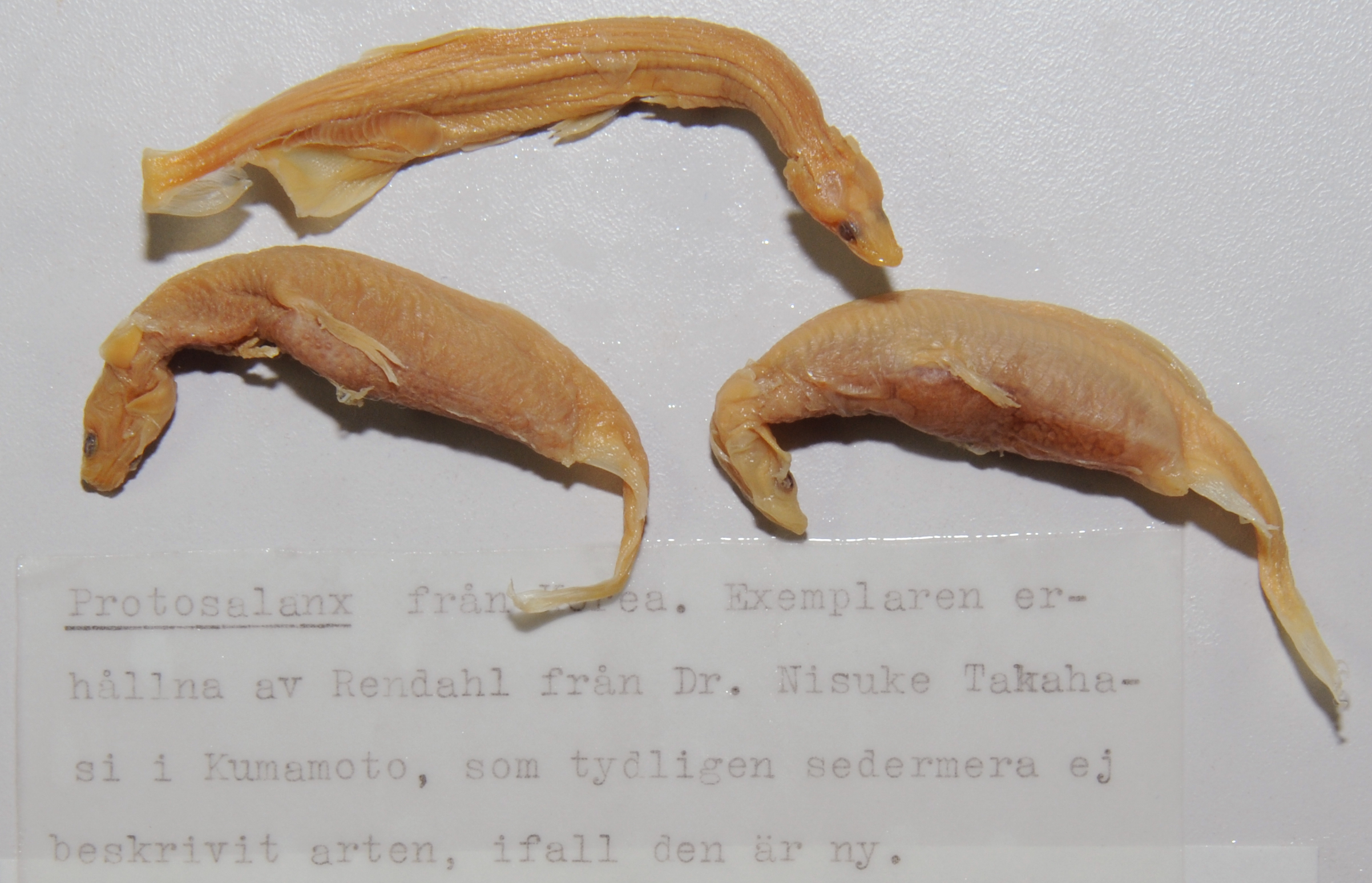
Specimen image via iDigBio
Protosalanx
Sign in to saveProtosalanx is a small genus of icefishes that are native to China, Korea and Vietnam where they primarily inhabit coastal waters and nearby fresh waters. They are commercially fished and used for aquaculture in China, where also introduced to some inland waters like Lake Dianchi. In addition to being eaten locally in Asia, they are exported to southern Europe as a replacement of the more expensive transparent goby, a Mediterranean species used in the local cuisine. This replacement is often done openly, but sometimes it is done fraudulently.
Species
GENUS
- KingdomAnimalia
- PhylumChordata
- ClassTeleostei
- OrderOsmeriformes
- FamilySalangidae
via GBIF
Museum specimens
- Specimen records
- 2
- With media
- 1
- Family
- Salangidae
- Collections
- CAS, NRM
- Recorded in
- South Korea, Korea
Wikidata facts
- Instance of
- taxon
- Parent taxon
- Salangidae
- Image
- Clearhead icefish, Protosalanx hyalocranius.jpg
Show 3 more facts
- taxon name
- Protosalanx
- taxon rank
- genus
- topic's main category
- Category:Protosalanx
Sources (1)
via Wikidata · CC0
~2 min read
Encyclopedic overview
3 sectionsContents
- Species
- Genome and sex-determination
- References
Protosalanx is a small genus of icefishes that are native to China, Korea and Vietnam where they primarily inhabit coastal waters and nearby fresh waters. They are commercially fished and used for aquaculture in China, where also introduced to some inland waters like Lake Dianchi. In addition to being eaten locally in Asia, they are exported to southern Europe as a replacement of the more expensive transparent goby, a Mediterranean species used in the local cuisine. This replacement is often done openly, but sometimes it is done fraudulently.
Protosalanx are up to in standard length, have a transparent body and largely lack scales. They are open-water fish. Small Protosalanx mostly feed on zooplankton, but larger individuals also take small fish, including cannibalism of young of their own species. They are naturally anadromous, with adults migrating from their coastal sea habitat into estuaries to spawn and the juveniles returning to the coastal sea. However, some of the introduced populations have been able to adapt their life cycle and always stay in fresh water.
Excerpted from Wikipedia’s “Protosalanx” article, available under the CC BY-SA 4.0 licence.