(c) Nick Fitzgerald, some rights reserved (CC BY-NC), uploaded by Nick Fitzgerald · cc-by-nc
Pterygopappus
Sign in to savePterygopappus is a genus of flowering plants in the tribe Gnaphalieae within the family Asteraceae. There is only one known species, Pterygopappus lawrencii (sage cushion plant), which is endemic to alpine Tasmania. It forms thick, light blue/green mats with densely packed leaves. It is most common in the mountains of the northeastern part of the island. It is a slow grower and prefers cool, moist environments.
Species
sage cushion plant
GENUS
- KingdomPlantae
- PhylumTracheophyta
- ClassMagnoliopsida
- OrderAsterales
- FamilyAsteraceae
via GBIF · Kew POWO
Museum specimens
- Specimen records
- 27
- With media
- 5
- Family
- Asteraceae
- Collections
- MEL, K
- Recorded in
- Australia
Wikidata facts
- Instance of
- taxon
- Parent taxon
- Gnaphalieae
- Image
- Pterygopappus lawrencei 1.jpg
Show 4 more facts
- taxon name
- Pterygopappus
- taxon rank
- genus
- Commons category
- Pterygopappus
Sources (1)
via Wikidata · CC0
~3 min read
Encyclopedic overview
5 sectionsContents
- Description
- Habitat and distribution
- Ecological importance
- Threats
- References
Pterygopappus is a genus of flowering plants in the tribe Gnaphalieae within the family Asteraceae. There is only one known species, Pterygopappus lawrencii (sage cushion plant), which is endemic to alpine Tasmania. It forms thick, light blue/green mats with densely packed leaves. It is most common in the mountains of the northeastern part of the island. It is a slow grower and prefers cool, moist environments.
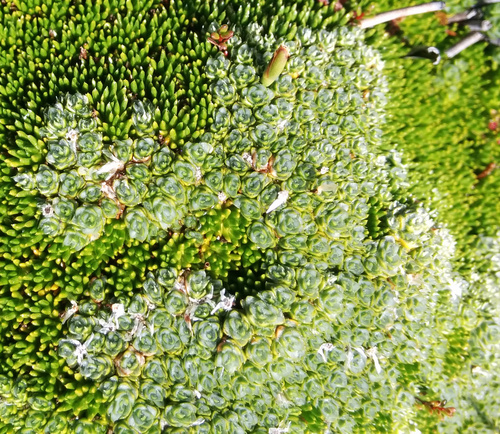
== Description == Pterygopappus lawrencii has a noticeably tufted habit and is easily identified by its sage-green leaves which are no more than 5 mm long. These leaves are tightly congested and can be said to resemble a small cabbage or rose. They are covered in very fine, small and white hairs. Beneath the tightly grouped sets of leaves, stems elongate at a rate which is equal to the rate at which new leaves are produced. It is therefore difficult to identify which leaves are connected to which stem. This is the main method for how this species spreads across the alpine landscape. From the centre of the small ‘rosette’ emerges a white, small daisy like flower between December- March. The fruit of this species is an achene.
Excerpted from Wikipedia’s “Pterygopappus” article, available under the CC BY-SA 4.0 licence.