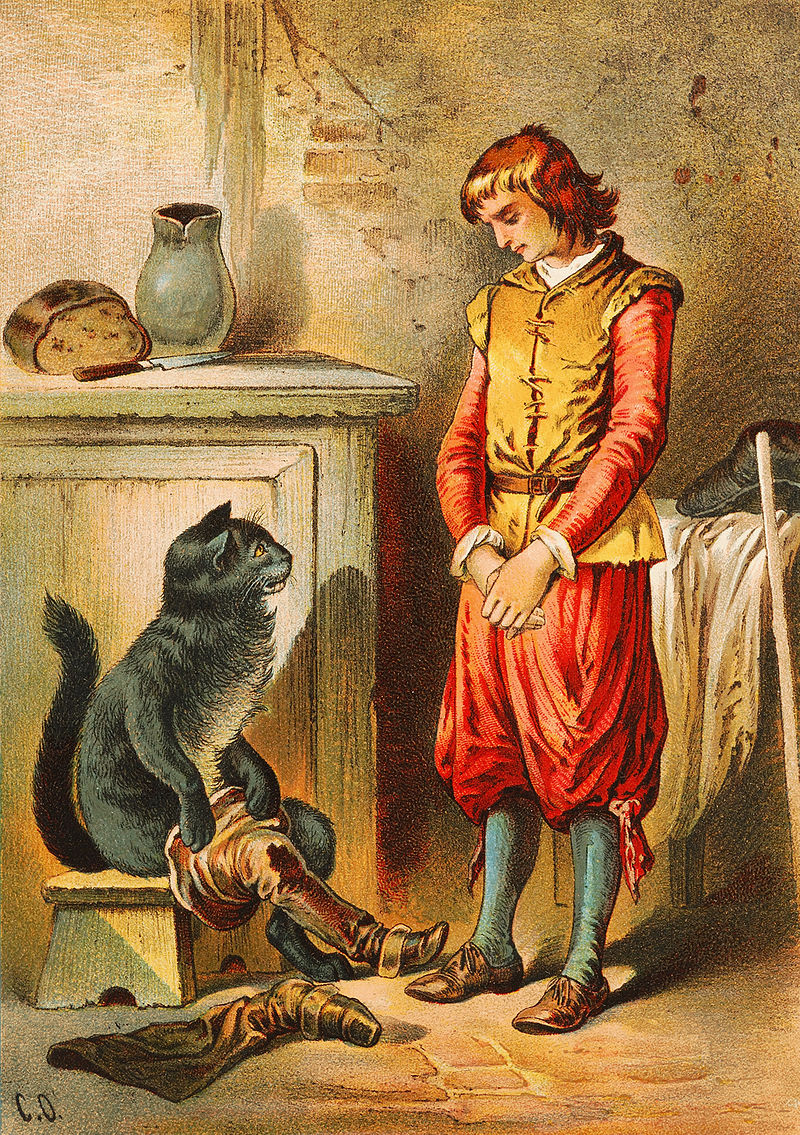
File:Offterdinger_Der_gestiefelte_Kater_(1).jpg · Wikimedia Commons · See Wikimedia Commons
Puss in Boots
Sign in to savefairy tale with multiple variants (ATU 545B)
"Puss in Boots" is a classic fairy tale that exists in many different versions across cultures, classified by folklorists as tale type ATU 545B. The story has endured for centuries because its various adaptations explore themes of cleverness, resourcefulness, and social mobility through the adventures of a witty cat.
AI-generated from the Wikipedia summary — may contain errors.
Wikidata facts
- Author
- Charles Perrault
- Genre
- folk tale
- Image
- Gustave Dore le chat botte.png
Show 5 more facts
- Commons category
- Puss in boots
- topic's main category
- Category:Puss in Boots
- Commons gallery
- Puss in Boots
- Aarne–Thompson–Uther Tale Type Index
- 545B
- topic has template
- Template:Puss in Boots
Sources (6)
via Wikidata · CC0
~9 min read
Encyclopedic overview
"Puss in Boots" (German: Der gestiefelte Kater; French: Le Maître chat ou le Chat botté; Italian: Il gatto con gli stivali; Dutch: De Gelaarsde Kat) is a European fairy tale about an anthropomorphic cat who uses trickery and deceit to gain power, wealth, and the hand in marriage of a princess for his penniless and low-born master.
The oldest written telling is Costantino Fortunato (Italian for "Lucky Costantino") by Italian author Giovanni Francesco Straparola, included in The Facetious Nights of Straparola (c. 1550–1553). In this version, the cat is a disguised fairy who helps his owner, a poor boy named Costantino from Bohemia, in earning the princess' hand by duping a king, a lord, and many commoners. Another version was published in 1634 by Giambattista Basile with the title Cagliuso. The most popular version of the tale was published in French in 1697 by Charles Perrault (1628–1703), a retired civil servant and member of the Académie française.
Excerpted from Wikipedia’s “Puss in Boots” article, available under the CC BY-SA 4.0 licence.