Putinversteher
Sign in to saveAlso known as Putin-Versteher, Putin-Empathizer, Russlandversteher
thumb|A Putinversteher logo similar to what may be seen on T-shirts, mugs, and the like Putinversteher or Putin-Versteher (, female form Putinversteherin) is a German neologism (Putin + verstehen), which literally translates to "Putin understander", i.e. "one who understands Putin". It is a pejorative reference to politicians and pundits who express empathy to Vladimir Putin and may also be translated as "Putin-Empathizer". Similar words include Russlandversteher and Russland-Versteher ("Russia-Empathizer").
Described at
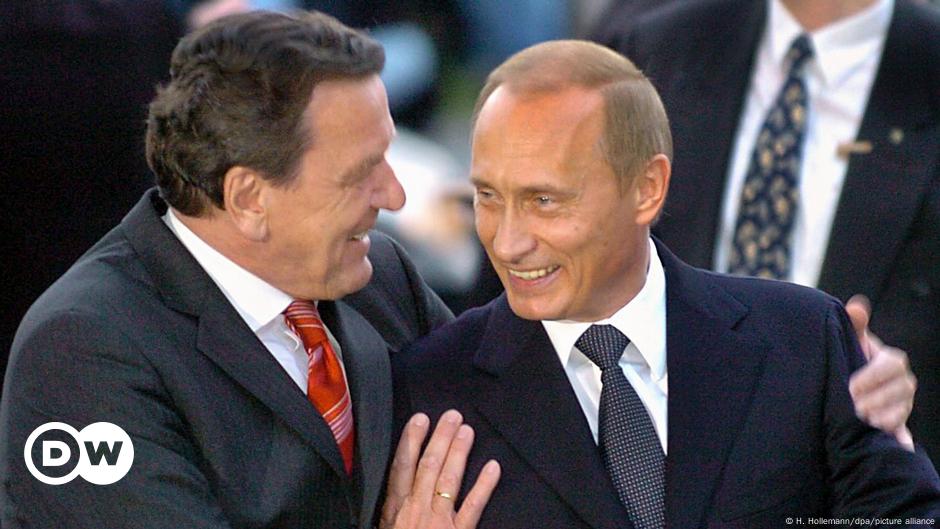
Der "Putinversteher" geht um die Welt
Die deutsche Wortschöpfung hat einen englischen Wikipedia-Eintrag bekommen. Doch was versteht man eigentlich unter einem Putinversteher? Und wer zählt dazu?
dw.com →Der frühere deutsche Kanzler Gerhard Schröder ist einer der bekanntesten "Putinversteher"Bild: H. Hollemann/dpa/picture alliance Wenn ein Wikipedia-Eintrag ein Indikator dafür ist, was man heutzutage wissen muss, dann sollte die Welt einen Blick auf die neue englischsprachige Seite für den "Putinversteher" werfen. Für deutsche Muttersprachler erschließt sich der Begriff von selbst: Es geht um jemanden, der Verständnis für den russischen Präsidenten Wladmir Putin hat. Es ist nicht das erste deutsche Wort, das sich über die Jahre in der englischen Sprache etabliert hat. Dazu gehört zum Beispiel der Terminus "Lügenpresse" , der ursprünglich von den Nazis eingeführt wurde. Die Absicht dahinter: Medienberichte zu diskreditieren, die nicht der eigenen Ideologie folgen. In den letzten Jahren feierte die "Lügenpresse" ihr Comeback in der rechtspopulistischen Partei AfD (Alternative für Deutschland) und unter Donald-Trump-Anhängern. AfD-Demo in Rostock (2015): Die Beschimpfung "Lügenpresse" ist auch im englischsprachigen Raum verbreitetBild: picture-alliance/dpa/B. Wüstneck Wenn man im Deutschen einen "Versteher" ans Wortende hängt, dann hat das einen ironischen und spöttischen Unterton, hat auch die englische Zeitung "The Economist" festgestellt. So beschreibt das Wort "Frauenversteher" einen Mann, der sich seiner besonders guten Beziehung zu Frauen rühmt. Ein "Putinversteher" ist folglich jemand, der Empathie für den russischen Präsidenten empfindet. Schon 2014, nach der Annexion der Krim , war der Begriff negativ belastet - seit dem Angriff auf die Ukraine am 24. Februar ist er schon fast ein Schimpfwort. Als Russland den Krieg begann, betonten "Putinversteher", darunter prominente deutsche Politiker und Talk Show-Experten, dass die Ausweitung der NATO nach Osten von Russland als reale Bedrohung verstanden werden musste. Die Invasion der Ukraine wurde mit dem Einmarsch der USA in den Irak im Jahr 2003 verglichen, einem weiteren nicht zu rechtfertigenden Krieg. "Putinversteher" heißen zwar die derzeitigen Gewaltexzesse nicht gut, aber - so kann man es bei Wikipedia nachlesen - in ihrer Haltung gegenüber dem russischen Präsidenten und seinem Führungsstil schwingt ein "Ja, aber wir können seine Position verstehen" mit. Gern greifen "Putinversteher" auch zur "Whataboutism"-Strategie: Sie reagieren auf eine Anschuldigung mit einer schwierigen Gegenfrage. Oder sie verweisen bei Kritik an Russland darauf, dass auch der Westen schlimme Taten begangen habe. "Putinversteher" sind vor allem, aber nicht nur in populistischen Parteien zu Hause. Ihre Grundhaltung zieht sich quer durch das politische Spektrum Deutschlands, wobei einige Politiker, die für die Annexion der Krim noch Verständnis zeigten, jetzt Abstand nehmen oder sich zumindest nicht mehr öffentlich als "Putinversteher" zu erkennen geben. So wie andere rechtspopulistische Parteien in Europa, hat auch die AfD in Deutschland enge Beziehungen zu Russland gepflegt. Nach dem Einmarsch in die Ukraine kämpft die Partei jetzt um eine einheitliche Position. Auch Sahra Wagenknecht, die stellvertretende Vorsitzende der Linksfraktion, hatte Putins Handeln immer wieder gerechtfertigt. "Vielleicht sollten wir Russland einfach mal ernst nehmen und seine Sicherheitsinteressen respektieren", sagte sie im Februar in einer Talkshow - wenige Tage vor dem Einmarsch der russischen Armee in die Ukraine. Noch vor Kriegsbeginn und bevor der Begriff "Putinversteher" Eingang in die Wikipedia-Enzyklopädie fand, tauchte er mehrfach in englischsprachigen Artikeln auf. Im Januar 2021 veröffentlichte Riddle - ein politisches Analyse-Medium im Netz mit Fokus auf Russland - einen Artikel des Historikers und Politikwissenschaftlers Dmitiri Stratievski. Er stellte darin die Frage, ob Armin Laschet, damals noch der Kopf der Christlich Demokratischen Union (CDU), eine Art "merkelianischer Putinversteher" sei, weil er den Bezug russischen Gases für Deutschland unterstütze - so wie Angela Merkel es getan hatte.
Excerpt from a page describing this subject · 24,830 chars · not written by Vinony
~9 min read
Encyclopedic overview
10 sectionsContents
- Origin
- Scope and usage
- Characterization
- In Germany
- In France
- In the Netherlands
- In Russia
- See also
- References
- External links
thumb|A Putinversteher logo similar to what may be seen on T-shirts, mugs, and the like Putinversteher or Putin-Versteher (, female form Putinversteherin) is a German neologism (Putin + verstehen), which literally translates to "Putin understander", i.e. "one who understands Putin". It is a pejorative reference to politicians and pundits who express empathy to Vladimir Putin and may also be translated as "Putin-Empathizer". Similar words include Russlandversteher and Russland-Versteher ("Russia-Empathizer").
== Origin == The term was first used in March 2014 by the German publications Der Spiegel and Die Welt, shortly after the annexation of Crimea by the Russian Federation. Der Spiegel used the term when Die Linke politician Sahra Wagenknecht and other party members said that the annexation of Crimea was understandable and justified, arguing that Russia's "legitimate interests in the region" must be taken into consideration. That same month, Die Welt labelled some other people that, who, they view as going too far in their "understanding" of Putin. Foremost was former Social Democratic of Germany (SPD) leader and German chancellor Gerhard Schröder, whose supporters were also irritated by his closeness to Putin.
Excerpted from Wikipedia’s “Putinversteher” article, available under the CC BY-SA 4.0 licence.