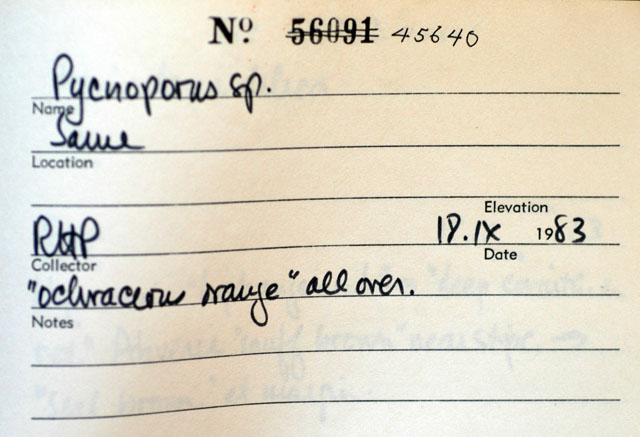
Specimen image via iDigBio · BY-NC-SA
Pycnoporus
Sign in to savePycnoporus is a genus of fungi in the family Polyporaceae. This genus is distinguished from most other polypores because of its brilliant red-orange color. Modern mycology recognizes five distinct species of Pycnoporus: the type P. cinnabarinus, P. coccineus, P. palibini, P. puniceus, and P. sanguineus. These species are divided somewhat by morphology, biogeography, and DNA sequence.
Species
Genus
- PhylumPlatyhelminthes
- ClassTrematoda
- OrderPlagiorchiida
- FamilyLecithodendriidae
via
Museum specimens
- Specimen records
- 67
- With media
- 11
- Family
- Polyporaceae
- Collections
- INSTITUTO NACIONAL DE PESQUISAS DA AMAZÔNIA (INPA), USNM, TENN-F, UFBA, OSC, MEL
- Recorded in
- Brasil, Egypt, United States, Japan, China, Australia, Thailand
Wikidata facts
- Instance of
- taxon
- Parent taxon
- Polyporaceae
- Image
- Pycnoporus cinnabarinus 02.jpg
Show 5 more facts
- taxon name
- Pycnoporus
- taxon rank
- genus
- Commons category
- Pycnoporus
- topic's main category
- Category:Pycnoporus
- taxon author citation
- P.Karst.
Sources (2)
via Wikidata · CC0
~4 min read
Encyclopedic overview
5 sectionsContents
- Biogeography
- Description
- Identification
- Uses
- References
Pycnoporus is a genus of fungi in the family Polyporaceae. This genus is distinguished from most other polypores because of its brilliant red-orange color. Modern mycology recognizes five distinct species of Pycnoporus: the type P. cinnabarinus, P. coccineus, P. palibini, P. puniceus, and P. sanguineus. These species are divided somewhat by morphology, biogeography, and DNA sequence.
==Biogeography== Pycnoporus cinnabarinus occurs in cooler, temperate regions within Europe and North America. Pycnoporus sanguineus occurs in warmer, tropical regions within South America, North America, and Asia. Pycnoporus coccineus occurs in temperate areas of Australia and New Zealand. Pycnoporus puniceus is a rare species found in Southeastern Asia and Malaysia.
Excerpted from Wikipedia’s “Pycnoporus” article, available under the CC BY-SA 4.0 licence.