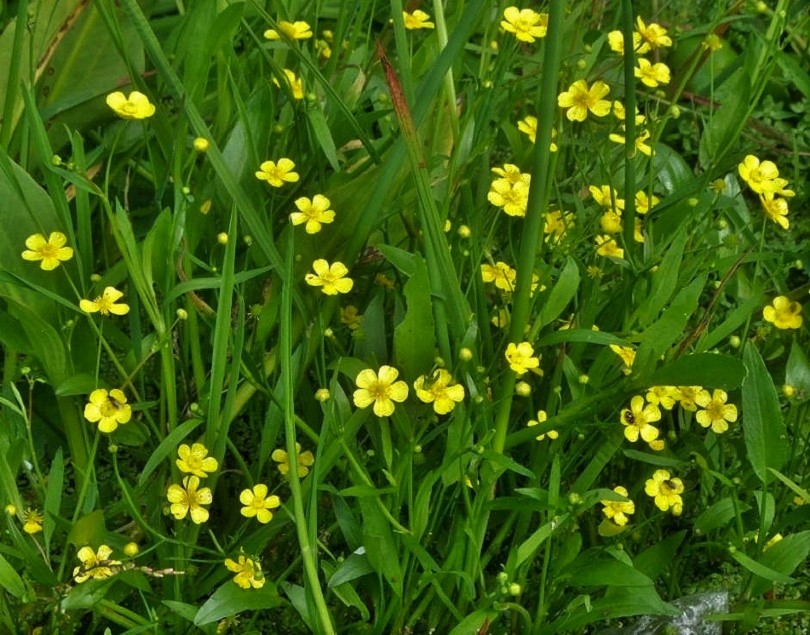
Image from GBIF · CC BY
OverviewAI-generated
Ranunculus flammula is a species of plant in the family Ranunculaceae, belonging to the genus Ranunculus. It is classified within the order Ranunculales and the class Magnoliopsida. The species was described in Species Plantarum and has the accepted taxonomic status. Common names for this plant include greater creeping spearwort, Petite Douve, Petite Flamme, llafnlys bach, and egelboterbloem.
The organism inhabits freshwater environments. Its native range includes Alaska, Albania, Alberta, Algeria, Altay, Arizona, Austria, the Azores, the Baltic States, Belarus, Belgium, and British Columbia. It has also been introduced to New South Wales, South Australia, Tasmania, and Victoria. The IUCN Red List assessed the species as Least Concern in 2014.
Synthesized by Vinony from 41 facts across 8 sources: Wikidata, WoRMS, GBIF, Gbif Occ, IUCN Red List, Plants of the World, iDigBio, Vinony graph. Generated from structured data (not the Wikipedia text) and checked against those facts — may still contain errors.
Species
Least Concernegelboterbloem
SPECIES
- KingdomPlantae
- PhylumTracheophyta
- ClassMagnoliopsida
- OrderRanunculales
- FamilyRanunculaceae
via GBIF · IUCN · Kew POWO
Museum specimens
- Specimen records
- 5,286
- With media
- 3,781
- Family
- Ranunculaceae
- Collections
- UNIVERSITY OF ALBERTA MUSEUMS, GH, SD, CHSC, OSU, MADUG-UG
- Recorded in
- Canada, Mexico, United States
Wikidata facts
- Instance of
- taxon
- Parent taxon
- Ranunculus
- Image
- RanunculusFlammula4.jpg
Show 8 more facts
- taxon rank
- species
- taxon name
- Ranunculus flammula
- Commons category
- Ranunculus flammula
- IUCN conservation status
- Least Concern
- Commons gallery
- Ranunculus flammula
- taxon common name
- žgoča zlatica
- short name
- R. flammula
via Wikidata · CC0
~1 min read
Encyclopedic overview
Ranunculus flammula, the lesser spearwort, greater creeping spearwort or banewort, is a species of perennial herbaceous plants in the genus Ranunculus (buttercup), growing in damp places throughout the Boreal Kingdom. It flowers June/July. Ranunculus flammula is poisonous. It is very closely related to R. reptans, which is distinguished by prostrate and more slender stems, narrower leaves and smaller flowers and is sometimes included within R. flammula sensu lato as a variety (R. flammula var. reptans (L.) E. Meyer).
In addition to other forms of pollination, this plant is adapted to rain-pollination.
Excerpted from Wikipedia’s “Ranunculus flammula” article, available under the CC BY-SA 4.0 licence.