File:Regions_and_Prefectures_of_Japan_no_labels.svg · Wikimedia Commons · See Wikimedia Commons
region of Japan
Also known as list of regions of Japan, List of regions of Japan
geographic region in Japan
AI overview
A region of Japan is an area within the country that groups together prefectures based on shared geography, culture, or history. Understanding regions helps people organize information about Japan's diverse landscapes, industries, and ways of life across the country.
AI-generated from the Wikipedia summary — may contain errors.
Wikidata facts
Show 1 more fact
- Commons category
- Regions of Japan
via Wikidata · CC0
~4 min read
Article
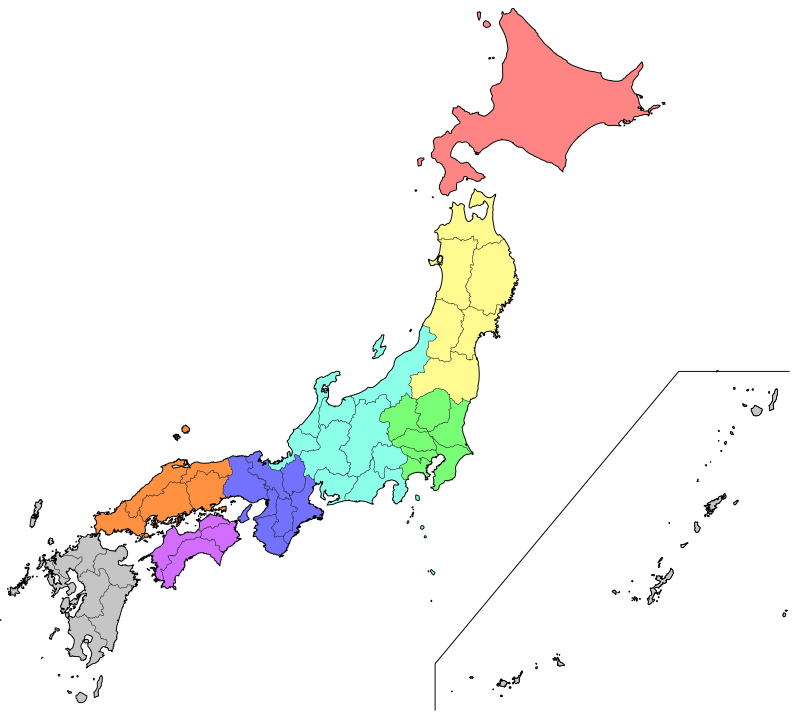
Map of the regions of Japan. From northeast to southwest: Hokkaidō (red), Tōhoku (yellow), Kantō (green), Chūbu (cyan), Kansai (indigo), Chūgoku (orange), Shikoku (purple), and Kyūshū & Okinawa (grey).
Japan is often divided into regions, each containing one or more of the country's 47 prefectures at large. Sometimes, they are referred to as "blocs" (ブロック, burokku), or "regional blocs" (地域ブロック, chiiki burokku) as opposed to more granular regional divisions. They are not official administrative units, though they have been used by government officials for statistical and other purposes since 1905. They are widely used in, for example, maps, geography textbooks, and weather reports, and many businesses and institutions use their home regions in their names as well, for example Kyushu National Museum, Kinki Nippon Railway, Chūgoku Bank, and Tōhoku University.