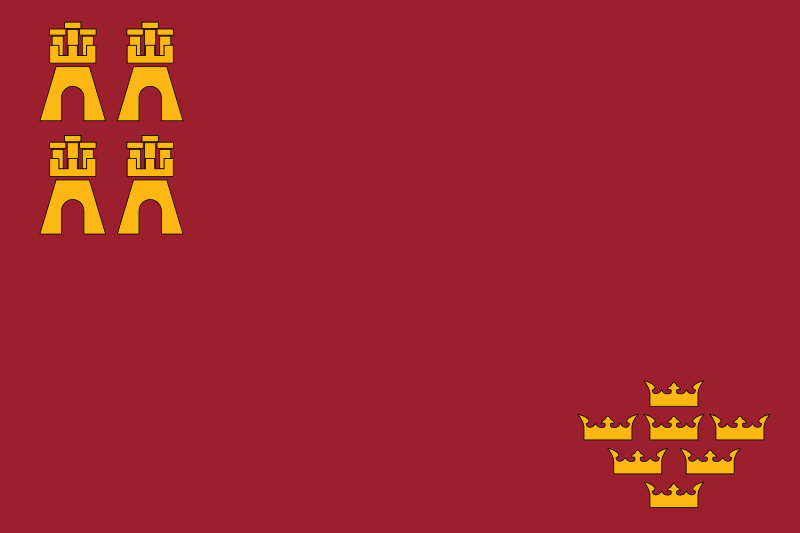
Region of Murcia
Also known as Autonomous Community of the Region of Murcia, Región de Murcia, Comunidad Autónoma de la Región de Murcia, CARM, Provincia de Murcia, Murcia province, Murcia region, Region de Murcia
autonomous community of Spain
AI overview
The Region of Murcia is an autonomous community located in southeastern Spain that has its own regional government and administration. It matters as part of Spain's system of devolved governance, where different regions manage their own local affairs while remaining part of the Spanish state.
AI-generated from the Wikipedia summary — may contain errors.
Wikidata facts
- Demonym
- murciano
- Population
- 1586989
- Area
- 11313
- Elevation
- 348
- Official website
- www.carm.es
- Image
- (Region of Murcia) IberianPeninsulaNASA (cropped).jpg
Show 7 more facts
- P12749
- Gau Island
- inception
- 1982-00-00
- Commons gallery
- Región de Murcia
- Commons category
- Region of Murcia
- native label
~40 min read
Article
The Region of Murcia (/ˈmʊərsiə/, US also /ˈmɜːrʃ(i)ə/; Spanish: Región de Murcia [reˈxjon de ˈmuɾθja]; Valencian: Regió de Múrcia) is an autonomous community of Spain located in the southeastern part of the Iberian Peninsula, on the Mediterranean coast. The region has an area of 11,314 km (4,368 sq mi) and a population of 1,568,492 as of 2024. About a third of its population lives in the capital, Murcia. At 2,014 m (6,608 ft), the region's highest point is Los Obispos Peak in the Revolcadores Massif.
A jurisdiction of the Crown of Castile since the Middle Ages, the Kingdom of Murcia was replaced in the 19th century by territory primarily belonging to the provinces of Albacete and Murcia (and subsidiarily to those of Jaén and Alicante). The former two were henceforth attached to a 'historical region' also named after Murcia. The province of Murcia constituted as the full-fledged single-province autonomous community of the Region of Murcia in 1982.