
File:Antony08.gif · Wikimedia Commons · See Wikimedia Commons
espressione regolare
Sign in to saveAlso known as regex, regexp, regxp, RegExp, rational expression, Complement operator (regular expressions), regular expressions, rational expressions
sequenza di simboli che identifica un insieme di stringhe
A regular expression is a sequence of characters that you can use to search for and find specific text patterns in documents or data. It matters because it lets you quickly locate, extract, or replace information without having to manually search through everything yourself.
AI-generated from the Wikipedia summary — may contain errors.
Described at
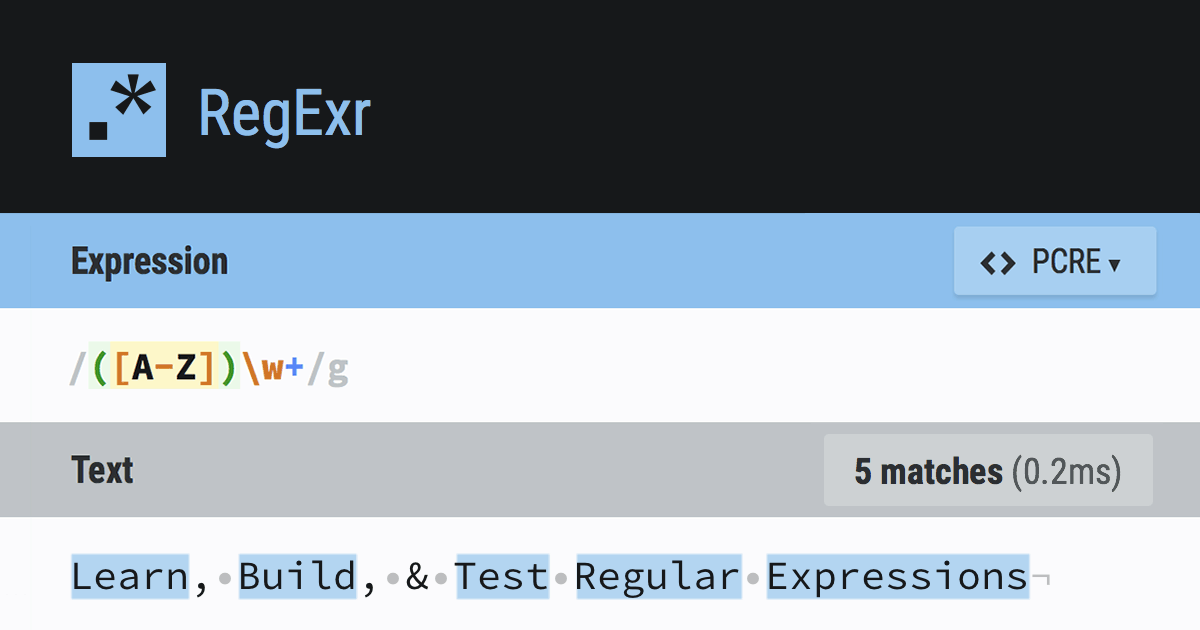
RegExr: Learn, Build, & Test RegEx
Regular expression tester with syntax highlighting, PHP / PCRE & JS Support, contextual help, cheat sheet, reference, and searchable community patterns.
regexr.com →Edit the Expression & Text to see matches. Roll over matches or the expression for details. PCRE & JavaScript flavors of RegEx are supported. Validate your expression with Tests mode. The side bar includes a Cheatsheet, full Reference, and Help. You can also Save & Share with the Community and view patterns you create or favorite in My Patterns. Explore results with the Tools below. Replace & List output custom results. Details lists capture groups. Explain describes your expression in plain English. Build a suite of tests that your expression should (or should not) match. Create new tests with the 'Add Test' button. Click a test to edit the name, type, & text. Any unsaved changes will be lost. Saved patterns & favorites will be migrated to your account.
Excerpt from a page describing this subject · 2,795 chars · not written by Vinony
Wikidata facts
Show 10 more facts
- discoverer or inventor
- Stephen Cole Kleene
- topic's main category
- Category:Regular expressions
- Stack Exchange tag
- stackoverflow.com/tags/regex
- Commons category
- Regex
- uses
- plus sign
- described at URL
- regexr.com
- time of discovery or invention
- 1951-00-00
- maintained by WikiProject
- WikiProject Mathematics
- P13411
- Tonga
- equivalent class
- edamontology.org/data_1352
via Wikidata · CC0
Article · Italiano
Un'espressione regolare (in lingua inglese regular expression o, in forma abbreviata, regexp, regex o RE) è una sequenza di simboli (quindi una stringa) che identifica un insieme di stringhe. Possono definire tutti e soli i linguaggi regolari. Il teorema di Kleene afferma che la classe dei linguaggi regolari corrisponde alla classe dei linguaggi generati da grammatiche di tipo 3 (nella gerarchia di Chomsky) e riconosciuti da automi a stati finiti. Tuttavia, nella pratica esistono taluni costrutti (ad esempio i costrutti di ) che permettono di ampliare l'insieme di linguaggi definibili. Programmi diversi supportano notazioni diverse per esprimere le stesse espressioni regolari, pertanto non esiste una sintassi "universale".
Abstract from DBpedia / Wikipedia · CC BY-SA