File:Da_Vinci_Vitruve_Luc_Viatour.jpg · Wikimedia Commons · See Wikimedia Commons
renaissance humanism
Sign in to saveAlso known as revival of letters
revival in the study of classical antiquity
Wikidata facts
- Instance of
- cultural movement
- Part of
- Renaissance
Show 4 more facts
- Commons category
- Humanism
- topic's main category
- Category:Renaissance humanism
- described by source
- The Nuttall Encyclopædia
- different from
- humanism
via Wikidata · CC0
~31 min read
Encyclopedic overview
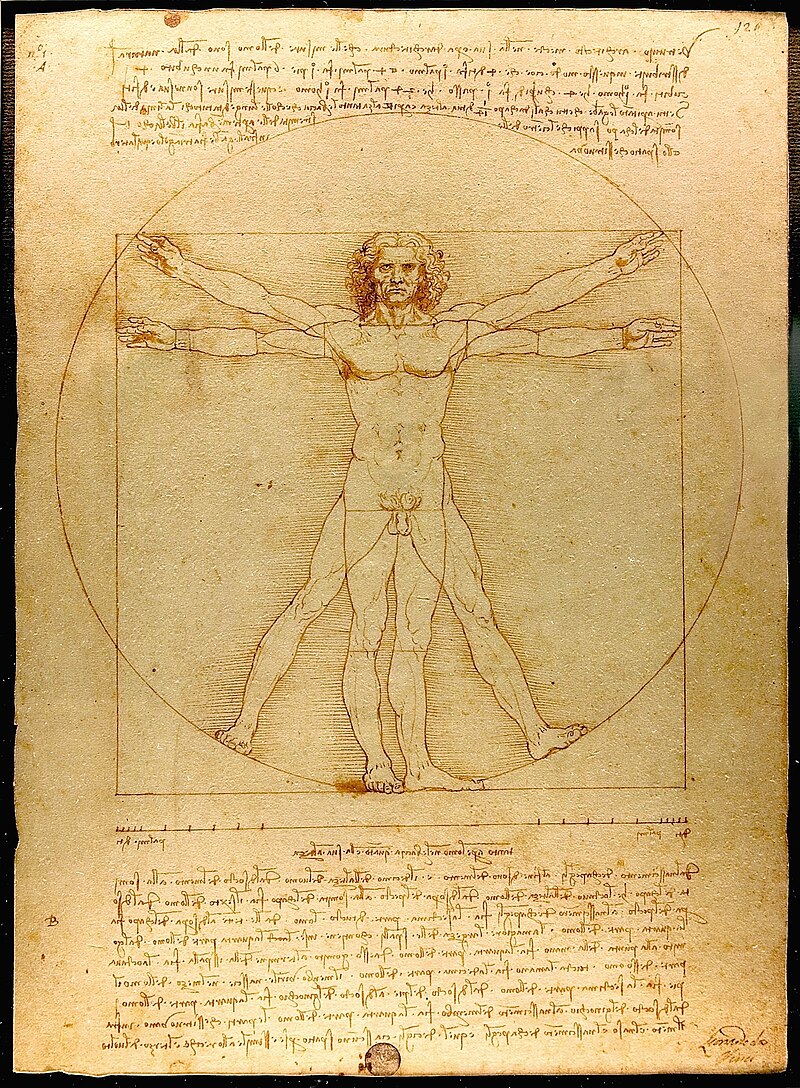
Leonardo da Vinci's Vitruvian Man (c. 1490) shows the correlations of ideal human body proportions with geometry described by the ancient Roman architect Vitruvius in his De Architectura. "In his explicit turn back to an ancient model in search of knowledge and wisdom, Leonardo follows early humanist practice. What he finds in Vitruvius is a mathematical formula for the proportions of all parts of the human body, which results in its idealized representation as the true microcosmic measure of all things. [...]The perfection of this ideal human form corresponds visually to the early humanist belief in the unique central placement of human beings within the divine universal order and their consequent human grandeur and dignity, expressed in the philosopher Pico della Mirandola's Oration on the Dignity of Man (1486), known as the manifesto of the Renaissance." — Anne Hudson Jones
Renaissance humanism is a worldview centered on the nature and importance of humanity that emerged from the study of classical antiquity.
Excerpted from Wikipedia’s “renaissance humanism” article, available under the CC BY-SA 4.0 licence.