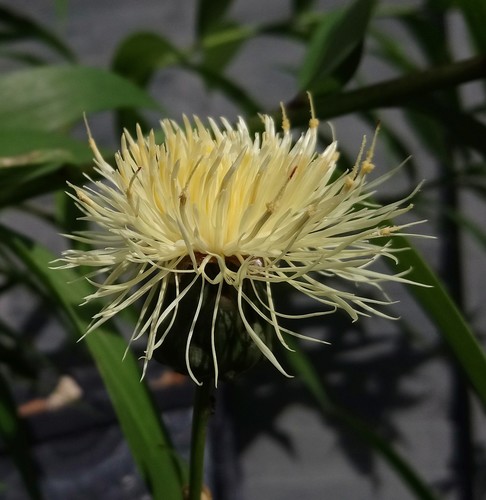
(c) Thistle-Garden, some rights reserved (CC BY-NC) · cc-by-nc
Rhaponticoides
Sign in to saveRhaponticoides is a genus of flowering plants in the family Asteraceae, found in northern Africa, southern and eastern Europe, and western Asia as far east as Mongolia. They were resurrected from Centaurea.
Species
GENUS
- KingdomPlantae
- PhylumTracheophyta
- ClassMagnoliopsida
- OrderAsterales
- FamilyAsteraceae
Rhaponticoides es un género de plantas con floresherbáceas perteneciente a la familia Asteraceae con unas 30 especies.[1] Nota: Todas las especies del género estaba anteriormente clasificada como Centaurea subgénero Centaurea en su sentido tradicional, pero se ha demostrado, a través de estudios moleculares, que dicho subgénero erá polifilético lo que llevó a segregar las especies involucradas y reinstaurar para ellas el género Rhaponticoides Vaill., 1718, de tal manera que ahora deben atribuirse todas a dicho género.[2][3][4] Índice 1 Descripción 2 Distribución 3 Taxonomía 4 Especies 5 Citología 6 Referencias 7 Enlaces externos Descripción Son plantas herbáceas perennes con tallos no alados simples o ramificados. Las hojas basales son frecuentemente en roseta y las caulinares alternas, casi todas pecioladas, no decurrentes, más o menos enteras, denticuladas, pinnatífidas o pinnatisectas. Los capítulos son terminales, solitarios o en inflorescencias cimosas, algo pedunculados. Tienen el involucro ovoide con 5-9 series de brácteas imbricadas y adpresas, más grandes centripetamente, con un apéndice apical escarioso, discolor, entero o lacerado, lateralmente decurrente. El receptá
via GBIF · Kew POWO
Wikidata facts
- Instance of
- taxon
- Parent taxon
- Centaureinae
- Image
- Rhaponticoides alpina ENBLA01.jpg
Show 7 more facts
- taxon name
- Rhaponticoides
- taxon rank
- genus
- topic's main category
- Category:Rhaponticoides
- Commons gallery
- Rhaponticoides
- Commons category
- Rhaponticoides
- taxon common name
- 金矢车菊属
Sources (1)
via Wikidata · CC0
~2 min read
Encyclopedic overview
2 sectionsContents
- Species
- References
Rhaponticoides is a genus of flowering plants in the family Asteraceae, found in northern Africa, southern and eastern Europe, and western Asia as far east as Mongolia. They were resurrected from Centaurea.
In the 20th century the genus Centaurea was paraphyletic, because it was based on a type species, C. centaurium, which was less related to the vast majority of other Centaurea than to species which were classified as belonging to other genera. In 2001 Werner Greuter solved this by moving the C. centaurium and the related species in the former subgenus Centaurea to an old, resurrected genus: Rhaponticoides, he conserved the name Centaurea for the majority of the other species, and electing C. paniculata to serve as the new type species.
Excerpted from Wikipedia’s “Rhaponticoides” article, available under the CC BY-SA 4.0 licence.