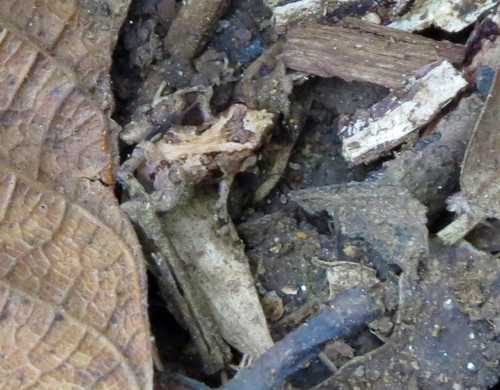
(c) Micha Baum, some rights reserved (CC BY-SA), uploaded by Micha Baum · cc-by-sa
Rhombophryne
Sign in to saveRhombophryne is a genus of microhylid frogs endemic to Madagascar. It is currently estimated to include more than 23 species, but only 20 of these are currently described. The common name 'diamond frog' has been proposed and used for members of this genus.
Species
GENUS
- KingdomAnimalia
- PhylumChordata
- ClassAmphibia
- OrderAnura
- FamilyMicrohylidae
Rhombophryne Boettger, 1880 è un genere di rane della famiglia Microhylidae, endemico del Madagascar.
via GBIF
Wikidata facts
- Instance of
- taxon
- Parent taxon
- Cophylinae
- Image
- Rhombophryne coudreaui01.jpg
Show 5 more facts
- Commons category
- Rhombophryne
- topic's main category
- Category:Rhombophryne
- taxon name
- Rhombophryne
- taxon rank
- genus
- endemic to
- Madagascar
Sources (1)
via Wikidata · CC0
~5 min read
Encyclopedic overview
5 sectionsContents
- Taxonomy
- Ecomorphology
- Reproductive Ecology
- Species
- References
Rhombophryne is a genus of microhylid frogs endemic to Madagascar. It is currently estimated to include more than 23 species, but only 20 of these are currently described. The common name 'diamond frog' has been proposed and used for members of this genus.
==Taxonomy== The genus Rhombophryne was monotypic until 2005, containing just R. testudo Boettger, 1880. However, in 2005 Andreone et al. showed that the genus Plethodontohyla was paraphyletic with respect to this genus. Several species were therefore transferred to this genus by Frost et al. in 2006, Glaw and Vences in 2007, and Wollenberg et al. in 2008. In 2015/2016, Peloso et al. re-analysed the genetic relationships of the Microhylidae using partial genomic data. They proposed the synonymy of Stumpffia with Rhombophryne because these genera were found to be paraphyletic. However, in 2016 Scherz et al. re-analysed their data with new data—including osteology and external morphology. They found strong support for these groups being ecologically distinct, non-synonymous sister taxa. To accommodate this, however, they established a new genus, Anilany for a species that would otherwise have rendered Stumpffia paraphyletic. These findings were supported by a subsequent study on the phylogeny of the family Microhylidae.
Excerpted from Wikipedia’s “Rhombophryne” article, available under the CC BY-SA 4.0 licence.