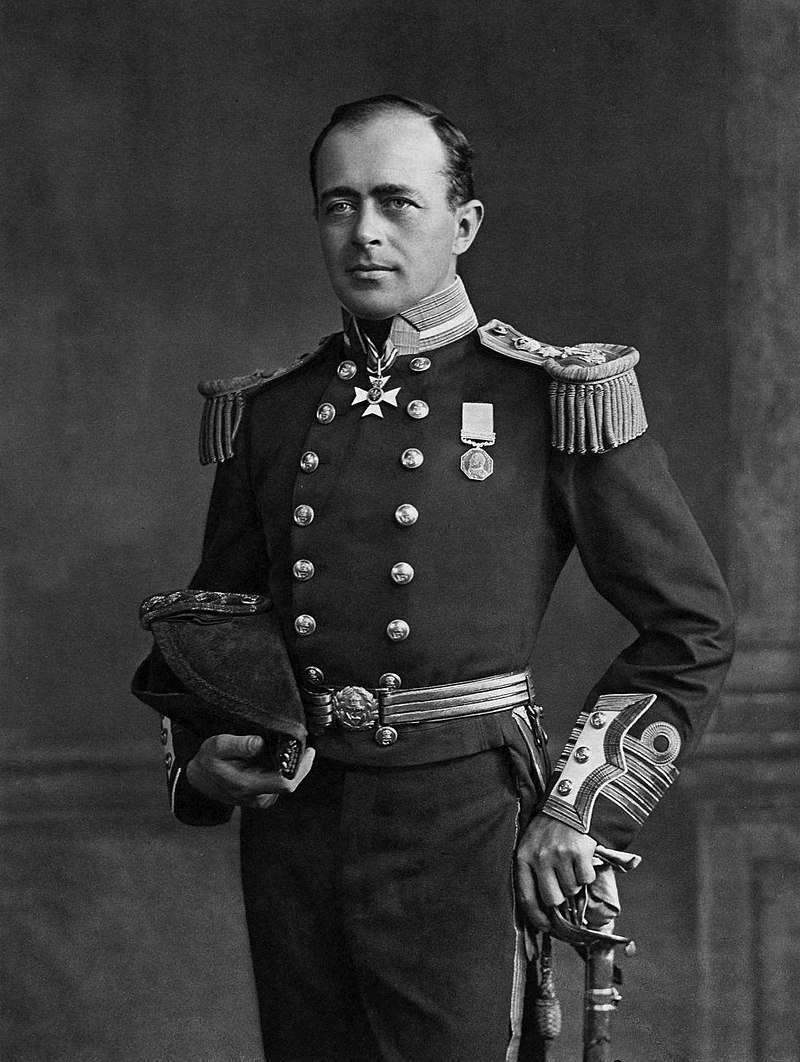
File:Scott_of_the_Antarctic_(bw)_(cropped).jpg · Wikimedia Commons · See Wikimedia Commons
Robert Falcon Scott
Sign in to saveAlso known as R. F. Scott, Captain Scott, Captain R. F. Scott
Royal Navy officer and explorer (1868–1912)
OverviewAI-generated
Robert Falcon Scott was a British naval officer, explorer, and non-fiction writer. Born in Plymouth in 1868, he served as a captain in the Royal Navy. He participated in the Discovery Expedition from 1901 to 1904 and the Terra Nova Expedition. His written works include *Journals*, *Voyage of the Discovery*, and *Scott's Last Expedition*, which he wrote in English.
Scott was married to Kathleen Scott and had a child named Peter Scott. He received several awards, including the Polar Medal, the Vega Medal, the Cullum Geographical Medal, and the Officer of the Legion of Honour. His archives are held at the British Library. He died on the Ross Ice Shelf in 1912 due to hypothermia and cachexia.
Synthesized by Vinony from 27 facts across 2 sources: Wikidata, Open Library. Generated from structured data (not the Wikipedia text) and checked against those facts — may still contain errors.
Person · Open Library
- Born
- 1868-06-06
- Died
- 1912-03-29
- Works
- 44
Top works
- Di letsṭe nesie
- Man against nature
- Journals
- Voyage of the Discovery
- Scott's Last Expedition
via Open Library + Wikidata
Wikidata facts
- Instance of
- human
- Family name
- Scott
- Gender
- male
- Citizenship
- United Kingdom of Great Britain and Ireland
- Place of birth
- Plymouth
- Place of death
- Ross Ice Shelf
- Spouse
- Kathleen Scott
- Child
- Peter Scott
- Occupation
- captain
- Languages spoken
- English language
- Award
- Royal Medal
- Participant in
- Terra Nova Expedition
- Military branch
- Royal Navy
- Military rank
- captain
- Image
- Scott of the Antarctic (bw) (cropped).jpg
Show 14 more facts
- Commons category
- Robert Falcon Scott
- cause of death
- cachexia
- date of birth
- 1868-06-06
- date of death
- 1912-03-29
- topic's main category
- Category:Robert Falcon Scott
- Commons gallery
- Robert Falcon Scott
- manner of death
- natural causes
- archives at
- British Library
- name in native language
- Robert Falcon Scott
- writing language
- English language
- P6944
- Robert Falcon Scott
- has works in the collection
- Australian National Maritime Museum
- different from
- Robert Scott
- P12749
- Eugenie Schwarzwald
Sources (8)
via Wikidata · CC0
~40 min read
Encyclopedic overview
Captain Robert Falcon Scott (6 June 1868 – c. 29 March 1912) was a British Royal Navy officer and explorer who led two expeditions to the Antarctic regions: the Discovery expedition of 1901–04 and the Terra Nova expedition of 1910–13.
On the first expedition, Scott set a new southern record by marching to latitude 82°S and discovered the Antarctic Plateau, on which the South Pole is located. On the second venture, Scott led a party of five which reached the South Pole on 17 January 1912, less than five weeks after Amundsen's South Pole expedition. On the return journey from the Pole, a planned meeting with supporting dog teams from the base camp failed, despite Scott's written instructions, and at a distance of 162 miles (261 km) from their base camp at Hut Point and approximately 12.5 miles (20.1 km) from the next depot, Scott and his companions died. When Scott and his party's bodies were discovered, they had in their possession the first Antarctic fossils discovered. The fossils were determined to be from the Glossopteris tree and proved that Antarctica was once forested and joined to other continents.
Excerpted from Wikipedia’s “Robert Falcon Scott” article, available under the CC BY-SA 4.0 licence.
Gallery (12)
Available in 69 languages
- Español
- Français
- Deutsch
- 中文
- 日本語
- Русский
- Português
- Italiano
- العربية
- Afrikaans
- Armenian
- Asturian
- Azerbaijani
- Bahasa Indonesia
- Basque
- be_x_old
- Belarusian
- Bulgarian
Show 50 more
- Burmese
- Catalan
- Chuvash
- Croatian
- Czech
- Danish
- Egyptian Arabic
- Esperanto
- Estonian
- Filipino
- Finnish
- Galician
- Georgian
- Greek
- Hebrew
- Hungarian
- Icelandic
- Ido
- Irish
- Kazakh
- Kotava
- Latin
- Latvian
- Lithuanian
- Low German
- Macedonian
- Madurese
- Manx
- Nederlands
- Norwegian
- Norwegian Nynorsk
- Occitan
- Polski
- Romanian
- Serbian
- Sicilian
- simple
- Slovak
- Slovenian
- Svenska
- Tatar
- Tiếng Việt
- Türkçe
- Ukrainian
- Uzbek
- Welsh
- Western Frisian
- Wu Chinese
- فارسی
- 한국어
via Wikidata sitelinks · CC0